







Many Americans find the decision to stop working long hours and retire an easy one. But the uncertain math behind whether retirement is feasible may be holding them back, advisers said.
Workers' confidence in having enough money to live comfortably in retirement fell 6 percentage points from 2025 to 61%, according to a survey of more than 2,500 Americans in January by nonpartisan researcher Employee Benefit Research Institute. That uncertainty may be one reason why workers increasingly expect to retire later and keep working in retirement, it said.
Though the median expected retirement age for workers remained 65, a growing number said they never plan to retire. Nearly one-quarter of workers adjusted their target retirement age in 2025, with most
moving it later.
But more work may not be the answer, advisers said. Planning and doing the hard math can help Americans feel more confident and get them to retirement, they said.
"Remember, retirement planning is less about working as long as possible and more about knowing when you have enough to support the life you want to lead," said Rose Faye, director of financial planning for Edelman Financial Engines.
How do you figure out if you have enough to retire?
Consider how much you plan to spend in retirement to live comfortably and what buckets of money you can draw from to fund that life, advisers said.
"It's important to start with a clear picture of your financial situation, yet many Americans don't have that visibility," Faye said. Only 4 of 10 Americans in an Edelman Financial Engines' survey know how their 401(k) is invested, which she said is notable given the critical role retirement savings play in long-term financial security.
You must understand how "a series of interconnected decisions, from when to claim Social Security to how you'll withdraw retirement savings, may affect your income, taxes, health care costs, and long-term financial security," she said.

Social Security ages and work
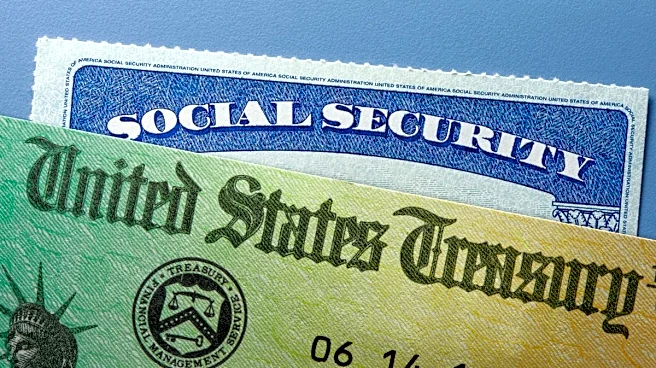
Social Security, the guaranteed government benefit for Americans who've worked most of their lives and paid payroll taxes, can trip people up.
The full retirement age (FRA) to receive full Social Security benefits rose to 67 this year for everyone born after 1960, but people can claim benefits as early as 62 at a reduced rate. If people delay Social Security to after 67, they'll receive an 8% bump in their payouts for each year after FRA up to age 70.
But age isn't the only consideration. Since surveys show many Americans plan to keep working, advisers warn that work can have unintended consequences.
If you're taking Social Security before FRA, the extra income may temporarily decrease your benefit. A dollar is deducted from your benefit payments for every $2 you earn above the annual limit, which is $24,480 for 2026, the Social Security Administration said. In the year you reach FRA, SSA deducts $1 in benefits for every $3 earned above a different limit. $65,160 in 2026. It only counts earnings up to the month before your FRA birthday.
Once you reach FRA, benefits are no longer reduced, and you begin to get back the money you lost due to earnings before FRA. You also may work now and earn as much as you want, but advisers warned that could have tax implications.
Income from wages, non-Roth retirement funds, and annuities will count towards "combined income" that determines if you'll have to pay taxes on your Social Security benefits and how much of the benefits will be taxed. Up to 85% of your Social Security check can be taxed.
Medicare and work
Americans are eligible for Medicare at 65, but what you pay depends on what your modified adjusted gross income was two years ago. Depending on your income tier, additional earnings from work and other sources can boost Medicare Part B base premiums by 40% to 240%.
Plus, "you will generally still pay Social Security and Medicare payroll taxes on earned income," Faye said.
Should Americans stop working in retirement?
It isn't just work that can push up a retiree's taxes.
"Withdrawals from tax-deferred accounts, such as traditional 401(k)s and IRAs, generally create taxable income," Faye said. "Required minimum distributions, the withdrawals you must take from certain retirement accounts later in life, can increase taxable income as well...therefore, which accounts you withdraw from, and when, can matter just as much as how much you withdraw."
Ultimately, whether to work or not hinges on the math.
"If working another year materially improves the sustainability of the plan or closes a meaningful income gap for you, that circumstance can support postponing retirement," Faye said.
How do you know if you can afford retirement?
There's no one-size-fits-all calculation or strategy to guarantee your savings will last, but some tests include:
- Have roughly 10 to 12 times your final annual salary saved by age 67.
- Plan to replace about 70% to 80% of pre-retirement income each year.
- Use the 4% rule or withdraw about 4% of your retirement savings in the first year and adjust that dollar amount for inflation annually.
- Estimate the amount your portfolio needs to provide anticipated annual spending and multiply that amount by 25.
Another tip: before you retire, know where your health insurance will come from and what it will cost.
Health insurance can be one of the most important factors that separates someone who is financially ready to retire from someone who may benefit from waiting instead. Edeleman Financial Engines' study shows that planning for health care and long-term care costs in retirement is the top unmet need for those who work with financial professionals.
"Medical expenses can increase significantly as we age, and long-term care can be a burdensome expense for retirees who aren’t financially prepared," Faye said.
Medora Lee is a money, markets and personal finance reporter at USA TODAY. You can reach her at mjlee@usatoday.com and subscribe to our free Daily Money newsletter for personal finance tips and business news every Monday through Friday morning.
This article originally appeared on USA TODAY: More planning and more math, not work, can boost retirement prosperity