





The U.S. is six months into a war in Iran that has driven up global oil and gas prices.
On Feb. 28, President Donald Trump announced the military operation against Iran in coordination with Israel. In the following days, he predicted it would last four to five weeks. In the roughly six months since then, 18 service members have died, a memorandum of understanding has materialized and fallen apart, and the price of oil and gas has risen worldwide.
The economy was a major platform on which Trump and Republicans won the White House and control of Congress in 2024. But multiple polls this month have shown Americans feel pessimistic about the war and their economic troubles.
Disruptions to the oil supply chain at the Strait of Hormuz persist as Iran
and the US continue to grapple over its control. Trump has said multiple times that the higher prices associated with the war will be worth his goal of preventing Iran from having a nuclear weapon. Here's a look at how gas prices have changed under Trump's presidency as the war stretches past six months.
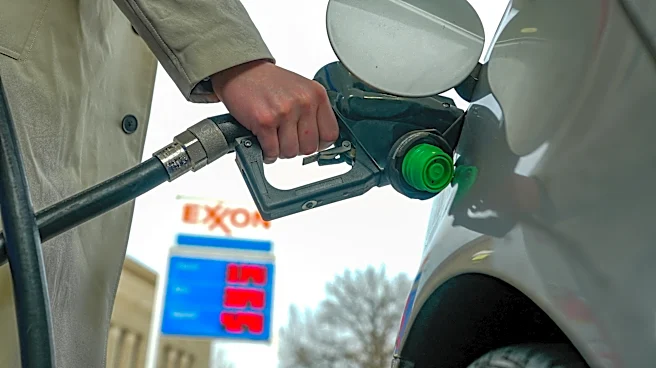
How has the war in Iran impacted gas prices?
Gas prices typically change seasonally. Here is a year-over-year comparison of the average price of a gallon of regular gas, according to AAA, between 2025 and 2026.
"Even though gasoline demand is down, which is typical for this time of year, crude oil is pushing up the national average," AAA said on Aug. 20, when the average gallon of gas cost more than ever before at that point in the year. "Crude oil prices remain in the $80 per barrel range amid continued instability in the Strait of Hormuz.
What does the war have to do with gas prices?
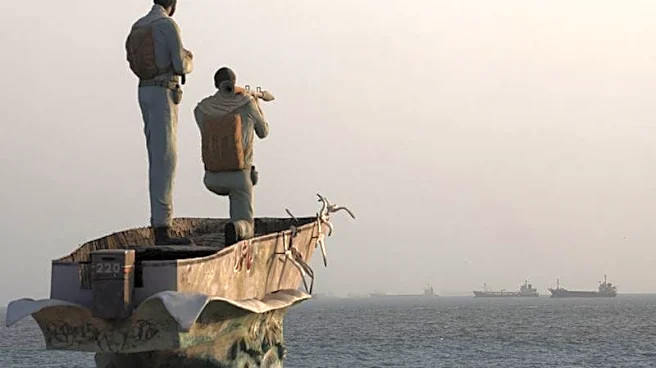
The Strait of Hormuz is a waterway that connects the Persian Gulf with the Gulf of Oman and the Arabian Sea. It is a chokepoint for about 20% of the world's oil shipments and a major point of tension throughout the war. Typically, more than 3,000 ships use the strait every month. Most of them transport crude oil, refined petroleum – the equivalent of about 20 million barrels of oil a day – and liquid natural gas from Persian Gulf docks to ports in China, India, Japan and South Korea. About 4% of those crude oil exports head to the Americas while a portion of oil shipments go to Europe. That waterway closure impacts the amount of oil able to be transported to the United States, resulting in higher prices for both oil and gas.
Iran and the US reached a memorandum of understanding to end the war in June that fell apart in July. Since then, Iran has resumed attacks on ships in the Strait of Hormuz and the US has reinstated its naval blockade of Iranian ports. Vice President JD Vance saidon Aug. 20 the US would move into a new phase of the war, ramping up economic pressure.
"We got rid of the mines," Trump told Glenn Beck of the Strait in a radio interview on Aug. 26. "But the strait, it's functioning it's a functioning strait. Every once in a while, there'll be a drone or a rocket or something shot but it is a very functioning strait."
Trump also told Al Jazeera Aug. 26 he is "not in a hurry" for negotiations with Iran to resume.
Contributing: Kate Perez, Joey Garrison, USA TODAY
Kinsey Crowley is the Trump Connect reporter for the USA TODAY Network. Reach her at KCrowley@usatodayco.com. Follow her on X (Twitter), Threads, Bluesky and TikTok.
This article originally appeared on USA TODAY: See how average gas prices during Iran war compare to last year