






Over the summer in Texas and across the nation, people voiced views on Flock camerasand privacy concerns about the AI-powered automatic license plate readers.
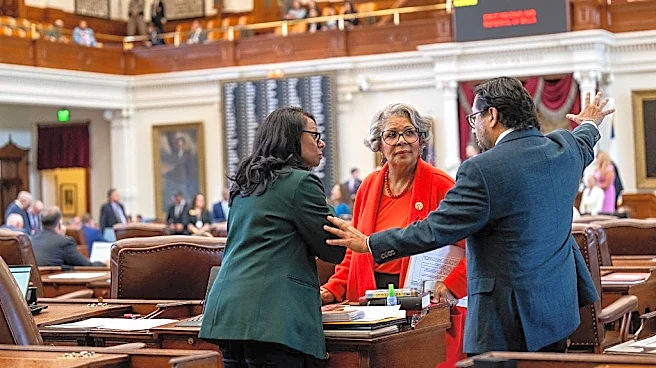
This has led several Texas state lawmakers to file bills this week, ahead of the 90th Texas legislative session that starts in January, to limit their purchase and use in the state.
Texas outgoing governor Greg Abbott also froze all state funding for Flock cameras in August, as The Texas Tribune was about to publish an investigation into how a state agency has devoted at least $30 million to building the state's Flock surveillance network through providing grants to local police departments.
Here's a quick overview of the bills and what Flock cameras are.

Texas lawmakers look at limiting, defunding Flock cameras
One Texas House bill — 331— filed
by Austin Democratic Rep. John Bucy would outright ban public agencies from using any automatic license plate reader (ALPR) — not limiting it just to Flock.
Republicans and Democrats in the Texas House have filed bills to limit how law enforcement can use ALPR. Midlothian Republican state Rep. Brian Harrison filed HB 847, which would require a warrant and limit law enforcement's use of the cameras to violent crime investigation.
HB 763, filed by Rep. Mary González, D-Clint, would also require a warrant before using an ALPR system and clarify that data from the devices are public records.
In the Senate, Houston Democrat Carlo Alvarado filed Senate Bill 232,which would prevent the Motor Vehicle Crime Prevention Authority from offering grants to buy ALPR systems.
This stems from a 2023 bill he filed that became law and added a $1 annual fee to Texans’ auto insurance policies to fund programs combating catalytic converter theft in the state.
An August investigation by The Texas Tribune found the authority had allocated more than $30 million of that money to help install around 3,200 Flock cameras across the state.
Why are they controversial?
Texas state Sen. Lois Kolkhorst, R-Brenham, wrote in anAug. 31 social media op-ed that she believes the growing uproar over Flock cameras "is born from the same fears that spawned the Fourth Amendment in 1791," and that the cameras represent "a frightening new web of warrantless mass surveillance."
"Texans should have a reasonable expectation of privacy," Kolkhorst wrote. "That means we must pull in the Constitutional reins on new technologies that can arbitrarily invade a person's life, home, or property."
As Kolkhorst said in her op-ed, the abuse of them can and has already happened.
In Amarillo, a former police officer was fired in July after accessing the Flock camera system more than 75 times for reasons outside police work.
As the Amarillo Globe-News, part of the USA TODAY Network, reported, the Potter County Attorney's Office has reviewed the case and accepted a criminal complaint charging the former officer with Tampering with a Government Record — a Class A misdemeanor punishable by a fine up to $4,000 and jail up to one year, or both.
In 2025, a Johnson County sheriff's deputy used the nationwide network of more than 83,000 Flock cameras without a warrant to track a woman suspected of attempting to get an abortion, according to the Texas Tribune.
What is a Flock camera?
An automatic license plate reader that captures a vehicle's information as it passes through the camera's field of view, according to Flock Safety's website.
The cameras are made by Atlanta-based Flock Safety, which manufactures safety technology for law enforcement, business owners and homeowners to help monitor crime, such as cameras and drones.
The camera captures a car's license plate numbers, a car's description, and the date, time and location a vehicle passed through, and uploads the data to a searchable database customers can use.
Flock Safety says the camera does not capture personal information, facial recognition or anything tied to individuals.
What does a Flock camera look like?
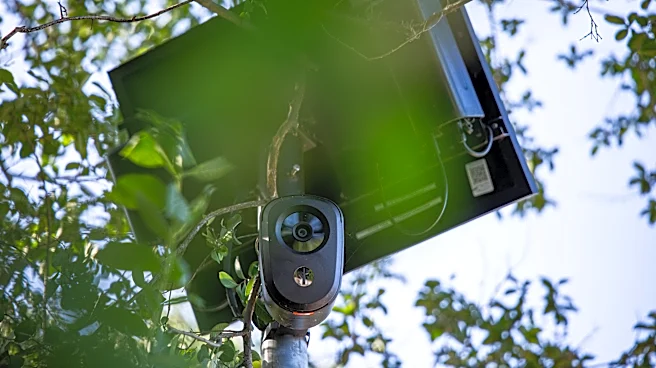
A typical Flock automatic license plate reader in Texas is a small, rounded black rectangular box mounted at the top of a pole along the roadway.
It can be paired with a solar panel on top.

How long do Flock cameras store data?
Flock complies with existing license plate reader retention laws and regulations that differ from the 30-day standard, according to Flock Safety's website.
If a customer wants a longer retention period not already required by law, Flock Safety will offer up to one year, but the agency must first obtain approval from an elected official or governing body.
Do Flock cameras use AI?
Yes, that's what makes it different from other automatic license plate readers — which aren't new technology.
Flock Safety's website notes that the cameras upload captured data to create searchable, identifiable descriptions of the car, such as “blue SUV with a racing stripe” or “white F-150 with a ladder in the back.”
In February 2025, Flock Safety launched other AI tools like:
- Plate Swap Insights — the system identifies when the same license plate has been spotted on multiple vehicles over the past 30 days.
- Multi-State Insights — alerts law enforcement when suspect vehicles are detected across multiple states.
- Hotlist Hotspot Insights — this tool pinpoints high-frequency license plate reader hotlist hits.
Where are Flock cameras located in Texas?
No centralized database shows where the cameras are located; the most comprehensive map of Flock camera locations is a user-generated map hosted by DeFlock. It shows users reporting cameras in and around major Texas cities like Dallas-Fort Worth, Austin and Houston.
Abilene Reporter-News and the Lubbock Avalanche-Journal — both part of the USA TODAY Network — have confirmed that their cities have Flock cameras.
The Texas Department of Public Safety also confirmed to the Waco Bridge that the state agency operates some cameras but declined to say how many.
Mateo Rosiles is the Texas Connect reporter for USA TODAY and its regional papers in Texas. Got a news tip for him? Email him at mrosiles@usatodayco.com.
This article originally appeared on USA TODAY: Texas Flock cameras face new restrictions under proposed bills