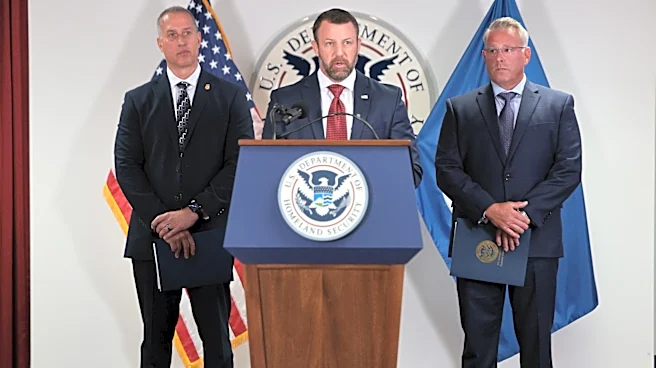






Standing beside placards displaying people arrested in a monthlong operation, Homeland Security Secretary Markwayne Mullin warned New York’s leaders: If they won't work with U.S. Immigration and Customs Enforcement, federal agents will come into their communities instead.
“Because they refuse to work with us with the 287(g) program, we will send as many people as we have possible,” Mullin said Sept. 1, referring to a federal program that authorizes state and local officers to perform certain immigration-enforcement duties in partnership with U.S. Immigration and Customs Enforcement.
His remarks escalated a confrontation over New York’s efforts to disentangle local police from federal immigration enforcement. They also came days after a new state
law forced local agencies to end their partnerships with ICE.
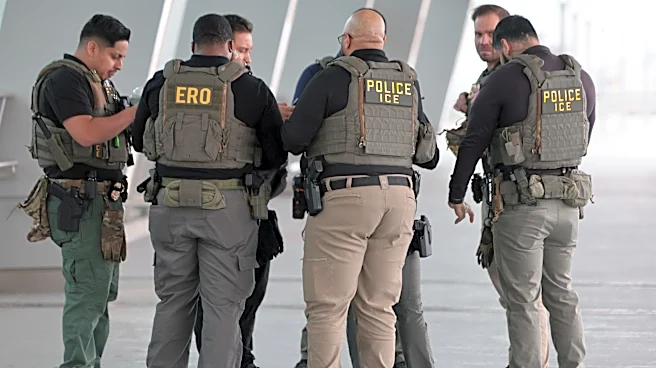
Mullin said “Operation Rotten Apple” resulted in more than 2,100 arrests across New York City, Long Island, the Hudson Valley and upstate New York between July 27 and Aug. 29. The operation ended four days after the new law took effect.

It also followed months of warnings from the Trump administration that limiting cooperation would bring more federal agents into New York.
In June — two weeks after Gov. Kathy Hochul signed the "Local Cops, Local Crimes" Act — White House border czar Tom Homan said he had reviewed an operational plan to fulfill a pledge he made to her if New York restricted local partnerships with ICE.
“I made her a promise: You’re going to see more ICE agents than you’ve ever seen in New York City, and it’s coming,” Homan said during an interview with Fox News.
DHS did not say whether "Operation Rotten Apple" was the plan Homan had referenced.
The department highlighted several people convicted of serious crimes, including murder, kidnapping, rape, robbery, drug trafficking and sexual offenses against children.
But DHS did not provide a full accounting of those arrested or say how many had criminal convictions, pending charges or no criminal records. Previous operations across the country have also swept up U.S. citizens, longtime residents and immigrants with pending asylum cases or protections that would typically shield them from deportation.
“These are not the people New York sanctuary policies should be protecting from federal immigration enforcement,” Kenneth Genalo, director of ICE Enforcement and Removal Operations in New York City, said during the news conference.
Genalo said such policies make enforcement more dangerous by preventing agents from taking custody of people in the controlled environment of a jail, forcing them to instead make arrests in public spaces.
“This is not safer. That is not compassionate. That is a political choice with real consequences,” Genalo said.

Mullin repeatedly described those arrested as “criminals” and “the worst of the worst.” Later in the news conference, however, he made clear the operation was not limited to people who had been convicted of crimes — and said ICE would arrest people based solely on their immigration status.
“If you’re here illegally, regardless of your status, if you’re a convicted criminal or not, you’re still in this country illegally,” Mullin said. “It is our job to hunt you down and to deport you.”
That broader approach is reflected in ICE’s detention population nationwide. As of July 11, 70% of the nearly 66,000 people in ICE custody had no criminal conviction, according to the Transactional Records Access Clearinghouse, which analyzes federal immigration data. That group includes some people facing pending charges, but also thousands detained solely for alleged civil immigration violations.
Mullin's focus on violent offenders echoed a central argument the Trump administration has used to justify its immigration crackdown. But broader research has consistently found that immigrants are less likely than U.S.-born people to commit crimes or be incarcerated. A 2024 study found that immigrants had lower incarceration rates over 150 years of U.S. history. A 2026 analysis by the Cato Institute, a libertarian think tank, estimated that immigrants living in the country without documentation were about 44% less likely to be incarcerated than U.S.-born Americans.
Mullin cast the operation as a rebuke to Hochul and New York City Mayor Zohran Mamdani, both Democrats. He accused them of making New Yorkers less safe by releasing 13,000 noncitizens despite ICE detainers, which are requests that local agencies hold people temporarily so federal officers can take custody of them. He called all 13,000 “criminals” but did not provide documentation, identify the period covered or distinguish between convictions and pending charges.
Hochul and Mamdani did not immediately respond to USA TODAY'S requests for comment.

A rapidly growing ICE program
At the center of the fight is a once relatively obscure federal program that has become a cornerstone of President Donald Trump’s mass-deportation campaign.
Section 287(g) of the Immigration and Nationality Act allows ICE to deputize state and local officers to perform certain federal immigration functions. Depending on the agreement, local officers can screen people in jails, execute administrative immigration warrants or question and arrest people for suspected immigration violations during routine police work.
The Trump administration has rapidly expanded the program. ICE had 135 active agreements at the end of the 2024 fiscal year. By September 2025, DHS said it had more than 1,000 — a more than 600% increase, according to the department.
The expansion has deepened a growing divide between states. Republican-led Florida and Texas have embraced the program, with some states requiring local agencies to participate. Democratic-led states have increasingly sought to keep local police out of federal immigration enforcement. California and Illinois already restricted such partnerships, while Maryland, Maine and New Mexico enacted bans as the program grew.
Critics of 287(g) argue that deputizing local officers to carry out civil immigration enforcement erodes trust, making immigrants less likely to report crimes, seek help or cooperate as witnesses. Hochul has made that argument in defending New York’s law, saying local officers should remain focused on investigating crimes rather than using state and local resources to perform ICE’s work.
"The ‘Local Cops, Local Crimes Act’ keeps New Yorkers safe by ensuring public safety resources go toward combating crime in our communities, not carrying out the work of ICE," Hochul and New York Attorney General Letitia James said in a statement in August. "The federal government claims they are going after the 'worst of the worst,' but every American has seen the reality: ICE is terrorizing communities and families with indiscriminate raids, detaining people without regard for criminal record, and using local law enforcement to deliver on the administration's mass deportation agenda."
New York’s Local Cops, Local Crimes Act, signed in May, prohibits state and local agencies from entering into or maintaining 287(g) agreements. The 12 agencies already participating were given until Aug. 25 to unwind them.
The law does not prevent local officers from working with federal agencies on criminal investigations. It bars them from performing federal civil immigration-enforcement functions.
The Trump administration challenged the law before it even took effect. The Justice Department sued New York in June, arguing that the ban unlawfully interfered with federal immigration enforcement. A federal judge declined to block the 287(g) provision, allowing the deadline to stand.
The fight then splintered within New York.
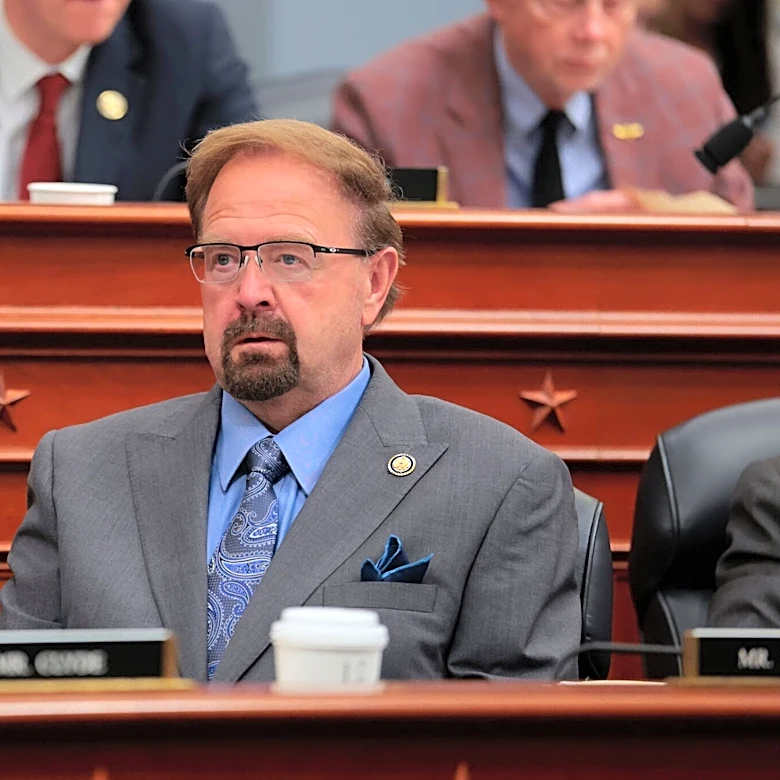
Fifteen county sheriffs sued to overturn the law on the day it took effect. Nassau County agreed to dissolve its ICE partnership but joined the challenge. Its Republican county executive, Bruce Blakeman, is running against Hochul for governor.
Rensselaer County took a more defiant approach. It was the only one of the 12 participating agencies that did not tell state officials it would end its agreement, according to the governor’s office. Hochul and James have since sued the county, asking a court to force its sheriff to comply.
As that fight played out, ICE officers were already carrying out "Operation Rotten Apple."
Mullin said New York’s resistance would not reduce immigration enforcement. It would change where — and how — it happens.
“We’re not done,” he said. “We’re still moving forward.”
This article originally appeared on USA TODAY: As New York moved to curb ICE cooperation, the agency arrested 2,100