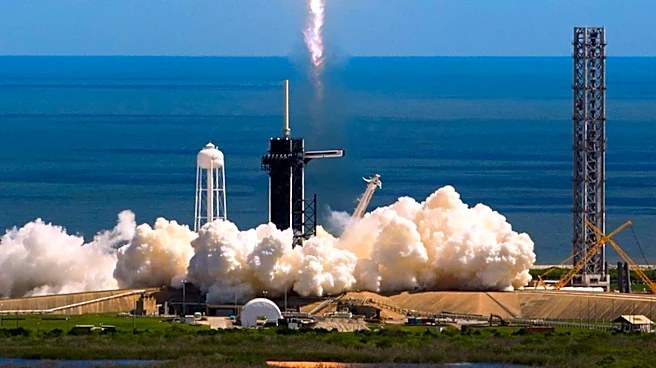




A few months ago, an independent astronomer predicted that a portion of a SpaceX rocket was on a collision course with the moon more than a year after it completed its mission.
Now, impact is imminent, with the upper-stage of the Falcon 9 rocket being just days away from slamming into the moon at more than seven times the speed of sound. The crash is expected to create a new crater on the moon's pockmarked surface and kick up enough dust that powerful instruments may be able to spot it more than a quarter-million miles away on Earth.
The predicament is accompanied by a bit of irony: Not only is SpaceX developing its much larger Starship rocket for stable, planned moon landings, but the Falcon 9 in question was itself used in a lunar mission.
Since
then, the vehicle has been stuck in a highly elliptical orbit in space around Earth, unable to fall back through the atmosphere after it did its job: sending an uncrewed commercial lunar lander on its way to the moon.
Ahead of the highly anticipated crash, here's everything to know about the Falcon 9 rocket and why it's due for a lunar impact.
What is SpaceX's Falcon 9 rocket?
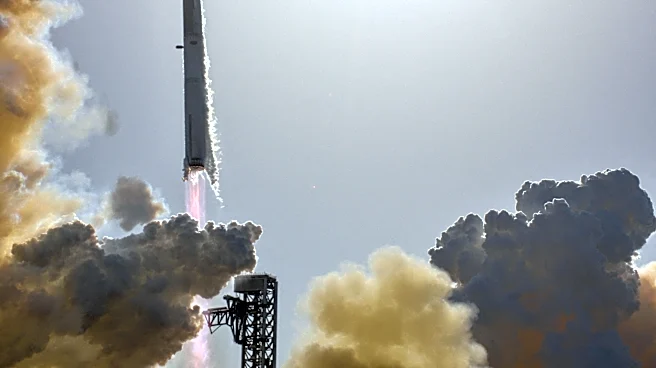
The Falcon 9 rocket manufactured by Elon Musk's SpaceX is the most active rocket in the world. Standing 230 feet tall, the two-stage rocket is classified as a medium-lift launch vehicle capable of carrying about 50,000 pounds of cargo to orbit.
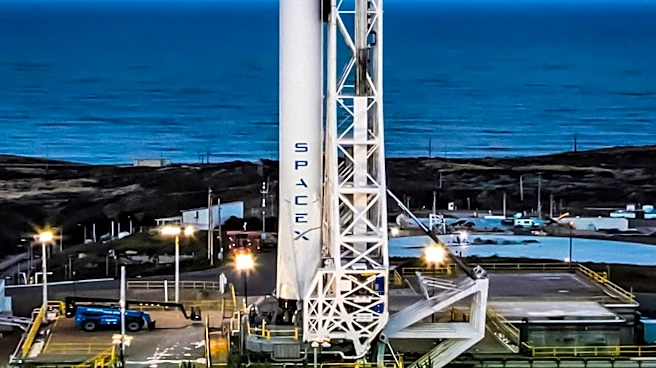
SpaceX has launched the Falcon 9 hundreds of times from both Florida's Space Coast and the Vandenberg Space Force Base in California to deliver its Starlink broadband internet satellites and other payloads to low-Earth orbit. The Falcon 9 is also the only American-made rocket that propels astronauts aboard SpaceX's Dragon crew capsule to the International Space Station.
Is a SpaceX rocket crashing into the moon?
Since January 2025, a portion of a SpaceX Falcon 9 rocket has been orbiting high above Earth, taking 26 days to complete one trip around the planet. Now, the section of the launch vehicle is projected to imminently crash into the moon's near side, which permanently faces Earth.
Because the moon has no atmosphere, the hardware has no chance of burning up before impacting the lunar surface.
What portion of the rocket is due to make lunar impact?
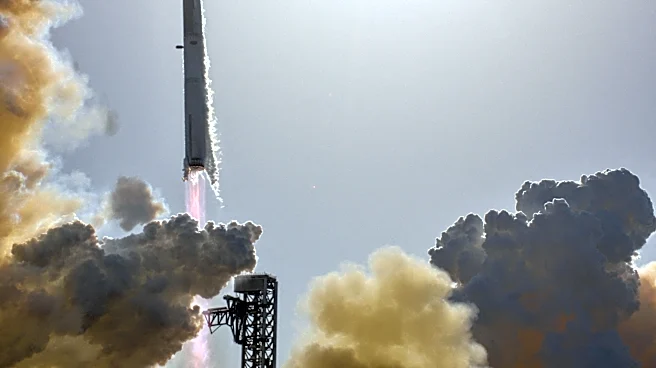
It won't be an entire Falcon 9 that will crash into the moon, but just the 45-foot upper stage designed to travel in orbit, also known as the second-stage. The first-stage (or lower-stage) that used nine Merlin-class engines to provide the initial burst of thrust at liftoff would have separated much earlier in the flight and returned to Earth for a controlled landing to be recovered, refurbished and reused by SpaceX for future launches.
While most Falcon 9 upper-stages eventually reenter Earth's atmosphere, this particularly one was so far away that appears to have instead gotten stuck in a sort of orbital limbo.
How are astronomers tracking the rocket?
The prediction comes from Bill Gray, an astronomer who writes the widely used Project Pluto software to track near-Earth objects like asteroids, comets and human-made spacecraft. Gray's analysis was based on ground observations from telescopes and surveys of the orbit of the object, which was been designated 2025-010D.
What mission did the Falcon 9 carry out?
The Falcon 9 on a path to crash into the moon is believed to be part of the same rocket that launched in January 2025 from the Kennedy Space Center in Florida carrying an uncrewed lunar lander. The Blue Ghost lander, developed by Texas-based spaceflight company Firefly Aerospace, made it to the surface in March, where it operated for a complete lunar day, equivalent to about 14 Earth days.
While the payload fairing that protected the lander before deployment reentered Earth’s atmosphere, the upper-stage of the Falcon 9 rocket kept orbiting the Earth without ever reentering and burning up, Gray wrote.
When, what time, will the Falcon 9 impact the moon?
The 8,800-pound Falcon 9 upper-stage is projected to crash into the moon at approximately 2:34 a.m. ET Wednesday, Aug. 5 near a feature known as the Einstein crater, according to Gray.
How fast will the rocket be traveling?
The object will be traveling at about 2.43 km a second, or 5,400 mph, when it strikes the moon, according to Gray's analysis.
Will the crash leave a crater?
Because the rocket is mostly hollow, it won't leave a crater as big as an asteroid would cause. But a study that Gray co-authored that has yet to be peer-reviewed suggests the impact could still create 66-to-98-foot-wide crater.
Will you be able to see the Falcon 9 rocket crash into the lunar surface?
Skywatchers may have a hard time observing the Falcon 9's upper-stage crash into the moon, even with Earth-based telescopes. That's because, as Gray explained, the impact will be incredibly faint for ground observations.
Astronomers plan to observe impact
While your backyard telescope won't be a lot of help in spotting the impact, professional astronomers have much more powerful equipment at their disposal to observe and crash. The impending impact, scientists say, offers a chance to analyze the crater and plume of dust stretching several miles above the surface.
Is the crash a threat to Earth?
The collision "doesn't present any danger to anyone" and won't significantly alter or damage the surface of the moon, Gray wrote on his website. But he added: "It does highlight a certain carelessness about how leftover space hardware (space junk) is disposed of."
Have spacecraft crashed into the moon before? Yes

Surprisingly, this is not the first time a spacecraft has crashed into the moon at such a high speed.
But when a NASA spacecraft collided into the moon in October 2009, it was on purpose.
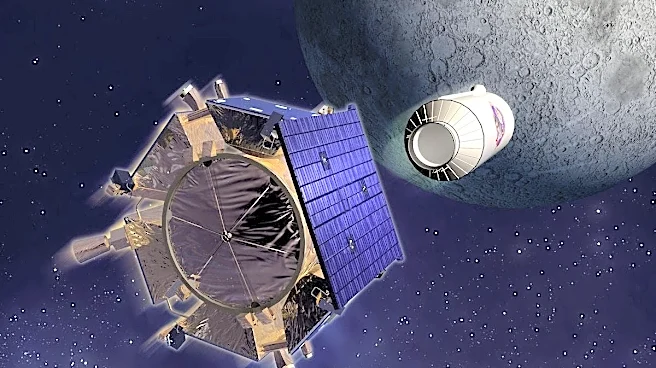
Twin impacts from NASA's Lunar Crater Observation and Sensing Satellite and its Centaur stage "exposed a plume of material that might not have seen direct sunlight for billions of years," the space agency explained. The purpose of the mission was to determine if water-ice was present in a permanently shadowed crater at the moon's south pole.
Eric Lagatta is the Space Connect reporter for the USA TODAY Network. Reach him at elagatta@usatodayco.com
This article originally appeared on USA TODAY: This SpaceX rocket is about to slam into the moon at 5,400 mph