






A deportation flight that was set to carry some 150 Afghans toward the Taliban on Nov. 3 – including some who served alongside the U.S. military or are relatives of those who did – will not leave this week, after a wave backlash from veterans, advocates and lawmakers and the intervention of a federal judge.
In an order issued on Nov. 3, U.S. District Judge Valerie Caproni wrote the government "has effectively represented that no Afghanistan nationals will be deported from the United States to Afghanistan or Pakistan this week," and barred it from doing so through Nov. 7.
Among those facing deportation is a man who fled Afghanistan after Taliban fighters detained him, beat him and threatened him for helping their enemies, according to court records.
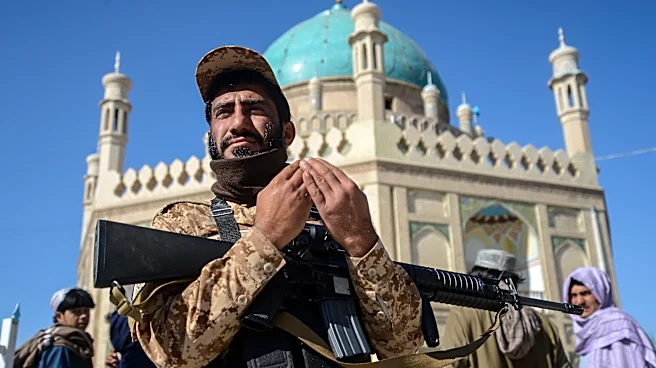
Attorneys and advocates said the would-be passengers also included women, LGBTQ+ people and members of religious and ethnic minorities, all of whom the hard-line Islamist group has persecuted since sweeping back into power as American troops withdrew in 2021.
The plane had been scheduled to lift off from Alexandria, Louisiana, around 7 p.m. on Election Day, bound for Pakistan, according to Shawn VanDiver, the president and founder of #AfghanEvac, a coalition that helps resettle Afghans who aided the U.S. war effort. From there, he said, the passengers would have been loaded onto buses, driven through the border gate and delivered to the Taliban’s intelligence service.
"It’s just really unprecedented and egregious," said Savi Arvey, director of policy for refugee and immigrant rights at Human Rights First.
Her organization, which tracks deportation flights, had never seen the United States try to deport so many Afghans at once, she said.

The flight, had it left, would have tested how far the administration will reach in its push for mass deportations, returning people, by way of a third country, to a government Washington does not recognize and warns its own citizens to avoid. In March, Secretary of State Marco Rubio designated Afghanistan as a state sponsor of wrongful detention, denouncing the Taliban’s "despicable tactics" of "kidnapping individuals for ransom or to seek policy concessions."
The State Department referred USA TODAY to comments Secretary of State Marco Rubio made at a Oct. 31 news conference, when he directed a reporter who had asked him about the flight to the Department of Homeland Security.
In a statement, the Department of Homeland Security said it "does not comment on prospective removal operations, including flight schedules, passenger manifests, destinations, or individual case details."
In the days before the flight, which was first reported by Bloomberg Law, the pressure built up. Veterans who had fought beside Afghan troops called their representatives. More than 900 people flooded officials with calls and letters, and 66 Democratic members of Congress urged the administration to ground the flight, warning the United States is bound not to return anyone to a country where they would face torture.
"That obligation does not disappear because a flight makes a stop along the way," the lawmakers wrote.
They also took aim at Pakistan, urging the administration to make clear that the United States would not accept Pakistan’s help in handing the Afghans to the Taliban, and reminding officials that U.S. law allows sanctions on foreign officials who aid serious human rights abuses.
"Our nation made a promise to stand by the Afghans who risked their lives and their family safety for us," Rep. Scott Peters, the California Democrat who led the letter, said at a news conference Nov. 3. "Sending them to the Taliban breaks that promise."
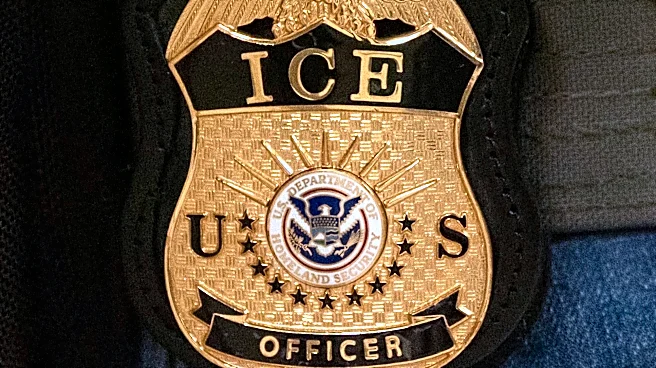
The Trump administration's reversal came in a Manhattan courtroom hours before the flight's scheduled departure, when a government lawyer relayed word from a senior U.S. Immigration and Customs Enforcement official that the agency had "no planned or confirmed chartered or commercial flights" for Afghans this week, and that such flights take weeks to arrange, according to court records. The government agreed to be held to that promise.
That account was at odds with the government’s own filings. Just last month, ICE officials and federal prosecutors told courts in Texas and Oklahoma that Afghan detainees had been scheduled for a flight departing the first week of November. An ICE supervisor in Virginia swore that its final destination would be Pakistan, with "further transport onward to Afghanistan."
Andrew Heinrich, a supervising attorney at Project Rousseau, the nonprofit legal group that brought the case, said there was "some confusion at the very least, if not discrepancy." The government is due to respond to the lawsuit on Nov. 5.
"Pressure got the plane grounded. The court makes sure it stays grounded," VanDiver said. "We made a promise to these families. Today we kept it for one more day. Our job is to keep it for good."
The reprieve may be brief, advocates fear. The plan to route Afghans through Pakistan has not been withdrawn, VanDiver said, and ICE has told some detainees the flight will now leave in a week or two.

Much about that plan remains in the dark. The government has not released details of the flight or the terms of its agreement with Pakistan, a country that has itself been fighting the Taliban government. In February, Pakistan’s defense minister declared "open war" after a round of cross-border attacks and airstrikes. The country has kept key crossings largely closed since, opening them mainly to expel Afghans.
Even the Taliban voiced unease about the flight. In a statement from Nov. 2, Afghanistan's Ministry of Foreign Affairs expressed "serious concern" about reports that the United States would send Afghans to Pakistan, where they have no legal status, and warned that third countries "should not bargain over the fate of another country’s nationals."
'They will kill me'
Among the Afghans facing deportation is a former university student. Within months of the Taliban sweeping back into power, the former student told an immigration judge, armed men came to his family’s home, accused him of helping their enemies and led him away.
For more than a week they beat him, until the bones in his foot broke, he testified. They released him only after his father promised to surrender him whenever they asked, and only after ordering him to spy on the village where he had grown up. USA TODAY reviewed his testimony in federal immigration documents and is withholding his name because he could face reprisals in Pakistan and Afghanistan.
Even after he fled, the Taliban kept coming back. They searched the family’s home, arrested his father and repeatedly asked where the son had gone, he said. When his mother and sisters were left alone, fighters warned them that women could not live without a man in the house.

So he returned, moved them into hiding in Kabul and slipped out of the country once more, carrying with him word from a relative that the Taliban were still going door to door in his village and asking about him. In December 2024, he crossed into the United States after spending months in Mexico waiting for an asylum appointment through the CBP One government app. While he waited, he testified, armed men kidnapped him and three friends, threatened to kill them and robbed them.
In July 2025, an immigration judge denied his asylum claim, pointing to gaps between his testimony and his parents' written statements and noting that his family had lived in Kabul without being harmed. He represented himself on appeal and submitted a document he said had been issued by Taliban officials, declaring him a traitor "under active pursuit and surveillance." The Board of Immigration Appeals declined to consider it.
"If I return," he had told the court, "they will kill me."
His story echoes through about 150 other people who had been slated for the flight, many of whom have final orders of removal, VanDiver said. Several were detained after routine ICE check-ins. Most made their way through the asylum system alone or found lawyers too late. Some had paid so-called immigration consultants who took advantage of them, he said.
"The tie that binds for everybody is that it is unsafe for them to go back," VanDiver said.
They are seeking refuge at a moment when it has rarely been harder to find. In September – the last month of available data – immigration judges denied 94.5% of the asylum cases they decided, the highest rate in nearly three decades, according to data from the Transactional Records Access Clearinghouse, a nonprofit data-gathering organization at Syracuse University. That month, only 800 people were granted asylum nationwide. The courts themselves have been remade along the way, with 279 immigration judges fired or resigning since fall 2024, according to TRAC.
Many of the Afghans facing deportation, Arvey said, "have potentially really strong asylum cases that have not been meaningfully heard."
What would wait for them across the border has been documented in grim detail. Last year, the U.N. Human Rights Office reported that Afghans forced home from Iran and Pakistan had been tortured, arbitrarily detained and threatened because of who they were or the work they had once done, with investigators recording beatings with cables and sticks, waterboarding and a mock execution. Afghanistan’s rulers denied the report's findings.
The killings have continued. In the first three months of this year alone, the U.N. mission in Afghanistan counted at least five slayings of former security forces members, among them a former commander who came home from Iran and was shot dead in his own house in January. In the months after the Taliban's takeover, Human Rights Watch documented the execution or disappearance of more than 100 former soldiers, police officers and intelligence agents.
'Shoulder to shoulder'
In Garrett Cathcart’s home in Atlanta, every rug was a gift from an Afghan. One came from a village his soldiers helped free from the Taliban, another from a warlord whose fighters battled alongside his troops and a third from a police chief who stood with him until the insurgents in that village surrendered.
Cathcart, a former Army captain, commanded a cavalry troop in Afghanistan from 2010 to 2011. Before heading into a fight, he and his Afghan partners would trade a phrase in Dari, "shana ba shana," meaning shoulder to shoulder.
"It was reassuring to both sides," he said. "Like, I got your back, man."
His interpreters were civilians, but they walked patrols beside his soldiers, translating Dari and Pashto and explaining which tribe was which and whom to trust. An Afghan engineer built his combat outposts, latrines and water tanks on little more than a handshake when government contracts moved too slowly.
"I could not have done my job without them," Cathcart said.

He spent nearly a year getting that engineer and his family out of Afghanistan and into the United States on a special immigrant visa, a program Congress created to offer refuge to Afghans who risked their lives for American forces. To Cathcart, it was a promise, both moral and legal. Now, watching Afghans facing deportation feels like watching it all come undone.
"The way we left Afghanistan was one thing," he said. "But now that we’re sending folks back that fought tooth and nail to get here, that’s another level."
#AfghanEvac is tracking at least one man slated for the Nov. 3 flight who served alongside American troops and about 15 others whose relatives did, though VanDiver cautioned that the number could change. In Afghanistan, he said, the loyalties of one family member can mark all the others.
"What your brother did or what your cousin did matters," VanDiver said.
Cathcart said he did not know who was aboard the flight or whether any of them had committed crimes. But he remembers what it took to earn the trust of people who had every reason to doubt him.
"I sat under Afghan starry skies next to a fire, drinking tea, convincing some of these Mujahideen fighters to fight alongside me, to trust me," he said. "And now I feel like I’m a liar."
The cost of the flight, Cathcart fears, will reach far beyond the people on it. The next time American troops need local allies, he said, those allies will remember what happened in Afghanistan.
"My biggest fear is that whatever war we’re in next someday, the American brand and our word has been tarnished," he said. "We’re going to say, 'Hey, trust me, we’re going to be together on this.' And they’re going to point to Afghanistan and say, 'But are we, though?'"
For VanDiver, who has spent years trying to bring America’s Afghan allies to safety, the obligation is simple.
“We want to take care of these people,” he said. “That should be the easiest thing in the world.”
This article originally appeared on USA TODAY: After outcry, US ground flight that would have sent Afghans to the Taliban