





NEW YORK – A week after a deadly building collapse in Brooklyn, residents remain in disbelief at the scale of the destruction as authorities piece together why an apartment building suddenly crumbled into a nearby construction site.
At the busy intersection of Flatbush and Bedford avenues, neighbors and tourists gawked at the collapse site through windows in a green construction fence on Nov. 17.
When the building collapsed at about 4 p.m. ET on Nov. 11, the adjacent building had its walls shorn off. Days later, entire apartments remain exposed to the street.
"This is surreal," said Natasa Grimes-Vinas, 56, who on the day of the collapse was getting off a bus when she heard a loud "boom" and saw a large dust cloud where the apartment building once
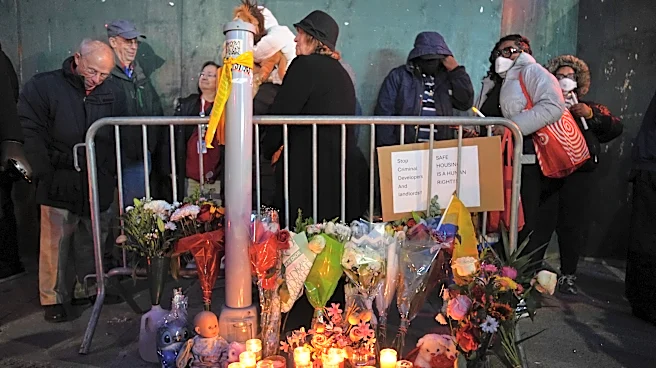
stood. Nearly a week later, she visited a makeshift memorial near the collapse site and said a prayer for the eight people killed in the tragedy.
"I still can’t believe this happened," she said.
The collapse occurred as crews were excavating an empty lot next to the now-crumbled building. The cause of the collapse remains under investigation.
Two children and six adults, including two construction workers, died in the collapse. Eighteen people − 14 civilians and four firefighters − were injured, officials say.
For many in the neighborhood, the tragedy represented the worst of their fears.
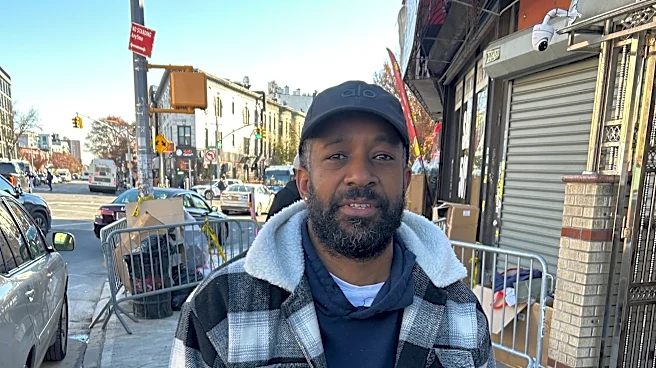
Steven Gobern, who lives a few blocks from the site, said he’s long had concerns about the rapid development in Flatbush, an immigrant community with one of the city’s largest West Indian populations.
Since the COVID-19 pandemic, Gobern and other neighbors said there’s been a surge of new construction, coinciding with rising rents and a changing landscape, as quaint brick homes are increasingly being replaced by sleek, glass buildings.
"It feels like every month there’s a new apartment building going up," he said. "This all needs to slow down."

City records show developers received approval to build a new three-story building where crews had begun digging into the earth. The collapsed building, which sat right next to the excavation site, was at least 96 years old and had almost 100 open violations, from unsafe electrical wiring to a bed bug infestation.
Engineering experts who spoke with USA TODAY said they had concerns about the city-approved excavation plans, the state of the neighboring building and how the construction project unfolded. The city defended its approval of the construction project, but said it is conducting additional reviews of the plans, as well as the collapse.
As the investigation plays out, residents said they’re worried about their own safety, citing maintenance issues in their apartment buildings, aging infrastructure and nearby construction projects.
More than a dozen neighbors said they’re heartbroken and angry about the tragedy, which many believe was preventable.
"I really hope somebody gets held accountable for this," said Nasha Murry, 53. "It’s devastating."
'It was like Ground Zero'

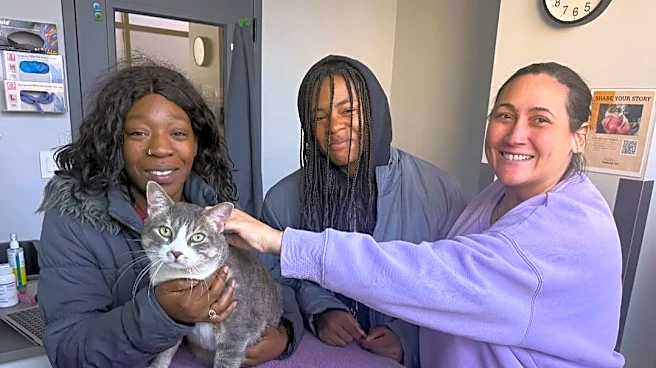
Murry, who was born and raised in Flatbush, said she was home when the building fell. She rushed outside and soon saw her neighborhood flooded with police and firefighters. Helicopters flew overhead and drones scoured the area with spotlights.
Murry said firefighters without masks could be seen on the rubble searching for victims in the mass of debris. She saw several people were carried away on stretchers and a pregnant woman pulled from the wreckage.
"I couldn’t believe what I was seeing," she told USA TODAY. "I’ll never forget that."
Gobern, who was taking his son home from basketball practice when the building fell, said "it was like Ground Zero."

The dead included two children, Nicole Daniela Sabala Rodríguez, 9, and her cousin Kevin Santiago Reyes González, 10. Nicole’s father, Juan Daniel Sabala Guzmán, 31, died with them.
Edgar Santiago Sapón Gutierrez, 26, a husband and father of a 6-year-old, died in the tragedy. He had left the highlands of Totonicapán, Guatemala, about three years ago to support his family.
Mamadou Bhoye Barry, 23, and Mamadou Bhoye N’Diaye, 31, who were cousins and roommates from Guinea, were killed in the tragedy. They lived with a married couple, including Fatoumata Binta Bah, who is six months pregnant and was pulled from the rubble. She was hospitalized but she and her baby survived, according to officials.

Gabriel Siguencia, 22, and Jose Luis Caguana Cosquillo were construction workers from Ecuador. Siguencia was working an overtime shift when the building fell. Cosquillo, an avid soccer player, leaves behind a 4-year-old son and a wife who was expecting another child.
At a memorial outside the collapsed building, neighbors said the victims reflected the area's diversity. They were immigrants who came to the U.S. in search of a better life and found refuge in this tight-knit community.
"I feel so bad," said Marguerite Joseph, 56, who settled in Flatbush with her family over 50 years ago after moving from Haiti. "This could have happened to anyone of us."
'Recipe for disaster'
While many questions about the collapse remain unanswered, public records paint a concerning picture: A vulnerable building owned by a controversial landlord sat next to a construction site that had twice violated directives from the city, public records show.
According to the New York City Department of Buildings, the owners of the excavation site purchased the land for $4 million in 2024. The city then approved their plans to demolish a single-story commercial building to make room for a three-story apartment building. In September, the owners sought approval for a nine-story building, but the city has yet to approve or reject the application, officials said.
Soon after demolition work began, the buildings department in March ordered the contractor to stop working because the site lacked protection for neighboring buildings, according to city records.

Despite the order, the contractor kept working and the buildings department cited them again the following month, according to city records. The order was lifted in May after a $10,000 fine.
Several experts who reviewed records of the excavation plans noted that it did not require additional bracing alongside the building that later collapsed, despite being required on other buildings on the perimeter of the excavation site.
It’s unclear why the project engineer who submitted the plans didn’t require additional protections. In a statement, the buildings department said the designs were compliant with city requirements and that "similar excavation designs have been safely performed at other work sites across the city for decades."
But engineering experts who reviewed the plans said they were shocked that reinforcements were not explicitly called for to stabilize the foundation of the nearly century-old building.
"This was a recipe for disaster," Abi Agheyere, a civil engineering professor at Drexel University who has studied structural failures for decades, told USA TODAY.
He noted a geotechnical report from November 2025 that said during excavation, the building "would need underpinning" – a process in which crews strengthen a building's foundation by extending it.

"If I had received these plans, I would have sent them back," Agheyere said.
The building that fell had 98 open violations stretching back to 1972. It also had documented cracks in its façade, which can indicate movement in the foundation – another reason the building should have required bracing before crews began to dig, Agheyere said.
Among the dozens of open violations, 21 were Class C or "immediately hazardous" violations for issues including peeling lead paint, a leaking roof and unsafe electrical wiring.
Olufemi Falade, the landlord of 1321 Flatbush Ave., was once jailed for over a week for violations at a different building, public records show. Falade also made the New York City Public Advocate’s "Worst Landlord Watchlist" six times in the last decade, most recently in 2024.
Falade did not respond to multiple requests for comment. Neither did Robert Fischman or Judy Swimer, who are tied to the limited liability company that owns the lot where construction was taking place. USA TODAY also reached out to Jieming Wang of LMW Engineering, the project engineer who drafted the excavation plans approved by the city.
Neighbors rush to donation centers
A week after the collapse, the pile of rubble remains largely untouched. Neighbors walked by the devastating scene on their way to work or school. Some stopped to take photos of the debris. Others stood for a moment before the many flowers, candles and letters arranged in a memorial outside the collapse site.

Across the street, volunteers at La Piscine De Bethesda, a Pentecostal church and nonprofit ministry, unpacked and organized piles of donations.
Since the tragedy, people have come from across the city with clothes, diapers and canned goods for those who’ve been displaced. The buildings department said on Nov. 17 that at least three buildings around the perimeter of the collapse were still under vacate orders.
Those who lost their homes are receiving cash assistance from the city; those displaced are being provided hotel rooms and housing, according to the mayor’s office. The Flatbush Development Corporation is providing neighbors with food, housing and other support.
On Nov. 17, Julian and Melrose Lowman drove from Queens Village to Flatbush with a trunk full of winter clothes and toiletries.
"This is horrible," Melrose Lowman, 63, a retired school nurse, said. "As soon as we heard about [the collapse], we knew we wanted to help."
Murry, who watched first responders scour the debris for survivors, said she donated pampers, clothes, wipes, soap and toothpaste.
"We need to stick together as a community, and these people need help," she said. "I pray everything works out for them. It’s about to be Thanksgiving."
A 'wake-up call'
Several neighbors said they view the tragedy as related to the ongoing gentrification of Flatbush, where they say new luxury apartments are going up at a staggering and concerning pace. The collapse, locals said, raised fears that their buildings could be next.
"It seems like they’re cutting corners to make the buildings be built faster," Murry said. "It’s OK to build buildings, but it feels like they’re not thinking about people’s safety."
The buildings department has not commented on any potential cause of the collapse. The agency says it is "committed to promoting safe and compliant construction."
A vacate order directive issued by the buildings department on the day of the collapse said it was due to "unsafe construction operations at the adjacent property, 2625 Bedford Avenue.” By the following afternoon, the department's website scrubbed that language.

The tragedy was the latest building collapse in New York in recent years. In 2023, a Manhattan parking garage collapsed, and an investigation blamed the unauthorized destruction of a load-bearing pier. The same year, a building partially collapsed in the Bronx and the city found an engineer failed to take necessary precautions. And in July, crews had to stabilize a high-rise building in Manhattan after its two support columns buckled, prompting evacuations.
Anthony Piderit, a structural engineer in New York City and past president of the Structural Engineers Association of New York, previously told USA TODAY that the city is unique in its number of old buildings in varying conditions. He said its building code is likely the strongest in the country, making the Brooklyn collapse "unacceptable."
City Council Member Farah Louis, who represents Flatbush, called for accountability at a news conference and told reporters, "Buildings do not simply collapse without systemic failures." She has since pushed for a temporary freeze on new development approvals and non-emergency construction across her district.
For some neighbors, the collapse was the last straw.
"Since this, I am really thinking about getting out of here," Murry said. "I feel like the city doesn’t care about the people who live here, and it’s just getting more and more expensive."

Christine Kirton, 72, who’s lived in Flatbush for decades, said she’s worried this won’t be the last building to crumble, especially in her neighborhood, which she described as a "city of holes" where construction crews are constantly digging.
"I hope this is a wake-up call," she said.
Contributing: Chris Quintana, María Luisa Paúl and N'dea Yancey-Bragg, USA TODAY
Christopher Cann is a national correspondent for USA TODAY based in New York City. Reach him by email at ccann@usatoday.com.
This article originally appeared on USA TODAY: Tragic NYC building collapse leaves neighbors searching for answers