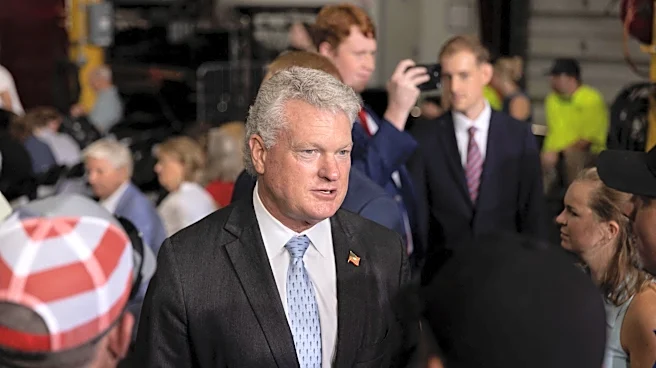








Representative Mike Collins is locked in a crucial race for a U.S. Senate seat in Georgia, and it won't be easy to win.
The Trump-backed candidate faces an uphill battle against incumbent Democratic Senator Jon Ossoff who leads early in polling and who has garnered national attention in recent weeks as a possible 2028 presidential candidate (despite Ossoff repeatedly saying he won't run).
Collins is also carrying a lot of political baggage. A recent CNN investigation found his son-in-law propped up white supremacist groups and spread anti-Semitic messages to a large online audience. Collins responded by saying "nobody speaks for me," but has yet to denounce the messages or speech used by his family member. His office has also been plagued by staffing
changes as Collins works with his third chief of staff following inappropriate online posts and staff connections to Holocaust deniers.
He is also at the center of a House ethics investigation, one that included a previous chief of staff, and that hasn't gone away now that he hopes to hop chambers from the House to the Senate.
Why is Collins under a House investigation?
In October 2025, the Office of Congressional Conduct transmitted a referral to the House Committee on Ethics over claims Collins may have used congressional resources for "unofficial or otherwise unauthorized purposes." One of Collins' staffers, Brandon Phillips, was also being investigated.
Collins was accused of retaining an employee who did no work for his office. The employee, a woman named Caroline Craze, was in a relationship with Phillips, Collins' Chief of Staff at the time. Collins and Phillips were accused of paying Craze with congressional funds and "dispensing special favors or privileges," both violations of the House rules and possibly a violation of federal law.
In a January report, the ethics board recommended the investigation continue "because there is substantial reason to believe that Rep. Collins used congressional resources" to pay Craze. The Committee on Ethics said it would "continue to gather information necessary to complete its review," but there has not been a public update to the investigation since.
Collins long stood by Phillips, denying the accusations and continuing to work with him on his Senate campaign. But the investigation into Phillips died when he was fired for posting a joke on social media making fun of a woman who tried to take her own life after accusing Matt Lauer of rape.
Collins issued a statement on the post, saying it was made without his knowledge or approval. He called it "despicable" and said it "in no way represents or reflects my values or the values of this campaign." He then apologized and said he has "made staffing changes to ensure this type of behavior never happens again," including firing Phillips.
No longer under the House's employment and jurisdiction, the investigation into Phillips closed.
Collins calls House investigation a 'nothing burger'
Collins has referred to the House investigation as a "nothing burger," and ultimately irrelevant to his candidacy for the Senate. In a primary debate in April, when questioned by then-opponent Buddy Carter about the investigation, Collins said it came from an "anonymous compliant that anyone can file." On other campaign stops, Collins said he trusts his team moving forward.
Derek Dooley, who faced Collins in the primary runoff also used the investigation in his campaign message. Dooley painted Collins as an untrustworthy steward of taxpayer dollars.
"This has been a bogus and politically motivated complaint since Day One, and we look forward to the committee that fully clearing Rep. Collins in short order," Collins' spokesperson Corbin Keown said in a recent statement to the Atlanta Journal-Constitution.
What happens to the investigation when Collins finishes his race?
If the House investigation is still ongoing come January, Collins' fate might be determined by whether he wins the Senate seat or not.
If Collins loses his race against Ossoff, he will no longer be a member of the House once the person who won his vacant seat is sworn in. At that point, the House investigation will simply be closed as Collins is no longer an active member.
If Collins wins the race for Senate, it's a little less clear on the next steps. Collins would no longer be a member of the House, and the OCC would lose jurisdiction, but he would still remain a member of Congress. It's unclear whether the investigation could take a different form or be completed.
Ethical violation investigations can also continue if it involves breaking federal law. Evidence compiled by the committee could be sent to the Department of Justice or left available for the agency to pursue criminal charges against the House member, no matter if they are still in office. The DOJ does have jurisdiction over former elected officials. Part of the accusations against Collins include misappropriation of federal funds, which could be investigated further by the DOJ.
While the OCC is unable to comment on ongoing investigations, USA TODAY reached out to the office to clarify the next steps of the investigation should Collins win the Senate seat. We did not receive a response.
Irene Wright covers politics in Georgia as the Atlanta Connect reporter with USA Today’s Deep South Connect team. Find her on X @IreneEWright or email her at ismith@usatodayco.com.
This article originally appeared on USA TODAY: Is Mike Collins still under House ethics investigation? Where he stands