





On Nov. 3, Election Day, Trump announced he had reached a deal to cut off aid to Israel by the end of the year.
By the following day — once the magnitude of Republican midterm losses became apparent — the question of how the U.S. relationship with Israel fit into Trump's "America First" promise and the price increases driven by the war with Iran was at the center of widespread GOP hand-wringing about where the party goes from here.
At the same time, the midterms ushered into Congress a slate of Democrats vocally critical of Israel, expanding their ranks in the Capitol.
What was once an area of bipartisan consensus, American support for Israel has gone through a sea change in the aftermath of the Hamas attack on Israel on Oct. 7, 2023, that killed
about 1,200 people and took 251 people hostage and Israel's response, which has left tens of thousands of people in Gaza dead.
The midterms provided perhaps the clearest sign yet of how far public and political opinion on the U.S.-Israel relationship has shifted on both sides of the aisle.
“It’s entering a new era and is still being defined,” said Joel Rubin, a former deputy assistant Secretary of State for Legislative Affairs in the Obama administration. “Historically, the relationship has had strong bipartisan backing for decades. But both parties are now reviewing their way forward, as is Israel itself.”
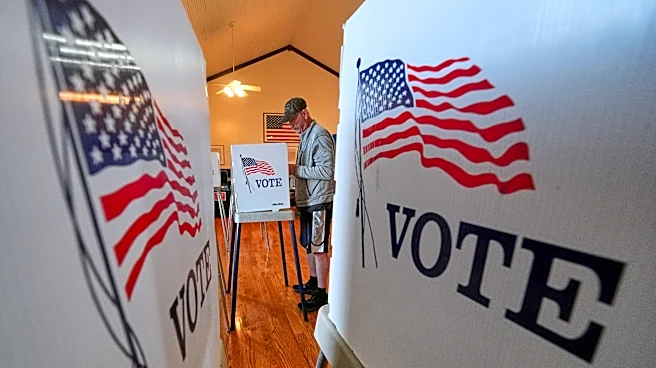
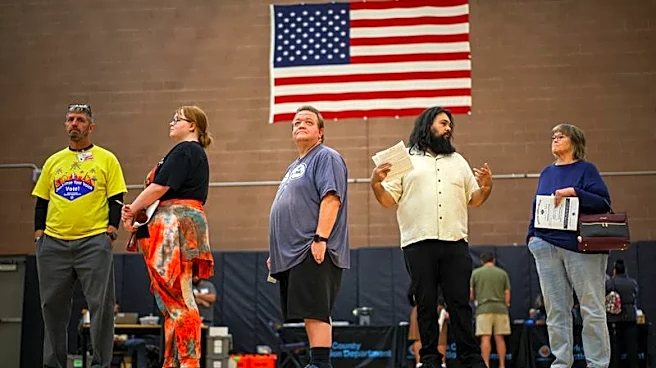
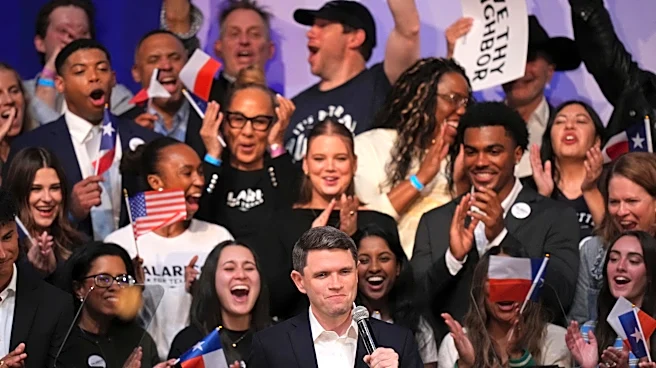
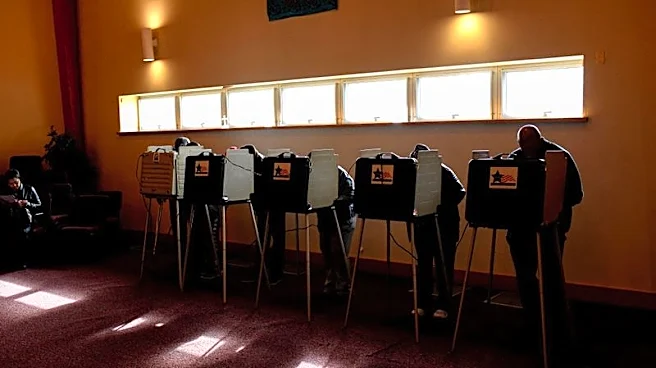
Trump, who for months asked voters to "pretend" he was on the ballot, heard loud and clear from them as Democrats swept Congress, ending a Republican trifecta. The scramble to understand what happened started almost immediately.
As the thrashing the GOP received became apparent, Trump said in an interview that "a part of it was Iran."
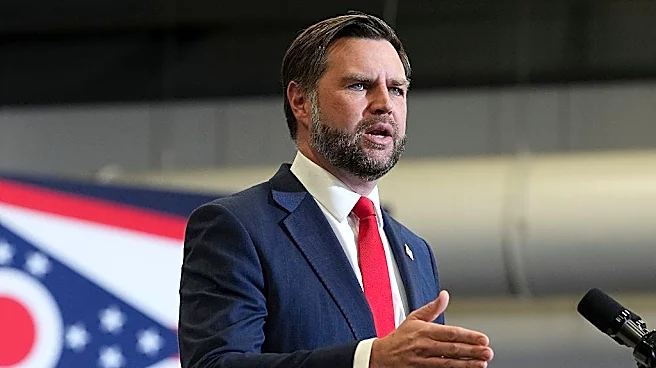
Vice President JD Vance, in a post on X, was blunt, writing: “The reason we lost is the war.”

Vance also wrote that a trusted pollster had asked Trump 2024 voters planning to vote Democratic in 2026 what would convince them to return to the Republican fold. The four answers, according to Vance, were ending the war, focusing on cost-of-living issues, putting "America First" and changing “our relationship to Israel.”
The war in Iran, which the U.S. and Israel launched in February, has upended global oil markets and contributed to a sharp increase in gas prices. Polls ahead of the midterms regularly found that economic and cost-of-living issues were the top voter concern.
But among a faction within Trump's Make America Great Again (MAGA) coalition, the skepticism toward Israel ran deeper.
For months, the MAGA brand of populists who adhere to the “America First” philosophy, such as former Rep. Marjorie Taylor Greene, former Trump White House strategist Steve Bannon and conservative commentator Tucker Carlson, had been loudly critical of the ongoing military and financial assistance to Israel.
Bannon, for instance, said a resumption of major combat operations in Iran would infuriate the anti-interventionist MAGA base and result in internal political fallout.
Greene said the GOP had “turned its back on America First and the workers.”
Trump, for his part, cast his Election Day announcement in a political light. He said in an interview on Nov. 3 that Israel is a thriving country and doesn't need the assistance, and described the aid as just a "bad talking point" that opens Republicans to "the slings from lunatics" like Sen.-elect Abdul El-Sayed, the progressive Democrat who was elected in Michigan.
The White House did not respond to questions about a potential change in relationship between the two countries, instead referring the reporter to comments from Trump and Vance.

It was not just the MAGA influencers that appear to have soured on U.S. aid to Israel.
A recent public opinion survey by the Chicago Council on Public Affairs found that 56% of Americans favored decreasing or stopping military aid to Israel (broken down by 72% of Democrats, 65% of Independents, and 30% of Republicans).
A YouGov and AJP (Americans for Justice in Palestine) Action poll in April found that 56% of MAGA supporters support conditions on aid to Israel and that when it comes to foreign aid generally, 70% believe the U.S. should prioritize domestic needs.
While Israel is the largest cumulative recipient of U.S. foreign aid since 1946, Ukraine currently is the largest yearly beneficiary, having received $6.75 billion in 2025.

Podcaster Joe Rogan, who has a largely young male audience, is credited with helping Trump reach those voters in the lead-up to the 2024 presidential election.
In the 2024 presidential election, young voters supported the Democratic presidential candidate Kamala Harris by a 4-point margin, a much smaller margin than the 25-point support young voters gave Joe Biden in 2020. Young white men drove most of that shift, with many who voted for Biden in 2020 voting Republican in 2024, according to an analysis by the Center for Information and Research on Civic Learning and Engagement at Tufts University. That group represented one of the biggest swings back toward Democrats in 2026.
Rogan has criticized the Iran war, accusing the Trump administration of breaking its "no more wars" campaign promise and suggesting that U.S. involvement is driven by Israeli interests and Prime Minister Benjamin Netanyahu.
William F.B. O'Reilly, a Republican strategist from New York, called this change in posture towards Israel “alarming” for both the U.S. and Israel.
“There is an unserious isolationist faction growing on the political right, led by Vice President Vance, that erroneously thinks America can stand alone in the world. It can't,” he said. “Israel may be able to stand on her own economically, but its future is undeniably tied to ours. These are frightening times on both shores.”
He said Vance's “less-than-subtle digs at Israel” can lead to greater attacks on that nation.
Democrats are struggling with their own rifts over Israel.
A New York Times/Siena poll found in May that three-quarters of Democratic voters opposed U.S. economic or military support for Israel.

That sentiment may be growing in Congress as well.
El-Sayed, an outspoken critic of U.S. military aid to Israel and other countries, who argued on the campaign trail that taxpayer dollars should be used to prioritize domestic needs like healthcare and education, was elected to the U.S. Senate from Michigan.
Israel emerged as a central issue in the Democratic primary between progressive El-Sayed and moderate Rep. Haley Stevens, and she pointed to his criticism of Israel in endorsing El-Sayed's GOP opponent days before the primary.
In New York, a trio of democratic socialist far-left candidates won their Democratic primaries this summer, ousting incumbents or besting candidates who were themselves progressive on many issues. The contests largely turned on support for Israel and all three nominees cruised to victory on Nov. 3.
Meanwhile, Democratic Sen. Jon Ossoff of Georgia, who was reelected, has adopted a balanced stance on U.S. military aid to Israel, supporting select defense systems while voting to block certain offensive weapons.

Those wins follow nearly half of House Democrats voting in July to cut off aid to Israel through an amendment to the State Department spending bill, signaling a lack of political support for a longtime ally. The measure did not pass due to lack of support from Republicans.
“Congressional Democrats, who overwhelmingly oppose the war with Iran and have deep concerns about the status of the Palestinian people, will enter the fray with real legislative powers,” Rubin said. “There’s a vibrant debate right now inside the Democratic Party over the future direction of the bilateral relationship, and both the pro-and anti-Israel wings won yesterday.”
As for the MAGA base, Rubin said, while they are upset about military adventurism abroad, including the Iran war and the Venezuela intervention, it was a pale second in impact on their voting decision, when compared to affordability issues.
Swapna Venugopal Ramaswamy is a White House correspondent for USA TODAY. You can follow her on X @SwapnaVenugopal
This article originally appeared on USA TODAY: Midterms might signal 'new era' for US-Israel relationship