



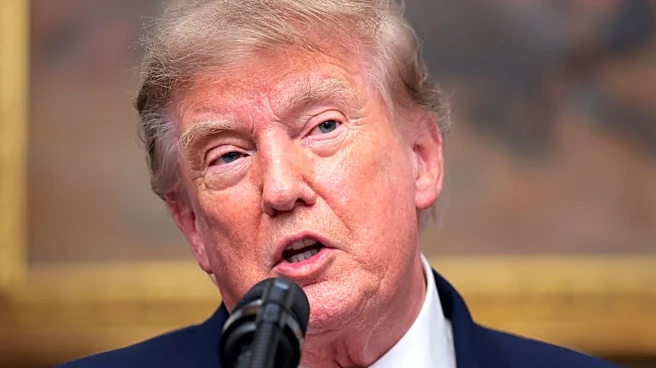
WASHINGTON – The Supreme Court said lower courts moved too soon when they partly paused President Donald Trump’s executive order cracking down on mail-in ballots before the midterm elections that will decide control of Congress.
The court on Aug. 24 agreed with Trump that parts of the policy were prematurely put on hold before the administration had finalized rules for how it would be implemented, lifting a lower court ruling that had blocked those provisions from moving forward for now in nearly half the states that challenged them.
But the most important part of the executive order – a new role for the U.S. Postal Service – remains on hold nationwide through a separate lower court ruling in a different case brought by voting rights groups.
And
the Supreme Court’s decision does not prevent the states from renewing their challenge to the new Postal Service role once the administration begins implementing the final rules.
That means it remains uncertain how much of Trump’s executive order will move forward in time for the rapidly approaching midterm elections.
In a divided opinion, the court said its decision "does not mean that any measure taken by the Government to implement the Order will necessarily be lawful."
"On that score, time will tell," the majority wrote in the unsigned opinion.
The court's three liberal justices dissented.
Justice Ketanji Brown Jackson said the decision “lets another shoe drop in the Kafkaesque nightmare that our precedents have been steadily creating for certain plaintiffs who seek to bring election-related challenges.”
“To be sure, the Court has not foreclosed States from challenging this blatantly unconstitutional Order,” Jackson wrote in her dissent. “But it declines to explain when, exactly, is the right time to bring a meritorious election-rule claim challenging unconstitutional interference with electoral processes.”
The order Trump signed in March directs agencies to compile a list of confirmed U.S. citizens eligible to vote in each state and to use federal data to help state election officials verify which voters are eligible.
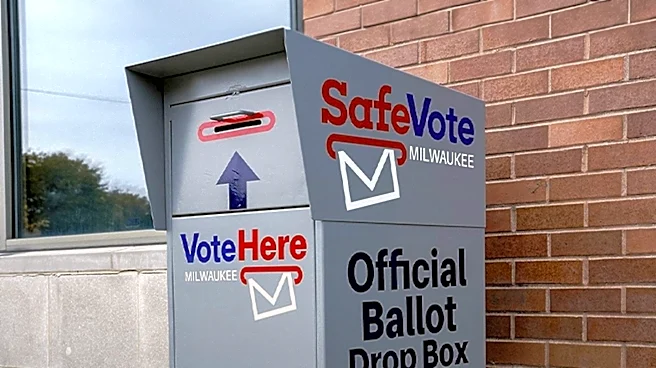
The Postal Service would then oversee mail-in voting, establishing "uniform standards" for the ballots and requiring states to provide lists of verified voters.
Trump's order partly blocked by lower courts
In June, a federal judge in Boston said parts of the order are unconstitutional. U.S. District Judge Indira Talwani ruled that those components can't be enforced this year in the 23 states, plus the District of Columbia, that sued over the order while the legal fight continues.
The administration argued the states’ lawsuit was premature because the executive order had not been fully implemented.
When an appeals court disagreed, the administration asked the Supreme Court to intervene.
As that request was pending, Talwani blocked the Postal Service from carrying out Trump's directive in any state in response to a separate legal challenge brought by voting rights groups. And the Postal Service finalized its proposal for implementing the order.
The Justice Department described the final rules as “modest requirements for preparation and envelope design” for mailed ballots that are well within the Postal Service’s traditional scope of setting mailing standards “for particularly sensitive types of mail.”
States do not have use the U.S. mail to conduct their elections, the Postal Service said. But for the states that do, the agency said it can take steps to “improve operational efficiency and support the faithful execution of federal law.”
A dozen Republican-led states backed the administration in a separate filing asking the Supreme Court to restore Trump's full executive order.
The blue and swing states challenging the order said allowing the changes to take effect before the midterms could result in millions of people being denied the right to vote because of the "high risk for errors and the limited window for correcting mistakes."
Voting rights groups have said the administration wants to “weaponize” the Postal Service to force states to violate voters’ privacy by getting access to the sensitive personal information that is in voter files.

Mailed ballots key fight before consequential elections
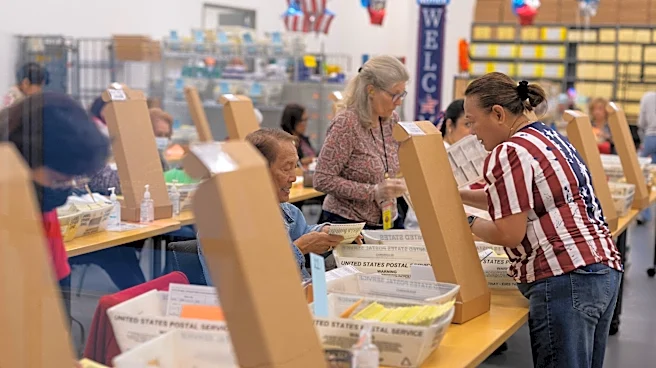
The fight over what rules govern absentee ballots could be crucial for the 2026 midterms, which will determine which party controls Congress. Democrats can take control by flipping a handful of seats in the House and Senate.
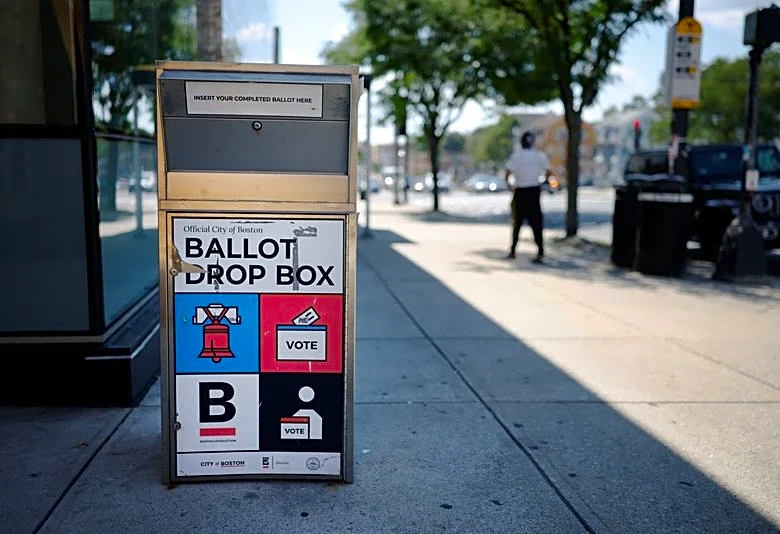
Voting by mail has decreased since its peak during the COVID-19 pandemic. But nearly 30% of voters still cast a ballot that way in the 2024 elections.
Democrats are more likely than Republicans to vote by mail, according to the MIT Election Data & Science Lab.
Under the Constitution, states are assigned the role of administering federal elections. But Trump has called for greater federal control of the process since losing his 2020 reelection campaign. He’s continued to falsely say he lost due to widespread voter fraud and has continued to vote by mail himself.
In July, the Boston-based 1st U.S. Circuit Court of Appeals said Trump's executive order is already straining states, which must prepare on a tight calendar for the changes. The appeals court also said the order “would sow confusion and threaten disenfranchisement of many eligible voters” if allowed to go into effect for the November elections.
In addition to his March executive order, Trump has proposed legislation to require voters to provide identification at polling places and proof of citizenship when registering as part of a broader bill, but it has stalled in Congress.
And judges have blocked another executive order that would have required potential voters to present documentation proving their citizenship in order to register to vote.
This article originally appeared on USA TODAY: Supreme Court gives Trump win in mail ballot dispute, but fight continues