





Tennessee's governor is allowing the controversial execution of the state's only female death row inmate to move forward this week, rejecting arguments that she should be spared because of an exceptionally traumatic childhood.
Gov. Bill Lee announced on Sept. 28 that he has upheld Christa Pike's death sentenceand does not plan to intervene in her execution by lethal injection, set for Sept. 30. Pike was sentenced to death for the brutal and prolonged 1995 murder of her romantic rival, 19-year-old Colleen Slemmer.
Lee issued a short statement about his decision and did not offer an explanation. While the Tennessee Attorney General's Office acknowledges that Pike had a childhood that involved repeated rapes, they have been arguing that her death
sentence is a just punishment for her crime.
Lee's decision comes after he considered arguments from both Pike's attorneys and more than 100 women's advocacy groups and sex abuse experts who implored him to commute her sentence to life in prison. They argued that Pike is so traumatized by repeated rapes throughout her girlhood, that the process of being executed by lethal injection will make her feel like she's being raped all over again. And that, they say, amounts to cruel and unusual punishment in violation of the U.S. Constitution.
"She will relive the sounds, the smells, and the pain," wrote a dozen women's advocacy organizations in what's known as a friend-of-the court brief filed in the Tennessee Supreme Court on Sept. 10 and in the U.S. Supreme Court on Sept. 26. "She will feel it now as she did then. And it will be as horrific for her now as it was then."
The Tennessee Supreme Court rejected those arguments, as did a court-appointed special master. That means Pike's last hope for a reprieve lies with the Supreme Court.
If the nation's highest courts declines to intervene, Pike will become the first woman executed in Tennessee in more than 200 years on Wednesday.
Here's what else you need to know about the case, including how Colleen Slemmer's mother feels more than 30 years after her daughter's murder.
What did Christa Pike do?
On Jan. 12, 1995, 18-year-old Pike, her boyfriend, and another young woman lured Slemmer to the woods in Knoxville. Pike and her boyfriend, then-17-year-old Tadaryl Shipp, tortured and murdered Slemmer in a crime that made international headlines both for its brutality and because of Pike's gender and youth.
"Armed with a box cutter and meat cleaver, Pike and two accomplices lured Slemmer to an isolated area. There, Pike kneed Slemmer’s head, threw her to the ground, and repeatedly kicked her," the Tennessee Attorney General's Office wrote in court documents. "When Slemmer tried to flee, Pike sliced her stomach with the box cutter. ... As Slemmer begged for her life, Pike repeatedly kicked her in the face. Pike then cut Slemmer’s throat as she begged for mercy."
After Slemmer made one final attempt to escape, Pike smashed the back of her head with a rock, they wrote. Shipp also carved a pentagram into Slemmer's chest, and Pike later showed off a piece of Slemmer's skull to a friend.
Pike was sentenced to death and Shipp got a life sentence because at 17, he wasn't eligible for the death penalty.
For Slemmer's mother, May Martinez, Pike's execution more than 30 years after her daughter's murder represents long-awaited justice.

"I just want Christa down so I can end it, relieve my daughter, so she finally can be resting," Martinez told WBIR-TV in 2021. "There's not a day goes by that I don't think about Colleen or how she died and how rough it was."
Martinez recently told WBIR-TV that she plans to attend Pike's execution this week.
"I'll hold Colleen's picture up to remind her of what she did," Martinez told the station. "She never apologized − never even tried − or her family."
She said she remembers her daughter as a playful and compassionate young woman who loved roller skating, computers, and playing old games with her family. She laments that her daughter has been so overshadowed by Pike over the years.
"It's never about the victims," she said. "It's like Colleen was never there."
Too traumatized to execute?
Court records show that Pike became a rape victim before she was even in preschool. Her grandmother's boyfriend targeted her for years, sexually assaulting her until she was in kindergarten, according to court documents obtained by USA TODAY.
At the age of 11, a neighbor raped Pike in an attack that caused an infection and preceded a suicide attempt at the age of 12. And at 17, a stranger attacked Pike while she was out walking, forced her into the woods, and raped her, court records say.
Pike's execution is certain to take her back to that trauma, the women's advocacy organizations wrote in the friend-of-the-court brief. The experience, which involves being strapped down, is likely to be so visceral to Pike, that it will be unconstitutionally cruel, they argue.
"There is a substantial risk she will feel and believe that she is being raped to death," argue the groups, which include the Coalition Against Trafficking in Women, Rights4Girls and Survivors Justice Project.
The groups, joined by dozens more sex assault experts and women's advocates, also appealed directly to Lee and urged him to commute Pike's sentence to life in prison.
"It is not just that she was a toddler when she was sexually abused for the first time, or that she was raped by three more men before her 18th birthday," they wrote in a letter to Lee on Sept. 10. "It is that Christa was forced to cope with her sexual abuse and rape virtually alone, without any of the victim support services that we know are so vital to recovery."

During a recent three-day hearing in a Knoxville courtroom, prosecutors said they would try to keep men away from Pike during the two-week period known as death watch, when guards closely monitor inmates in part to prevent them from dying by suicide.
David Wickenheiser, an assistant attorney general, quoted from a psychologist's report at the hearing that though "Christa will always carry that history of trauma with her ... she now has the tools and emotions to deal with life stressors."
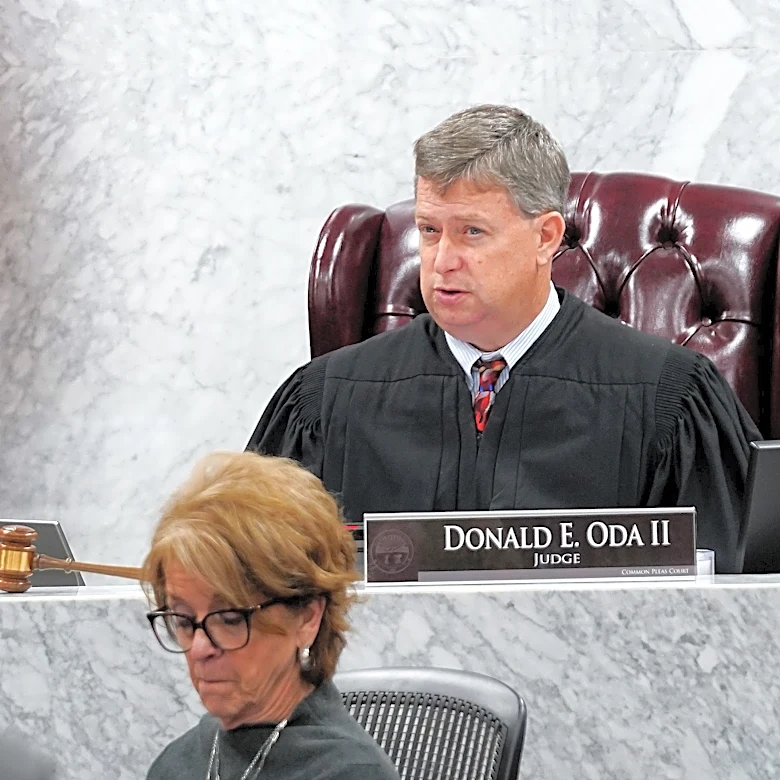
Senior Judge Mark Ward, the special master appointed by the Tennessee Supreme Court who presided over the hearing, concluded that the Tennessee Department of Corrections has "minimized the potential" for Pike to experience significant triggering and that mental suffering alone is not enough to violate the Constitution's protections against cruel and unusual punishment.
Pike's attorneys requested a stay of execution in the Supreme Court on Sept. 25, arguing that it is an open question whether mental suffering during an execution can be considered a constitutional violation.
"This case presents uniquely compelling circumstances where this Court is likely to consider such an important constitutional question," they wrote. "While the public may have an interest in seeing judgments carried out, it also has an interest that its citizens not be tortured to death in the name of the people."
In its response filed in the Supreme Court on Sept. 28, Tennessee said that Pike was attempting to "gin up a circuit split on whether mental suffering and psychological terror are cognizable in a method of execution challenge under the Eighth Amendment."
"Pike’s prior abuse and mental struggles are tragic to say the least," the state wrote. "But they are no cause to insulate her from a lawfully imposed and exhaustively reviewed death sentence that a jury of her peers imposed purely because of her own horrific conduct."
Christa Pike's other arguments for a reprieve
Pike's attorneys didn't pin all their hopes on the arguments about her past trauma. They also argue that a lethal injection would be unconstitutionally painful for Pike because of her unusually small veins and a condition known as thrombocytosis.
Further, they say that at 18 years old when she killed Slemmer, Pike was "more impulsive and emotional, more susceptible to peer pressure, and less able to make rational decisions." They point out that it's unusual for Tennessee to execute anyone who was so young when they committed murder.
Of more they 200 people sentenced to death in Tennessee in the last 50 years, they say only seven others were 18 at the time of their crimes. All of their death sentences have since been vacated, they say.
As for Pike, she now takes mood-stabilizing medications for her bipolar and PTSD, goes to therapy, and has found an outlet both in painting and in "helping new women to the prison," her attorneys said in a clemency petition.
"After years of psychotherapy and medications to treat her mental illness, Christa is thoughtful, even-tempered, bright, funny, and hopeful," they said.
Though Slemmer's mother says she's never gotten a personal apology about her daughter's murder, Pike expressed remorse in her clemency petition.
"Think back to the worst mistake you made as a reckless teenager. Well, mine happened to be huge, unforgettable and ruined countless lives," she wrote. "I was a mentally ill 18-year-old kid. ... I took the life of someone’s child, sister, friend. It sickens me now to think I had the ability to commit such a crime."

Amanda Lee Myers is a senior crime and courts reporter who covers the death penalty, cold cases and breaking news for USA TODAY. Follow her on X at @amandaleeusat.
This article originally appeared on USA TODAY: Christa Pike one day closer to execution after governor denies reprieve