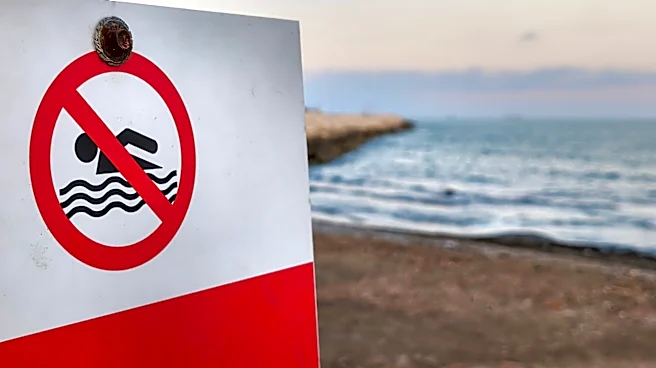









Public health advisories have been issued for three Oregon beaches due to unsafe levels of fecal bacteria.
Oregon Health Authority issued a public health advisory for unsafe levels of enterococcus, or fecal bacteria, at Oceanside Beach in Tillamook County on Sept. 2. The same advisory was issued for Siletz Bay in Lincoln County and Mill Beach in Curry County on Sept. 3.
At each of the beaches, visitors should not swim, surf, dive or kayak − activities where they may swallow water. They should also avoid wading in nearby creeks, pools of water on the beach or in discolored water, the Oregon Health Authority website states. Levels of fecal bacteria tend to be higher in these types of water sources, according to Oregon Health Authority. Pets should also be kept
out of the water.
The water at these beaches will be retested and once levels are safe, the advisories will be lifted, Oregon Health Authority told USA TODAY on Sept. 4.
Advisory signs are placed at these beaches for visitors. The organization will also update information on its website and social media channels. For the most up-to-date information, visit the Oregon Beach Monitoring Program website. Visitors can also call 971-673-0482 or 877-290-6767.
What can swimming in water with fecal bacteria do?
Unsafe levels of fecal bacteria can cause diarrhea, stomach cramps, skin rashes, upper respiratory infections and other illnesses, according to Oregon Health Authority. Children, elderly and people with compromised immune systems should use extra caution, as they are more vulnerable to illness from waterborne bacteria.
Why is there fecal bacteria in the water?
Oregon Health Authority, as of Sept. 4, had not indicated a source for the fecal bacteria. However, this type of bacteria can come from stormwater runoff, sewer overflows, failing septic systems and animal waste from livestock, pets and wildlife, the organization's website outlines.
Are the beaches still open?
Yes, as of Sept. 4, Oceanside Beach, Siletz Bay and Mill Beach remain open.
How are Oregon beaches sampled?
Oregon Health Authority conducts beach sampling between mid-May and mid-September, according to the organization's website. The state's beaches are divided, by location, into three week periods. The organization starts with the first swath of beaches for week one, moves to the second and third, then repeats this cycle until the sampling season is over.
Oceanside Beach is tested in the first-week period. Siletz Bay is tested in the second-week period and Mill Beach is tested in the third-week period, according to the organization's website.
Greta Cross is a national trending reporter at USA TODAY. Story idea? Email her at gcross@usatoday.com.
This article originally appeared on USA TODAY: 'Unsafe levels' of fecal bacteria found at 3 beaches in this state