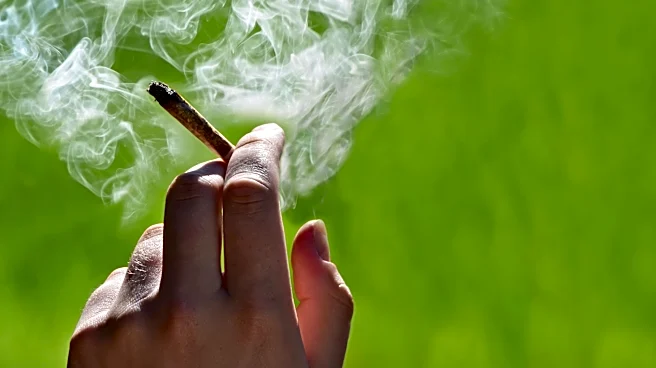









Even occasional marijuana use may be associated with a higher risk of stroke, according to a new study involving nearly 443,000 U.S. adults.
Researchers at Tulane University School of Medicine, led by assistant professor of cardiothoracic surgery Aabha Divya, found that people who reported using cannabis just one to five days per month had 40% higher odds of reporting a previous stroke than those who reported no recent use. Those who used cannabis more frequently, between 16 and 30 days per month, had 25% higher odds.
Researchers also found that both occasional and frequent cannabis users had higher odds of reporting a history of cardiovascular disease; however, the findings did not show a significant connection between cannabis use and heart
attacks.
The study's findings will be presented at the American Heart Association's Scientific Sessions 2026 in Chicago Nov. 6-9. Researchers say the results highlight the importance of discussing cannabis use with health care professionals when evaluating a person's risk of heart disease and stroke.

Marijuana use associated with higher stroke risk
Researchers analyzed survey responses from 442,906 U.S. adults who participated in the Centers for Disease Control and Prevention's Behavioral Risk Factor Surveillance System between 2020 and 2024.
Participants were asked how many days they had used cannabis during the previous month. They also reported whether a doctor had ever told them they had experienced a heart attack or stroke or been diagnosed with coronary heart disease.
Compared with people who reported no recent cannabis use, researchers found:
- People who used cannabis one to five days per month had 23% higher odds of reporting a history of cardiovascular disease.
- Those who used cannabis six to 15 days per month were classified as moderate users.
- People who used cannabis 16 to 30 days per month had 21% higher odds of reporting a history of cardiovascular disease.
The strongest associations involved stroke. Occasional users had 40% higher odds of reporting a previous stroke, compared with 25% higher odds among heavy users.
Researchers did not find a statistically significant relationship between how frequently participants used cannabis and their likelihood of reporting a previous heart attack.
"We were surprised to find that the link between cannabis use and cardiovascular disease was not straightforward," Divya said in an American Heart Association news release.
Researchers had expected cardiovascular risks to increase as cannabis use became more frequent. Instead, both occasional and heavy users showed higher odds of cardiovascular disease.
Does how people consume marijuana affect heart health?
Researchers found that the link between cannabis use and cardiovascular disease was similar whether participants smoked, vaped or consumed cannabis in edibles.
The findings come as marijuana use has become more common in the United States. Previous research cited by the study's authors found that one in six U.S. adults reported using cannabis within the previous month in 2024, compared with one in 10 in 2020. That represents a 51% increase over four years.
Robert L. Page II, a professor at the University of Colorado and an American Heart Association volunteer expert who was not involved in the research, said cannabis use should be considered when evaluating cardiovascular health.
He said healthcare professionals should discuss cannabis use with patients just as they do tobacco use when assessing the risk of heart disease.
What are the limitations of the marijuana study?
The findings do not prove that marijuana use causes strokes or other cardiovascular conditions.
The study found that people who used cannabis were more likely to report having had a stroke or other heart condition. However, researchers cannot say whether marijuana use caused these health problems or whether other factors contributed to them.
Researchers also relied on participants to remember and accurately report their cannabis use and medical histories. The survey did not collect information about the strength of the cannabis products, including their THC content, or how much participants consumed.
Additionally, the analysis included only states that collected information about individuals' cannabis use through optional survey questions. The researchers also noted that some people who had previously used cannabis may have stopped after receiving a cardiovascular diagnosis.
Reporter Anthony Thompson can be reached at ajthompson@usatodayco.com or on X @athompsonUSAT
This article originally appeared on USA TODAY: Occasional marijuana use linked to higher stroke risk, study finds