





CURITIBA, Brazil – Luis Armando Medina managed to hold it together through the long, wordless drive to Havana’s José Martí International airport with his parents.
At the terminal, his mom pulled him aside and handed him a small, worn picture of La Virgen de la Caridad del Cobre, Cuba’s patron saint. It was the same wallet-sized image she had given Luis Armando, 17, before baseball games for luck.
Tears welled in his eyes. And when he turned to his father, he found Luisito Medina crying behind dark sunglasses. His father had spent countless hours since he was a boy driving him to baseball games, tossing batting practice and talking baseball over pirated DVDs – but this was the first time he’d seen his father cry.
“Proud of you, son,” his father
stammered.
They didn’t want to say goodbye to their only son.
Click below to watch a video of Luis Armando's life in Brazil
But Cuba had been under threat since the United States took over Venezuela in January and President Donald Trump promised Cuba was next. Sanctions and an oil embargo crippledthe island’s power grid, and Cuba ramped up military demonstrations. U.S. and Cuban diplomats nearly came to blows on the floor of the United Nations. And U.S. attacks on Iran came with a warning that military strikes were possible – if not imminent– against the island.
Luis Armando would soon be of age for his mandatory Cuban military service. If drafted, he would be conscripted to live on bases that could be targeted by U.S. bombs.
His parents decided the only way to keep their son safe was to get him off the island.
Under the pretense of visiting relatives, his family lined up a visa to get him out of Cuba and to Brazil, where laws made it easier to claim asylum. It is also the home of a lesser-known amateur baseball league, where their son could cling to his dream of playing professional ball. His half-sister and her boyfriend would go with him.
Luis Armando smoothed out a worn corner of the Caridad photo and slid it into the pocket of his jeans.
He turned down the walkway toward his flight to Guyana – the first stop in a treacherous hike across two countries, through rainforest and rivers under the shadow of a smuggler – with a rolling suitcase and a Mizuno baseball bag crammed with a bat, balls, cleats and two baseball cards of his favorite player, Houston Astros infielder Jose Altuve.
He gave his parents a feeble thumbs up, and vanished down the hallway.

From baseball island to soccer country
Luis Armando awoke without an alarm at 7:45 a.m. in a grimy, two-bedroom apartment he shared with his sister and her boyfriend in the bustling Brazilian city of Curitiba, about 265 miles south of São Paulo. His feet hung off the end of the bed. Outside, motorcycles sped between cars in traffic, and queen palms and araucaria trees lined boulevards, reminders of the high-altitude pine forest from which the city was carved in the 17th century.
Six months since arriving, he was still getting used to this life.
The two Altuve cards, two baseballs and a folded jersey from his old baseball club in Cuba sat atop the dresser.Luis Armando dressed, slathered mayonnaise on melba toast and downed four hard-boiled eggs he heated on a small gas range fueled by a propane tank.
As he sat for breakfast at their shaky white plastic table, Luis Armando quickly swiped past alarming Cuban news items on Instagram on his Motorola smartphone. He stopped on “Tu Pelota Hispana,” a Latino baseball influencer who, on this day, analyzed Tampa Bay Rays pitcher Freddy Peralta’s pitching style.
The specter of a U.S. military takeover of Cuba hung over the Medina family like a contagion.
Many Cubans saw their own country’s future in the early-morning raid on Jan. 3 in Caracas, where U.S. special forces snatched then-Venezuelan president Nicolás Maduro and his wife, Cilia Flores. When President Donald Trump followed with an oil blockade and a promise that “Cuba is next,” they believed him.
On the table was a thin, blue notebook filled with page after page of Spanish-Portuguese translations in Luis Armando’s handwriting: ¿Como te va?/Como vai você? Hasta mañana/Até amanhã.

He’d been trying to assimilate. The language is similar to Spanish so he was picking it up swiftly. But there were daily reminders that he was in a foreign country: Visitors clap outside the front door rather than knock; Brazilians put black beans in their pasta (blasphemy in Cuban cuisine); his neighbors were nice but distant.
Mostly, he missed his parents.
Since being in Brazil, he’d taught himself to cook, wash dishes, help with the laundry – adult milestones he couldn’t share with his dad.
“He’s my best friend,” Luis Armando said.
After breakfast, he took the Number 20 bus two miles to the SmartFit gym and worked out his chest, triceps and shoulders. He hopped on and off a foam box 20 times to make himself quicker at sprinting after grounders.In three days, there would be a baseball tournament in Ibiúna, on the outskirts of São Paulo. There might be agents there. There might be scouts. He needed to be ready.
“To reach the Majors, that’s always been my dream,” he said, panting between sets. “But not just get there – I want to get there, stay and succeed.”

After his workout, Luis Armando wandered over to the Palladium Shopping Center: three levels and 120,000 square feet of shiny, fragrant, air-conditioned stores selling everything from $49 Vans to $1,200 Brooks Brothers suits – things he'd only seen in movies.
The first time he entered the Palladium, “I couldn’t believe it,” he said. “It was like a dream.”
He walked into a store specializing in sports jerseys. There were kits from Brazil’s myriad professional soccer clubs – São Paulo FC, SE Palmeiras, Club Atletico Paranaense – and even a few NFL and NBA jerseys. In his broken Portuguese, he asked the store clerk whether they had anything baseball related.
The clerk smiled and shook his head. They were deep in soccer country.

Just then, Luis Armando’s phone buzzed. It was his dad, calling from Havana on WhatsApp.
Luis Armando rushed to a quiet table in the nearby food court and answered the phone. It was the first of three calls he would receive from his dad that day.
“Hola papi,” he said. “¿Todo bien?”
‘The most difficult situation’
Four thousand miles away in Havana’s El Cerro neighborhood, Luisito Medina ran a finger over the baseball cards displayed on Luis Armando’s bedroom wall: Jackie Robinson, Ken Griffey Jr., Chico Cárdenas, Mickey Mantle, Mike Trout.
Baseball caps from a variety of teams (L.A. Dodgers, New York Yankees, Havana's Industriales) hung from a hook, and a tiny bat Luis Armando used in youth league was propped against the wall. The Cerro team jersey he wore as a boy hung on a wall.
The room was virtually untouched since Luis Armando fled to Brazil. Luisito Medina made sure it stayed that way.
“This is the most difficult situation I have ever had to face,” he said. “We had never been apart from each other for any reason ... God willing, we will be together again as a family.”
Luis Armando first held a bat at 4 and by 6 he was playing on teams in Old Havana, where his family lived at the time. His dad had steered him toward baseball, but Luis Armando took to it feverishly.
When he got home from his job as a contract driver in Havana, Luisito Medina hit grounders to his son at a nearby park and had him hit a crate of balls against a net, tweaking his swing. When Luisito was busy with a fare, Luis Armando’s mother threw batting practice to him.
Chauffeuring foreigners had its benefits. One of his clients gave him a Showoff brand glove for Luis Armando. He’s used it ever since.
When Luis Armando was 11, the family moved to El Cerro neighborhood, to be closer to Ciudad Deportiva, a sprawling ‘50s-era complex of baseball fields, indoor basketball courts and weightlifting gyms where Luis Armando could train.
When his playing time went down, Luisito Medina moved his son to the provincial Artemisa team, about an hour southwest of Havana. That meant daily one-hour drives each way for practices and games on the weekend. Often, Luisito had to choose between driving a client or his son.
“Either I was working or I was taking him to a game or I was training him,” the father remembered. “I needed to do all things at once.”

In the evenings after dinner, Luisito and Luis Armando watched pirated DVDs of well-known Cuban baseball players such as Germán Mesa, Alexei Ramírez and Kendry Morales, studying how they ran down grounders, turned double plays or turned their hips at the plate.
Like many Cuban players, Luis Armando saw baseball as a passion and a way to lift his family out of Cuba’s deteriorating state. But the game offered more than a potential paycheck: It delivered a peace and transcendence unfelt in any other part of his life.
“It’s as if that part of my world suddenly fills with color,” he said. “All the outside noise fades away … I feel truly alive on a baseball field.”
Last year, Luis Armando earned a starting spot on Artemisa, one of Cuba’s best teams. On Nov. 21, Artemisa traveled to to play against Havana's team at Chango Mederos stadium, blocks from his home. Family and friends piled into the stands to watch him play.
In the top of the second inning, Luis Armando launched a two-run blast 350 feet, over the left field wall, and into the busy Via Blanca beyond the stadium grounds.
“That ball still hasn’t landed,” Luisito Medina beamed.
By December, government baseball officials had clocked the budding star as a contender for the Cuban national team, the ultimate prize: to be recognized on an international stage.
A month later, Trump ordered Maduro snatched from Venezuela. A reported 32 Cuban soldiers and security officers were killed in the raid.
Meanwhile in El Cerro, Luisito’s neighborhood was in the grips of daily power outages. Luisito installed a gas-powered generator on his third-floor balcony to plug in fans and appliances when the power blinks out. He lowers an extension cord to neighbors so they can charge their phones.
“My small contribution to the neighborhood,” he said.
As he sat on the balcony looking out at the city, Luisito’s phone buzzed: Luis Armando’s face appeared on WhatsApp, calling from Brazil. Their 25-minute conversation was 10% niceties (“Did you have breakfast?” “Are you eating enough?”) and 90% baseball. They chatted about the Yankees bringing up a new shortstop and Luis Armando’s recent practice, where he roped a liner into left field using a new bat.
Luis Armando told his dad the team had signed another Cuban player, Ernesto Cruz, a 23-year-old pitcher who slings 80-plus-mph sliders.
“Stick with him,” his father told him. “Have him pitch to you. Learn how to hit that slider.”

The two chatted for a few more minutes then it was time for lunch.
“Dale,” Luisito told his son, using Cuban farewell, “un besote.”
He added a final sentiment that revealed a closeness and affection not always expressed between Cuban fathers and sons: We love you.
‘A friendly takeover of Cuba’
Brazil was never their first choice.
Luisito worried for his son as the rhetoric between Washington and Havana ramped up. By the end of January, the United States had cut off all oil deliveries to the island, and on Feb. 27 Trump told reporters, “We could very well end up having a friendly takeover of Cuba.”
His son would be graduating in April and would be required to serve up to 14 months in the Cuban military.
“All these things get in your head,” Luisito said. “We couldn’t just let him go.”
On Feb. 28, the Pentagon launched large-scale military strikes against Iran. Meanwhile, Cuban officials took to the airwaves, urging Cubans to prepare for a U.S. invasion .Cuba’s military released video of university students pointing automatic rifles, and Cuban President Miguel Díaz-Canel vowed U.S. military action would be met with “impregnable resistance.”
By the end of February, the family had made up its mind: They needed to get Luis Armando out of the country, even if it meant derailing his baseball dreams.

The obvious choice was the Dominican Republic, where they spoke the language and Luis Armando had the best chance of playing at a high level. But getting a visa there could take more than a year, Luisito was told. So would visas to Panama or Mexico, Spanish-speaking countries with strong baseball traditions.
Luisito turned to an option thousands of other Cubans were taking: Guyana.
The small, English-speaking South American coastal country of 840,000 people was one of the few places Cubans could fly into without a visa. Thousands of Cubans were fleeing to Guyana or making the overland crossing into Brazil.
Luisito had a relative living in Curitiba, Brazil, so they decided Luis Armando would go there.
Luis Armando, his half-sister, Daniella López, 21, and her boyfriend, Leandro Gutiérrez, were told not to reveal their plans to anyone. If the Cuban government knew they didn’t intend to return, there could be consequences.
Defectors from the communist island traditionally risked reprisals against family members who stayed behind, more so for cherished baseball players. When pitcher Liván Hernández fled the national team in Mexico in 1995, his half-brother, pitcher Orlando “El Duque” Hernández, was banned from Cuban baseball and later fled on a fishing boat, eventually reaching the United States. Both brothers went on to win World Series championships.
In recent years, however, Cuba has softened its stance and even allowed some defectors, such as Luis Robert, Jr., to play on the Cuban national team.
The Medinas weren’t taking any chances.
Shortly after graduating high school in mid-April, Luis Armando attended a pool party hosted by one of his friends. There was music and food and everyone reveled in the university life that lay ahead.
Luis Armando stayed mostly quiet, burdened by the secret that he’d soon be leaving Cuba.

“It was sad,” he remembered. “These were friends I’ve known since grade school. I realized this was the last time I’d be seeing these people.”
A week later, on Apr. 26, Luis Armando, his sister and her boyfriend boarded the flight to Guyana.
The following month, the Artemisa coach called Luisito with what ordinarily would be remarkable news: Luis Armando had been selected to compete for a spot on the Cuban national team – the call up to the Big Show.
But it was too late, Luisito told the coach. His son was gone.
‘I thought I was going to be sick’
In Georgetown, Guyana’s capital, Luis Armando's group found a coyote, a human smuggler willing to get them to Brazil. The next day, the three squeezed into a van with eight other Cuban migrants and sped off to the Brazilian border, Luis Armando said.
They drove for five hours at breakneck speeds through twisting, cratered roads. “They were driving as fast as they possibly could,” he said. “I thought I was going to be sick.”
At the border, they crossed the Takutu River in canoes into Brazil. They walked for a miles, then rode in another crammed van to Boa Vista, a city on the northern edge of the Amazon, where they applied for asylum at an immigration office.
López and Gutiérrez received temporary asylum. But Luis Armando, who wasn’t 18 and had arrived without parents, was considered an unaccompanied minor and not immediately eligible for asylum status. He wouldn’t be able to enroll in public school or hold a full-time job.
“We hadn’t expected that,” he said.
Dejected, they continued their journey. Another spine-jarring, 12-hour bus ride got them to Manaus and, from there, flights to São Paulo and Curitiba.
The first few weeks they stayed with Luisito’s half-sister then moved into the two-bedroom apartment near the Palladium mall. López got a job as a cashier at a grocery store and Gutiérrez found work as a mechanic during the day and delivered groceries at night.
Luis Armando moped around the apartment at first, López said, untethered from baseball for the first time in his life.
“He came from a country where baseball is the national sport, where he used to train every single day, all the time – to nothing,” she said. “He’s had a tougher time than any of us.”
Luis Armando had a roof over his head, food on the table and a little money trickling in through his sister’s job. Now he just needed baseball.
The only place in the city to play competitively was at Nikkei Curitiba, a Brazilian-Japanese sports complex in south-central Curitiba, with an Olympic-sized swimming pool, volleyball courts, baseball fields and batting cages.
But when López called to enroll her brother, they said their rosters were full. Luis Armando called nearly every day, pleading for a walk-on spot, anything for a chance to practice with the team and use their batting cages.
The club relented, signing him as a backup. Luis Armando arrived early to practice and was often the last to leave, despite not having transportation, said Sidney Sato Oku, one of his coaches.
“It’s not easy for him to get here,” he said. “But he’s here. Every day.”

In June, Luis Armando turned 18, older than most players Major League Baseball scouts are typically interested in. Clubs want the 13-to-15 year-old prodigies they can mold. Cuban baseball fields are filled with talented players like Luis Armando.
He could play in Mexico or Japan, Sato said. But Luis Armando remains focused on the United States. He rattled off names of Cuban players who reached the big leagues when they were older: Miguel Vargas, Aroldis Chapman, Andy Pagés.
“They’re from my country, they’ve gone through similar hardships,” Luis Armando said. “And they didn’t give up.”
Japanese baseball in Brazil
In Curitiba, Luis Armando learned baseball players address coaches as “sensei,” and teams bow to the field before the game.
Brazil’s Japanese population – at more than 2 million, the largest diaspora outside Japan – has spread baseball across Brazil since the late 19th century. Today, many of the soccer-crazed country’s baseball teams have Japanese-sounding names and traditions.
On a recent rainy Wednesday afternoon, he squeezed into the Number 338 bus as it rumbled through traffic, then walked the remaining five blocks in drizzling rain to the Nikkei Curitiba facility.
Here, Luis Armando helps train the 15-and-under team in exchange for extra practice with the younger players – expanding his training to four times a week.
“My goal is to improve,” he said. “That means training when no one else is.”
It also distracts him from the threat at home.
Cubans like his parents struggled under prolonged blackouts as the United States continued its oil blockade to pressure Cuban officials. In May, the U.S. Justice Department indicted the country's former President Raúl Castro in connection with a thirty-year-old incident that resulted in the deaths of three Americans and a U.S. resident, which some saw as prelude to military action. A few months later, Secretary of State Marco Rubio called on Cubans to collaborate with the C.I.A., and at a Florida rally on Oct. 23, Trump told supporters that “we’ll take care of Cuba on our way back from Iran.”
Despite the mounting threat of military action on his homeland, Luis Armando kept his focus on baseball.
About eight players were warming up in batting cages when he arrived. Talk quickly centered on the upcoming tournament in Ibiúna. There would be scouts there for sure, someone said.
Keyver Villamizar, a 15-year-old Venezuelan who has lived in Curitiba for two years, stood at the plate as Sato fed baseballs into the pitching machine. Keyver missed his first two, then hit a weak dribbler.
“Stay back,” Luis Armando told him in Spanish through a netting. “You’re leaning in.”
Keyver changed his stance – and began smashing ball after ball.
“Better,” Luis Armando said.
When it was his turn, Luis Armando swung through a few misses, adjusted his stance and started rifling line drives.
Chatter again turned to the 12-hour bus ride to the tournament in Ibiuna. “We need to be ready,” Luis Armando said to the other players but mostly to himself.
After practice, he and Cruz caught a ride home. Cruz lamented breaking up with his Brazilian girlfriend because of his taxing practice schedule, and they wondered if they'd ever meet girls worth giving up baseball for.
“Muchacho,” Luis Armando said, “There isn’t a girl in this world who could pull me away from baseball.”
He returned to his apartment at about 10:30 p.m. His sister had saved him dinner: fried ham steaks, congrí, avocado salad.

Luis Armando was hungry and needed to wash up. But first he pulled out his phone.
It was getting late, and he still needed to talk to his dad.
Doubleheader
Three days of heavy rains had drenched the fields at the Yakult Training Center in Ibiúna, a hilly town southwest of São Paulo, with baseball fields and indoor training facilities considered the epicenter of Brazilian baseball.
By the time their bus from Nikkei Curitiba arrived on a recent Saturday morning, the weather had broken and the sun peeked through clouds.
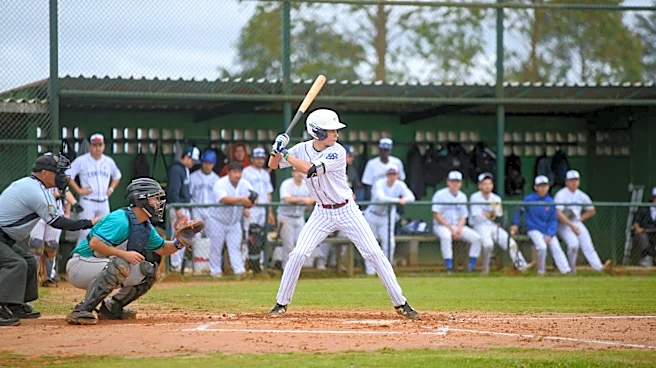
The 23-and-under event showcased some of Brazil’s brightest young players. Luis Armando’s team would be playing the team from Maringá, a favorite to win the 20-team tournament.
Luis Armando and his teammates stretched as the ground crew raked fresh dirt over puddles in the infield. The team huddled as coaches called out the starting lineup. Luis Armando received an encouraging surprise: He’d be starting at second base and batting fifth.
Luis Armando wandered out to second, inspected the dirt, flicked away a few stray stones.
In the stands were at least three scouts from Major League teams: the Boston Red Sox, Pittsburgh Pirates and Tampa Bay Rays.
Soccer has long dominated Brazil’s sports landscape. But last year, Major League Baseball made a sizeable investment in the Yakult facility, where Brazil’s best young players are recruited to live and train. On Jan. 15, the Red Sox awarded a $500,000 signing bonus to a 17-year-old hard-throwing Brazilian righthander, Claudio Pereira, who trained there.
“If you have good players here, they help our players get better, too,” said Tiago Campos, a Brazil-based Tampa Bay Rays scout who played in the Cincinnati Reds’ minor-league system.

Just before the start of the game, Rafael Motooka, the Red Sox scout who discovered Pereira, wandered over to the Curitiba bench and introduced himself to Luis Armando and Cruz. He had heard of the Cuban players. They swapped phone numbers and promised to send training videos and stay in touch.
As Motooka walked away, the two players shared a smile. Before the first pitch was tossed, they had already scored a major win.
Luis Armando went hitless through four at-bats but had two walks, scored a run and batted in another on a fielder’s choice. He also played solid defense, backhanding a line drive and throwing out a runner at second.
During a second game against the Nippon Blue Jays, Luis Armando made a few untimely errors toward the end of the game. Not his best game. But he had connected with a Major League scout, the real goal of the day.
“Whatever errors I made, I’ll learn from them,” he said later.
With the games over, the Curitiba team collected its gear and chugged the last of the Gatorade. Despite the loss, the mood was celebratory: Someone handed out chocolate-coated coconut candy, and a Bluetooth speaker blared Brazilian alt rock.

Players joked about errors they’d made and someone wondered where they'd be going for dinner.
“Where’s Luis?” Cruz asked, looking around.
But Luis Armando wasn’t there.
He was strolling past second base toward centerfield, phone in hand, calling his dad.
Jervis is a national correspondent based in Austin, Texas. He reported this story from Curitiba and São Paulo, Brazil, and Havana, Cuba. Follow him on X: @MrRJervis, or Instagram: @rjervis5905.
This article originally appeared on USA TODAY: He fled Cuba to avoid US bombs. Baseball gave him a way out