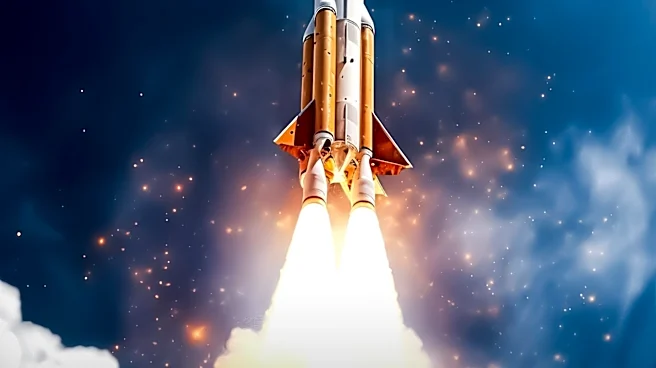






The rocket NASA used in April to send four astronauts on the historic Artemis II trip around the moon is an absolute behemoth.
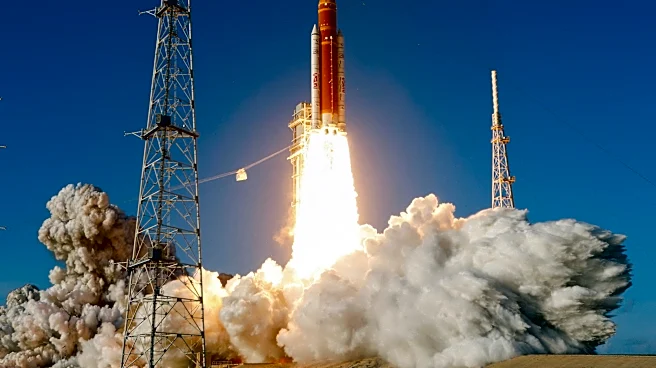
Not only is the 322-foot Space Launch System rocket among the largest in the world. It's also the most powerful NASA has ever launched – about 15% more powerful than its Saturn V predecessor used for the Apollo missions.
When the SLS rocket lifted off April 1 at NASA's Kennedy Space Center in Florida, it provided a staggering 8.8 million pounds of thrust – a measure of the amount of force used to push the vehicle off the ground – to send the Artemis II crew toward the moon in an Orion spacecraft.
Now, new research suggests that launch was so mighty that the SLS ripped a gargantuan hole in Earth's atmosphere on its way to
space and disrupted GPS signals.
Here's what to know.
What was NASA's Artemis II mission?
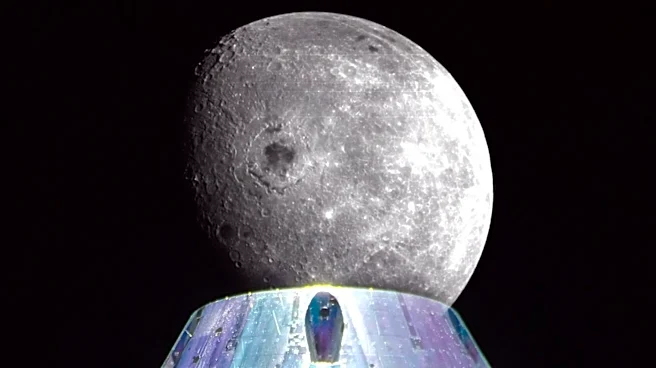
In April, the Artemis II mission sent NASA astronauts Reid Wiseman, Victor Glover and Christina Koch, as well as the Canadian Space Agency's Jeremy Hansen on a trip around the moon. The second mission under NASA's multibillion-dollar Artemis program, Artemis II marked the first time humans flew near the moon in more than 50 years and set the stage for a potential crewed landing as early as 2028.
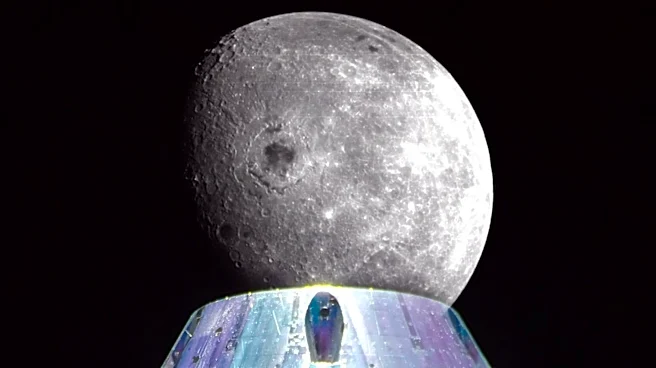
During the 10-day flight, Wiseman, Glover, Koch and Hansen surpassed a record set during the infamous Apollo 13 mission in 1970 – traveling a historic 252,756 miles from Earth. They also bore witness to sights of the moon's far side never before seen by human eyes while traveling as close as 4,067 miles above the surface during a lunar flyby.
Three of the astronauts also made individual history. Hansen became the first Canadian selected for a moon mission, while Koch became the first woman and Glover the first Black man.
Artemis II launch tore a 'hole' in Earth's atmosphere
The launch of the mission also managed, apparently, to tear a massive hole in Earth's atmosphere.
That's according to researchers from Taiwan, who analyzed data from ground-based GPS receivers to reconstruct the flight of NASA's Space Launch System (SLS) rocket. The four astronauts rode in NASA's Orion spacecraft, which hitched a ride to space atop the SLS during an April 1 launch from the Kennedy Space Center in Florida.
Now, a new study from researchers from the National Cheng Kung University in Taiwan said the launch, as well as the Orion capsule's orbital maneuvers, created three disturbances in Earth's upper atmosphere, known as the ionosphere. The region is where many satellites used for communication orbit Earth and is also where auroras form, according to the National Oceanic and Atmospheric Administration.
In the first two cases, "these holes stretched across the American continent from East to West like giant 3,100-mile ... contrails," Space.com noted.
Such disturbances aren't uncommon during spaceflight, but the researchers noted that these disruptions were so large that it could have disrupted GPS signals.
The pre-print study, which has yet to be peer-reviewed, was published online in the scientific journal Geophysical Research Letters
What's next for NASA's moon ambitions? Artemis III in 2027
The Artemis II mission was the first of two planned flight tests under NASA's moon campaign to set the stage for astronauts to reach the lunar surface and establish a lasting foothold.
Up next, NASA is working toward carrying out its Artemis III mission late in 2027. While Artemis II tested out both the SLS rocket and Orion spacecraft with a crew, its successor will test out two commercial lunar landers.
The complex mission will involve sending a new crew – NASA astronauts Randy Bresnik, Andre Douglas and Frank Rubio as well as Italian Luca Parmitano of the European Space Agency – to Earth orbit in an Orion capsule following another SLS launch.
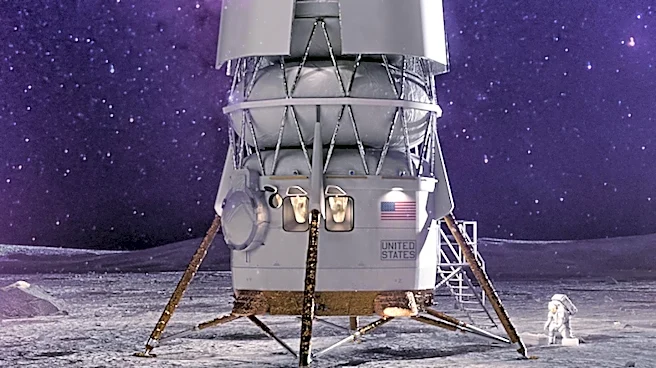
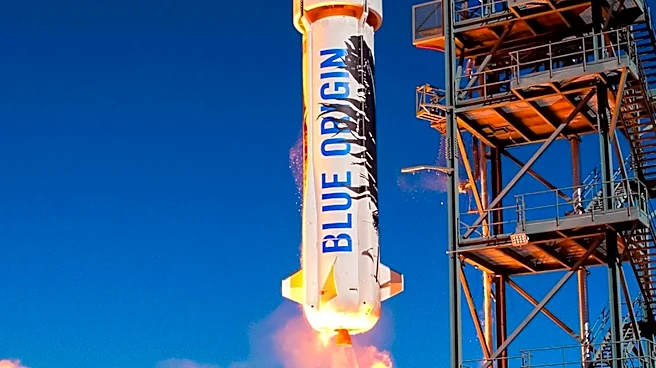
There, they will dock with and potentially board both Blue Origin's and SpaceX's lunar landers during a two-week mission. Both those landers Blue Origin's Mark 2 and SpaceX's Human Landing System (HLS) will reach orbit atop each company's own rockets: the New Glenn and Starship, respectively.
Eric Lagatta is the Space Connect reporter for the USA TODAY Network. Reach him at elagatta@usatodayco.com
This article originally appeared on USA TODAY: Artemis II moon launch was so powerful it punched a hole in atmosphere