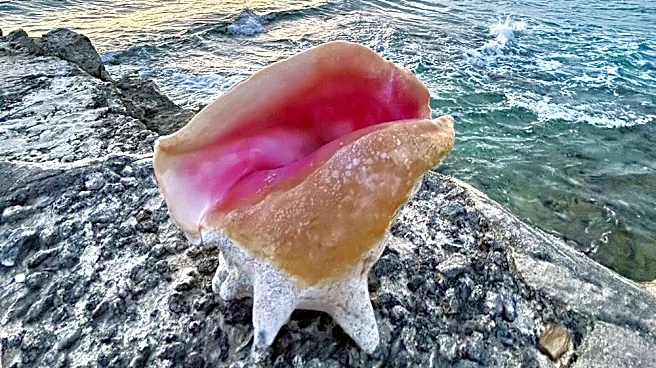







The iconic queen conch, unofficial mascot of the Florida Keys, is under threat — and federal officials missed a deadline to help protect it.
The Center for Biological Diversity, a nonprofit conservation organization, filed a lawsuit against the National Marine Fisheries Service
(NMFS) in July, alleging that the organization failed to designate critical habitat for the threatened species by the required deadline.That means two major projects in Broward County involving dredging the seabed could disturb nearby populations of queen conch, Alex Muir, a Florida-based attorney at the Center for Biological Diversity, told the USA TODAY Network.
Without critical habitat designation, Muir added, "some of the analyses that were undertaken for the permitting
of both of those projects" were not as "thorough" as they might have been.
In addition to threats to its habitat, the queen conch is also frequently overharvested for its meat, which is used in foods like fritters, soups, salads and ceviche.
"At this time, the queen conch is facing an array of threats, including the Sand Bypass project off of Broward County's coast, and the potential of the Port Everglades expansion, which could decimate one of the breeding aggregations in the state of Florida," Muir said. "That breeding aggregation is critical for the recovery of the species."
The NMFS originally listed the queen conch as a threatened species under the Endangered Species Act (ESA) on February 14, 2024. At the time of the initial listing, the NMFS determined there was "inadequate data" to pinpoint the species' critical habitat, Muir said.
As a result, the organization had an extra year to determine critical habitat, she said, which meant a deadline that fell in February of 2025. In July of 2026, no critical habitat designation has been made.
A spokesperson for the National Marine Fisheries Service said the organization was "unable to comment on matters of litigation" in response to a request for comment by the USA TODAY Network.
Queen conchs are picky about their habitats
Queen conchs are large marine gastropods, and can be found throughout the Caribbean Sea, around Bermuda and in the Florida Keys.
They're a "long-lived" species, according to NOAA's website, usually reaching from 25 to 30 years old. They have a spawning season of four to nine months, and reproduce via internal fertilization, meaning that queen conchs must come into contact to mate.
To breed, they typically seek out areas of seagrass in shallow waters, said Dr. Megan Davis, the director of the Queen Conch Lab at Florida Atlantic University Harbor Branch Oceanographic Institute, who said she has been studying the species since the early 1980s.
"They do that during the summer months, typically starting around April, through about September," she said.
After they spawn, young queen conch are particular about their nursery habitats, Davis added. They're "looking for certain cues, and they're looking for sea grass," all the while hunting for their "favorite food," diatoms — unicellular algae that get stuck to the blades.
"When they are young, they very much rely on the seagrass beds, and the seagrass beds very much rely on them," Davis said. "Because the seagrass beds get grazed, cleaned and kept healthy by the queen conch. But not all sea grass beds have queen conch in them, so you can't just say, 'Oh, all seagrass beds can support queen conch.' There are some very fine definitions of where conch will like to spend their time."
Critical parts of the food web
Queen conch are key parts of marine ecosystems they do choose to inhabit, Davis said.
"It's almost like a cow grazing in a field, right?" she said. "It's nutrifying the seagrass bed as it's eating, and as it's producing its waste. And so, it's making it a very dynamic sea grass habitat that starts to attract other animals."
Davis said she participated in a study in the Bahamas, in which she helped reestablish a population in an area that had been "fished of all the conch over a period of time." The researchers set up a "large penned area" to observe the queen conch they introduced, and found they were great cleaners of epiphytes — algal organisms on seagrass blades.
"Because the conch hadn’t been there in a long time, they had sort of grown over," Davis said. "And you could see a very marked difference between the inside of the pen, where the conch were, and then the outside of the pen, where there weren’t conch."
Over time, Davis said they also noticed a "cascade of all the different levels of a food web" come back into place.
"We started just seeing more fish come in, turtles come in, rays come in," Davis said. "Octopus and other benthic animals, starfish and sea urchins. The community was, in some ways, revived by having the conch back in the habitat. So, it was very exciting to see this observation — I call it an observation because it wasn't done under strict science protocol, but it was something that we visually saw over time."
Dredging, Sand Bypass in Broward County could threaten queen conch
In 2024, scientists surveyed one of only "two known reproductively active aggregations of adult queen conch" in Port Everglades, "a Fort Lauderdale port that is planning a massive deepening and widening of its harbor and entrance channel as soon as 2028," according to the National Centers for Coastal Ocean Science's website.
Data from the survey, says the organization's site, was intended to "inform the National Marine Fisheries Service’s biological assessment of queen conch," as well as "support development of long-term monitoring and adaptive management plans for the queen conch population in the vicinity of the port."
Though the Port Everglades Expansion is currently paused after the U.S. Army Corps of Engineers withdrew its state permit application for the "dredging project" in April of this year, according to the Center for Biological Diversity and Miami Waterkeeper, Muir says it remains a concern, along with the Sand Bypass project, which will excavate "a 10.8-acre pit to trap sand for beach renourishment."
"The U.S. Army Corps of Engineers and the National Marine Fisheries Service were not required to look at whether the project the Army Corps is permitting — in this case, the Broward County Sand Bypass project — will destroy or adversely modify critical habitat for the queen conch, even though we know this project is happening in an area that is critical to the recovery of the species, because it is in the area adjacent to Port Everglades," Muir said.
Center hopes to establish concrete timeline
With the lawsuit, Muir said the Center for Biological Diversity hopes to pin the NMFS down to a timeline.
"We would like to see the National Marine Fisheries Service admit to a specific date by which they will propose critical habitat, and then another date by which they can finalize critical habitat for the queen conch," she said.
Under the Administrative Procedure Act, Muir added, any proposal of critical habitat designation requires a subsequent period of public comment.
"The most important aspect of filing the suit is ensuring that the queen conch gets the protections it's entitled to," she said. "That ensures it's allowed to recover, and is given the habitat in which it can do so ... right now, these lawsuits are more important than ever to ensure that, in the face of an administration that wants to take down our foundational environmental laws. We need to hold them accountable to the duties they're required to uphold."
Imperiled by overharvesting, vulnerable to climate change
Queen conchs are "highly sought after for their meat," according to NOAA, and overharvesting is an existential threat to the species.
"When the overharvesting happens, that's when the population gets so low that they can't find each other for reproduction," Davis said. "That's why it's good to have areas that we know are traditional spawning areas, and to protect those areas as much as possible."
In addition to other human-made threats to their habitats, changing weather patterns pose yet another problem for queen conchs, Davis said.
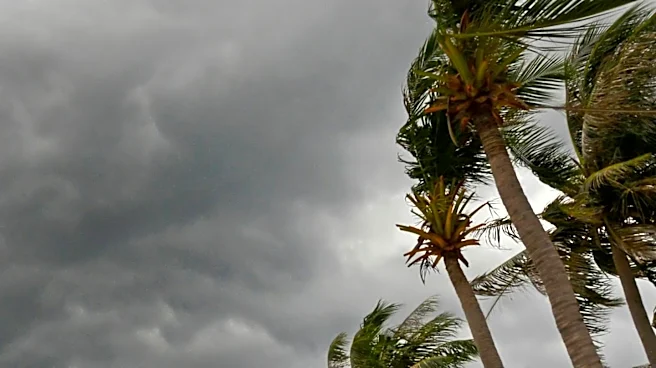
"Hurricanes, a lot more rain and things like that, can change some of the coastal dynamics," she said. "That might bury the conch if it's a big storm, like what has happened in the Keys and in Puerto Rico."
Due to climate change, hurricanes are predicted to "cause more intense rainfall and have an increased coastal flood risk," thanks to "higher storm surge caused by rising seas," according to an article published by NASA's Science Editorial Team. Though the frequency of storms worldwide could decrease or remain unchanged, those hurricanes that do form "are more likely to become intense."
"There has been some habitat degradation, and some runoff and pollution from urbanization along the coast," Davis said. "And warming temperatures in the ocean can also be a threat for the young veligers, and conch in shallow water. It's kind of a combination of overfishing and habitat degradation issues, from man and also from storms."
That's why, when a queen conch habitat is identified, protecting it becomes critical, Davis said.
"If we know of a breeding population, and we know that some sort of development or something might happen, that means that it's really important to have those conversations with the developer — that this is important habitat," she said.
Sarah Perkel is a South Florida Connect Reporter for the USA TODAY Network's Florida Connect team. You can get all of Florida’s best content directly in your inbox each weekday day by signing up for the free newsletter, Florida TODAY.
This article originally appeared on USA TODAY: Missed deadline further threatens iconic Florida queen conch