

A new report from the U.S. Chemical Safety and Hazard Investigation Board identified key failures at the U.S. Steel Clairton Coke Works Plant that contributed to the deadly explosion at the Western Pennsylvania facility almost exactly a year ago.
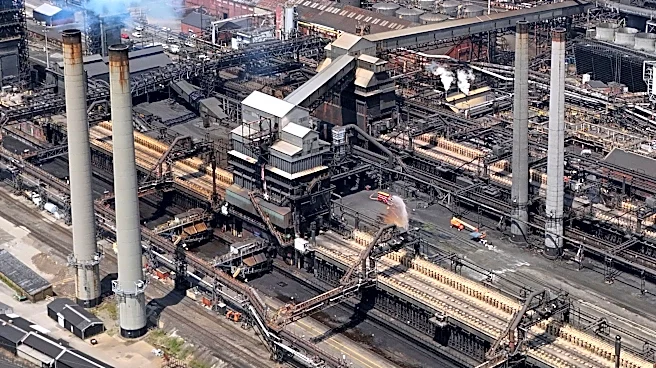
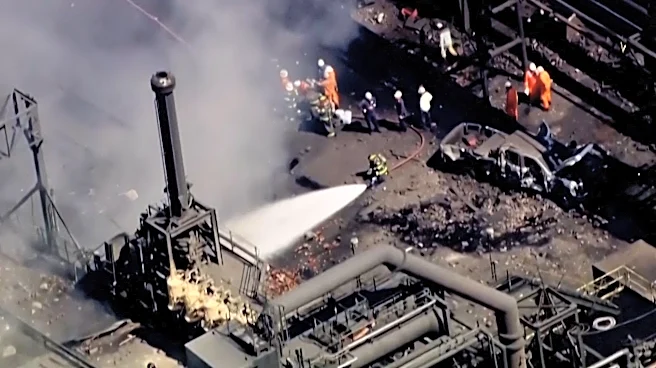
On Aug. 11, 2025, a blast at the 392-acre Clairton plant caused the collapse of multiple buildings, killing two people and injuring nearly a dozen more. The explosion took place after workers had attempted to perform a maintenance operation involving washing a valve, a task that had no formal procedure, according to the report.
A report lays out problems leading up to the explosion and makes recommendations to U.S. Steel to prevent another disaster from occurring again at what is considered the largest
coking facility in North America, according to the Chemical Safety Board.
Report identifies failures that led to US Steel explosion
The report, published earlier this month, identified three safety issues that contributed to the explosion and its fatalities: procedures and hazards, facility siting and process safety management systems.
The explosion took place during a valve washing operation, when pressurized water filled an enclosed space and caused a battery valve's "catastrophic failure," causing coke oven gas to release and, moments later, to ignite and explode, according to the report.
There was no formal procedure in place for valve washing, and workers had been using pressurized water for three years prior to the explosion.
The location of the battery transfer area, buildings that were routinely occupied and weren't designed to withstand an explosion, was located less than 20 feet directly above the coke oven gas piping system. Four U.S. Steel employees were inside three buildings in the area prior to the explosion, in which all three buildings were destroyed. Two employees were killed, and two other workers who were in or near the buildings were seriously injured.
The report noted that U.S. Steel had "multiple opportunities to evaluate and address the inherent hazards resulting from the co-location of occupied buildings and the hazardous coke oven gas piping" in the years prior to the explosion, but that the company "affirmatively" chose not to "based on the company's belief that it was not required to do so."
The report also said that U.S. Steel did not have robust process safety management systems in place that could have prevented or reduced the severity of the explosion, noting that these kinds of systems are "crucial" for facilities handling and producing hazardous chemicals.
Report recommends evaluations, new procedures at US Steel plant
The Chemical Safety and Hazard Investigation Board recommended that U.S. Steel conduct a sitting evaluation for all occupied and potentially occupied buildings at the Clairton Coke Works facility, mitigate all facility sitting hazards, develop a written procedure in alignment with industry standards for washing valve seats with pressurized water and ensure that workers are trained on the procedure, carry out a hazard analysis or safety validation of the written valve washing procedure and develop a comprehensive process safety management system for coke oven gas processes at the Clairton facility.
They also recommended that Nippon Steel North America develop a corporate process safety governance program to make sure that process safety management was impelemented at all applicable facilities, and made the recommendation to MPW Industrial Services that it should develop written policies and procedures in accordance with industry standards for cleaning piping systems that contain flammable or toxic gas and ensure that all workers who may clean these systems are trained.
How many people were hurt, killed in US Steel plant explosion?
The explosion killed Timothy "TQ" Quinn, 39, and Steven Menefee, 52, according to the Allegheny County Medical Examiner. It injured 11 other people, causing serious injuries to five of them, and resulted in an estimated $52.5 million in property damage, according to the Chemical Safety and Hazard Investigation Board.
What caused deadly US Steel plant explosion?
On Aug. 11, 2025, during a maintenance operation, as employees and contractors were trying to fully close and reopen a double disc gate isolation valve in the piping that supplied coke oven gas to one of U.S. Steel's coke oven batteries and wash the valve's seats with pressurized water, about 19 pounds of coke oven gas were released and exploded.
While washing the valve's seats, the workers closed or almost closed the valve's double gates. Pressurized water filled the enclosed space between the two gates inside the cast iron valve and made the pressure inside the valve increase to the point that the valve "failed catastrophically," causing coke oven gas to release into the surrounding area, according to the U.S. Chemical Safety and Hazard Investigation Board's report.
While workers attempted to evacuate the area, the gas ignited and exploded within 24 seconds of the order at 10:47 a.m.
Finch Walker is the Pittsburgh Connect Reporter for the USA TODAY Network. Contact Walker at FWalker@usatodayco.com. Instagram: @finchwalker_. X: @_finchwalker.
This article originally appeared on USA TODAY: Report identifies failures that led to Clairton steel plant explosion