



As America continues to celebrate its 250th year, the art of the White House Collection offers its own picture of our evolving nation. It began with just a single presidential portrait but has expanded over time, shaped by presidents, first ladies and eventually professional curators.
The collection of more than 500 paintings, drawings and sculptures captures the nation’s leaders and landscapes, wars and peace, and an evolving sense of whose art and experiences belong in the American story.
"Art for the White House: A Changing Portrait of America," a new book by Leslie Greene Bowman, traces how those works came to be part of the White House Collection and what those choices reveal about the country at different moments in our history. It also
tells the more personal story of how presidents and first families lived with art, loved particular works and helped assemble the collection over generations.
It all begins with a familiar face.
How artwork became a staple of White House decor

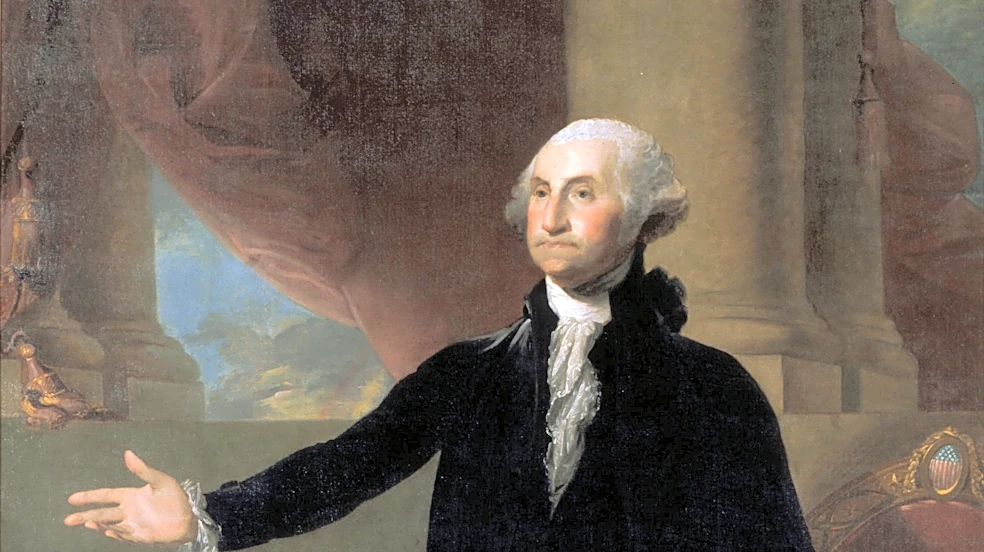
A full-length portrait of President George Washington, painted by Gilbert Stuart, was the first piece acquired for the White House. Congress purchased it as John and Abigail Adams became the mansion’s first residents in November 1800.
For decades, presidents themselves were largely the story reflected on the White House walls. As late as 1860, the collection contained just 12 works of art, nine of them presidential portraits.
One of the first to push for a new tradition was former first lady Julia Gardiner Tyler, who presented her own 1848 portrait in 1869, hoping it would inspire a collection that included the mansion’s male residents as well as their wives.
The idea didn’t catch on immediately, but first lady Edith Roosevelt established the Ground Floor Corridor as a gallery for first-lady portraits in 1902, during her husband Theodore’s presidency. The Roosevelts also brought a more deliberate focus to expanding art in the White House, including choosing subjects beyond presidential portraiture. "Signing of the Peace Protocol Between Spain and the United States," by French artist Théobald Chartran, captured America’s growing role in the world after the Spanish-American War.
It also has a distinction no other in the collection can claim: The historic event it depicts actually took place inside the White House in the Cabinet Room, which was then on the second floor of the private quarters. (Chartran also painted Mrs. Roosevelt’s portrait.)
Surprisingly, the White House itself did not appear in its own art collection until 1934, when first lady Eleanor Roosevelt received "Our White House, Washington, D.C." as a gift from artist Lydia Field Emmet. The title reflected an evolving idea of the White House as not simply a president’s residence, but the People’s House.
Historical events became muses for White House art

Major moments in American history also became subjects. "The Peacemakers," painted by George P.A. Healy, depicts President Abraham Lincoln with Gens. Ulysses S. Grant and William T. Sherman and Adm. David D. Porter making difficult decisions in the closing days of the Civil War.
President Harry Truman wanted it for the White House enough to negotiate directly with a New York art dealer for a lower price in 1947. President George H.W. Bush asked to include that painting, which had been in his private office, in the background of his own official White House portrait. Bush is depicted standing directly in front of Lincoln and Grant, obscuring them from view.
Other works captured American life rather than historical events. As the country became increasingly urban and industrial, George Henry Durrie's "Farmyard in Winter" looked back at a rapidly changing rural America. The painting entered the collection during the Truman years. But despite occasional important acquisitions, the collection contained mostly portraits and scattered gifts.
By the 1960s, American art had developed a rich and varied history of its own, but little of it appeared on the White House walls – something Jacqueline Kennedy set out to change when she became first lady.
Mrs. Kennedy appointed the first White House curator and created a committee that brought together museum experts, collectors and art authorities. The committee set out to fill gaps in the periods, subjects, historical figures and artistic movements represented.
Sears, Roebuck and Co. donated five portraits of Native American leaders that Charles Bird King painted after they came to Washington in 1821 to meet President James Monroe.

Another gap was the Hudson River School, whose sweeping landscapes helped forge a distinctly American artistic identity in the mid-1800s. John Frederick Kensett’s "Niagara Falls" became the first work from the movement to enter the collection.
The American West was missing, too. Among the works added during the Kennedy years was "Coming Through the Rye," a bronze by Frederic Remington of four cowboys charging forward on horseback, whose depictions of the vanishing frontier Theodore Roosevelt had admired.
The tradition continues in modern-day presidencies
White House fine art also began to catch up with contemporary American art. In 1962, John Marin’s lively, kinetic "The Circus No. 1" became the first work of American Modernism to enter the collection – a striking departure from the portraits, landscapes and historical scenes that had long dominated it.
The transformation happened remarkably fast, with roughly 75 acquisitions over two years. The work Mrs. Kennedy began did not stop with her husband’s untimely end. Later presidencies continued adding new chapters of American art.
In 1997, during Bill Clinton’s presidency, Georgia O’Keeffe’s modern vision of the American landscape, captured in "Mountain at Bear Lake – Taos," was added.
A decade later, during the George W. Bush presidency, the collection added a work by Jacob Lawrence, one of the great chroniclers of Black American life. "The Builders" depicts Black workers at a construction site.

During Barack Obama’s time, Alma Thomas’ vibrant abstract "Resurrection" became the first work by a Black woman artist to enter the permanent collection.
The collection continues to evolve. In 2020, Melania Trump welcomed another first: "Floor Frame," an abstract bronze sculpture by Isamu Noguchi, the first Asian American artist included in the White House Collection. And in 2025, Jill Biden announced the acquisition of "Dia Feriado," a bold geometric painting by Carmen Herrera, the first by a Cuban American woman.
More than two centuries after George Washington’s portrait became the first work of art acquired for the White House, its early residents could scarcely have imagined what would follow – a changing picture of America itself.
Stewart D. McLaurin is president of the White House Historical Association, a private nonprofit, nonpartisan organization founded by first lady Jacqueline Kennedy in 1961, and is director of The People’s House: A White House Experience multimedia educational center and museum.
This article originally appeared on USA TODAY: How White House art tells the story of America's evolution | Opinion