






As time ticks down toward Nov. 1 with no word from the U.S. Senate on making daylight saving time permanent, it looks more and more likely that Pittsburgh will see earlier sunrises and sunsets this winter after the clocks fall back.
The U.S. House approved the Sunshine Protection Act
earlier this summer in a bipartisan vote to make daylight saving time permanent with support from President Donald Trump, but the U.S. Senate has yet to take the measure up for a vote.In Pittsburgh, unless the measure passes the Senate and is signed by Trump within the next week, that means sunrises and sunsets will both come earlier in the winter than when daylight saving time is in effect.
Here's what to know.
When do clocks fall back in 2026?
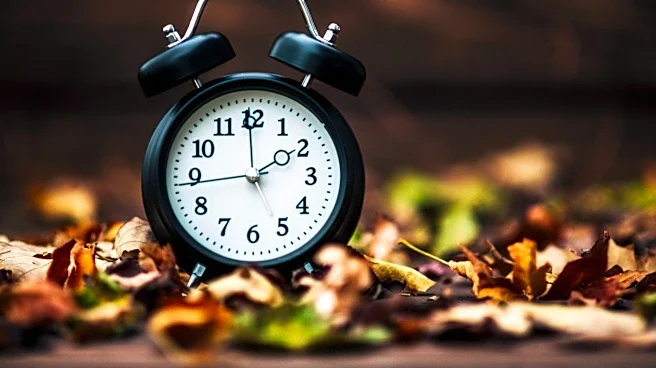
If Congress doesn't act, daylight saving time will end
at 2 a.m. local time on Sunday, Nov. 1. This means that clocks will move back by one hour to 1 a.m., providing what may feel like an extra hour of sleep to some people and bringing earlier sunsets for the remainder of the fall season and winter months.
What's the difference between standard time and daylight saving?
According to Congress, standard time is the legally established base time for a time zone. Daylight saving time moves that clock ahead by one hour during part of the year.
In practical terms, daylight saving time is the clock setting that's used from spring through fall, while standard time is used during the winter months.
Daylight saving time runs from March to November, resulting in later sunsets and more evening daylight, according to the U.S. Naval Observatory.
Standard time is used during the rest of the year and more closely matches the sun's position.
Does Pennsylvania observe daylight saving time?
Yes, Pennsylvania observes daylight saving time. Hawaii and most of Arizona, save for the Navajo Nation, are the only U.S. states that don't observe it. American Samoa, Guam, the Northern Mariana Islands, Puerto Rico and the U.S. Virgin Islands also don't observe daylight saving time.
Will daylight saving become permanent in Pennsylvania?
Around the country, 19 states have enacted laws to make daylight saving time permanent. But these laws can't take effect until Congress allows it at the federal level.
Pennsylvania has not passed any laws to observe permanent daylight saving time.
What time will sunrise and sunset be in Pittsburgh?
Sunrise and sunset will both take place about an hour earlier on Nov. 1 than they did the day prior.
On Nov. 1, sunrise will take place at about 6:50 a.m. in Pittsburgh, according to the National Oceanic and Atmospheric Administration. Sunset will occur at about 5:17 p.m.
The day before, on Oct. 31, sunrise is expected to happen at 7:49 a.m., while sunset will take place at about 6:18 p.m.
When will Congress vote on permanent daylight saving time?
It's not clear. The Sunshine Protection Act hasn't been scheduled for a vote in the Senate, and another congressional recess is set to begin on Oct. 5.
Mary Walrath-Holdridge, Saman Shafiq and Alex Perry contributed to this report.
Finch Walker is the Pittsburgh Connect Reporter for the USA TODAY Network. Contact Walker at FWalker@usatodayco.com. Instagram: @finchwalker_. X: @_finchwalker.
This article originally appeared on USA TODAY: Does PA observe daylight saving time? Clocks fall back on this date