





WASHINGTON – The Justice Department's lawsuit seeking to block the certification of Alaska’s Senate race signaled the administration's willingness to contest the results of the Nov. 3 midterm elections, and could also educate voters about two candidates on the ballot named Dan Sullivan.
Rick Hasen, a law professor at University of California, Los Angeles, called the lawsuit "absurd" and said the departmenthas "an exceptionally weak hand." But he worried that the DOJ could try to interfere in vote counting after Election Day.
"The situation in Alaska is specifically frightening," Hasen said, because of the state's remoteness, complex voting procedures and lengthy time counting ballots. "I am particularly concerned DOJ could try to seize ballots or
voting machines."
Walter Olson, a senior fellow at the libertarian Cato Institute, called the lawsuit “abusive” and “nearly frivolous.” But he said that when viewing the lawsuit as a press release, coverage of it could motivate Republicans to vote for the right Sullivan while also demonstrating that the administration is fighting to protect election integrity.
“It is unlikely to demoralize any Democrats,” Olson told USA TODAY. “It could energize Republicans.”
The legal battle is about GOP Sen. Daniel S. Sullivan defending his seat against retired teacher Daniel J. Sullivan and Democratic former state Rep. Mary Peltola. The Justice Department filed a federal lawsuit Oct. 22 asking a judge to postpone certification of the Nov. 3 election if the results are close, until after an investigation of potential voter confusion.
But some legal experts say the department doesn’t traditionally have a role in determining who is on the ballot. Alaska’s state Supreme Court ruled that both Sullivans could remain. Litigants typically wait until after votes are counted to challenge them.
“I’ve never heard of it,” Derek Muller, an election law expert at Notre Dame Law School, told USA TODAY. “I’ve never heard of an election where you try to block certification before the election.”
The Alaska race is one of the most closely watched in the country as the midterms determine which party will control the Senate. Republicans lead the Senate 53-47 and the House 218-214, with one independent.
Polls show the race between Daniel S. Sullivan and Peltola is too close to call, according to an average by RealClearPolitics.com.
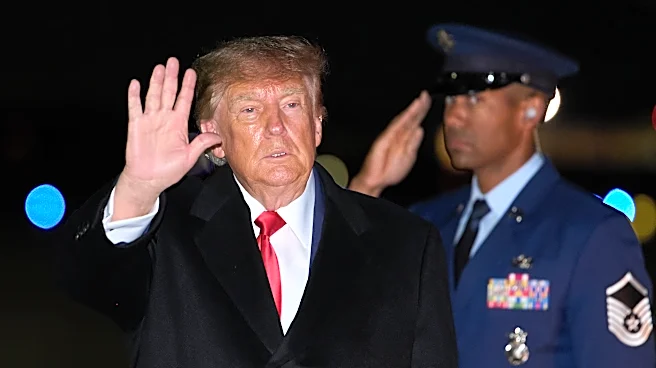
Trump told reporters Oct. 23 that he had directed DOJ to file the lawsuit.
“I’m the one that said do it,” Trump said. He said the challenger Daniel J. Sullivan “has nothing to do with politics” and called his campaign “disgraceful.”

The lawsuit asks the court to prevent the state of Alaska from certifying election results “pending an investigation to determine whether votes cast for Daniel J. Sullivan were meant to be cast for Senator Sullivan.”
The lawsuit contends that Daniel J. Sullivan is running as a Republican despite being “a known longtime supporter of Democratic candidates.” The challenger’s website “uses a format, color scheme and overall theme similar to the public website for Senator Sullivan’s campaign,” the lawsuit said.
Daniel J. Sullivan changed his registration between the primary and general elections, and is running as unaffiliated.

Reaction to the lawsuit was starkly divided along party lines.
“DOJ arguing that Republicans in Alaska are too dumb to understand the word incumbent on the ballot. Geez,” former Sen. Claire McCaskill, D-Missouri, said in a social media post.
But Mike Davis, head of the conservative legal group Article 3 Project and a former Senate Judiciary Committee staffer for Republicans, accused Democrats of running a fringe candidate to knock out the incumbent.
“There's no question Democrats are intentionally running Alaska U.S. Senate fringe candidate Daniel J. Sullivan to confuse and disenfranchise voters who wish to vote for U.S. Senator Daniel S. Sullivan – so their Democrat candidate can eke out a victory,” Davis said in a social media post.
Aaron Blacksberg, federal policy counsel at the nonpartisan Institute for Responsive Government, which analyzes policies to make voting work well, said Alaska relies heavily on mail voting, so ballots are already being cast.
Litigants typically aim to challenge policies when there is still a chance to get some benefit, said Blacksberg, who called the lawsuit "unprecedented."
“There is probably some attempt to lay some groundwork early to point back to later,” Blacksberg told USA TODAY.

Hasen called the lawsuit one of the department’s “most desperate and unprofessional assaults on the American election system yet.”
The Justice Department cited the National Voter Registration Act’s preamble to say it is designed to “protect the integrity of the electoral process.” But Hasen said the statute "gives no power whatsoever to the federal government to do anything."
This article originally appeared on USA TODAY: Alaska suit signals DOJ willingness to contest election results: experts