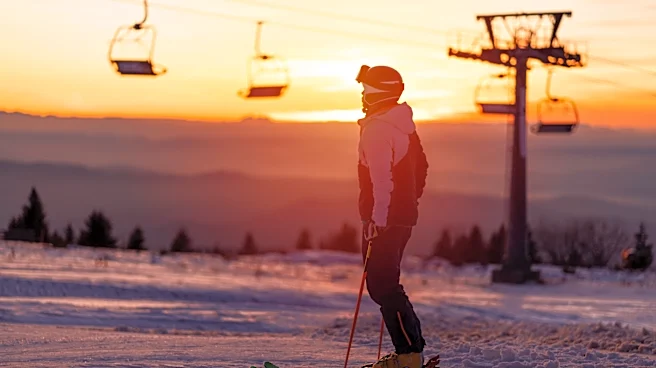




The debate over daylight saving time has gained an unlikely opponent: ski resorts.
As Congress considers legislation that would make daylight saving time permanent, ski resort operators across the country are urging senators to reject the plan. They argue that darker winter mornings would create safety risks for workers, delay ski lift openings and hurt mountain communities that depend on winter tourism.
The push comes as President Donald Trump and supporters of the Sunshine Protection Act continue to advocate ending the twice-yearly clock change. The House has already approved the measure, but it still faces a Senate vote before it can become law.

For ski resorts, the concern isn't losing daylight in the evening. It's losing it before the workday
even begins.
In a Sept. 10 letter shared with USA TODAY, a coalition representing 115 ski areas in 10 states warned senators that permanent daylight saving time could push winter sunrises past 8 a.m. in parts of the Mountain West and New England. That, they argue, would force workers to prepare slopes in the dark, create safety concerns and potentially delay ski operations.
Why are ski resorts opposed to permanent daylight saving time?
Resort operators say permanent daylight saving time would affect ski areas in two major ways: worker safety and daily operations.
Many employees, including ski patrollers, lift mechanics, snowmakers and groomers, begin work hours before lifts open to the public. Resort groups argue that darker winter mornings would force those employees to perform critical tasks in low-light conditions, increasing safety risks.
They also say ski areas cannot safely open until crews complete inspections and other preparations that often require daylight.
If resorts had to wait longer for sunrise, operators contend, opening times could be pushed back, reducing operating hours during peak ski season and affecting nearby hotels, restaurants and other businesses that depend on mountain tourism.
Why not just open later?
Resort groups say shifting operating hours is not as simple as moving the schedule.
According to the letter, morning daylight is essential for tasks such as avalanche mitigation, lift inspections and trail preparation. Moving those activities later into the day could create new operational challenges while shortening the prime hours that many skiers prefer.
Operators also argue that ski areas are tied to a broader network of schools, child care schedules, transit systems and transportation agencies, making large-scale schedule changes difficult.
Ski resorts aren't the only critics
Some religious groups have also raised concerns about permanent daylight saving time.
Orthodox Jewish leaders have argued that later winter sunrises could complicateprayer schedules that are tied to sunrise and sunset. Some Muslim communities have expressed similar concerns because certain daily prayers must be completed by dawn.
What would the Sunshine Protection Act do?
The Sunshine Protection Act would make daylight saving time permanent nationwide, eliminating the need to change clocks twice a year.
Supporters, including Trump, argue the change would provide more evening daylight, reduce disruption from clock changes and simplify daily life for Americans.
Opponents counter that permanent daylight saving time could lead to very dark winter mornings, particularly in northern states, raising concerns about safety, health and daily routines.
When does daylight saving time end in 2026?
Unless Congress acts, daylight saving time will end at 2 a.m. local time on Sunday, Nov. 1, 2026, when clocks are set back one hour.
That means Americans will gain an extra hour of sleep, but sunsets will arrive earlier throughout the winter months.
Why the debate isn't ending anytime soon
While polls consistently show many Americans want to end the twice-yearly clock changes, there is far less agreement on what should replace them.
Some favor permanent daylight saving time for brighter evenings. Others, including many sleep researchers, prefer permanent standard time because it more closely aligns with the body's natural circadian rhythm.
That divide has left lawmakers balancing competing concerns from businesses, health experts, religious groups and now the ski industry as the debate over the nation's clocks heads back to Congress.
Contributing: Reuters; Bart Jensen, Zachary Schermele, Jorge L. Ortiz, Fernando Cervantes Jr., Emily DeLetter, Julia Gomez, Kinsey Crowley, Marc Ramirez / USA TODAY
Saman Shafiq is a trending news reporter for USA TODAY. Reach her at sshafiq@usatodayco.com and follow her on X and Instagram @saman_shafiq7.
This article originally appeared on USA TODAY: Ski resorts push back on Trump's time change plan