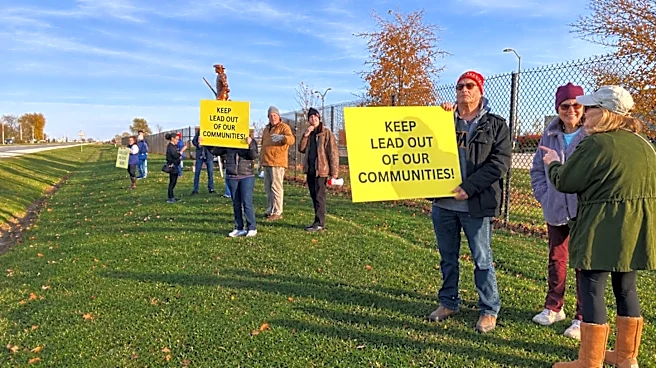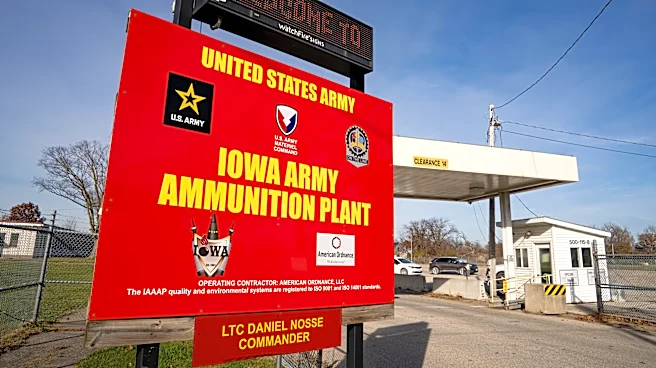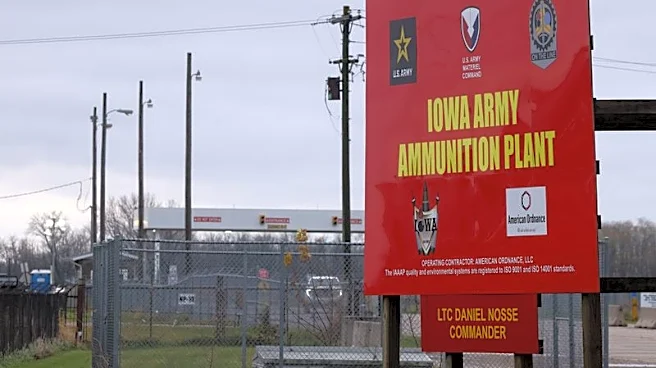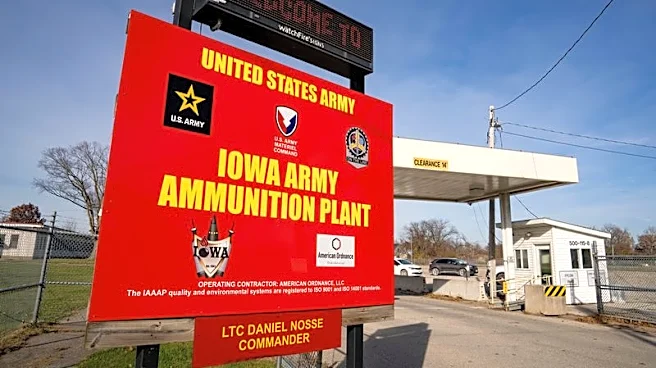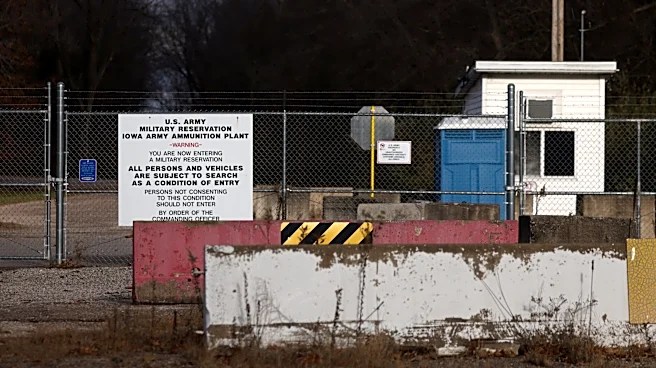





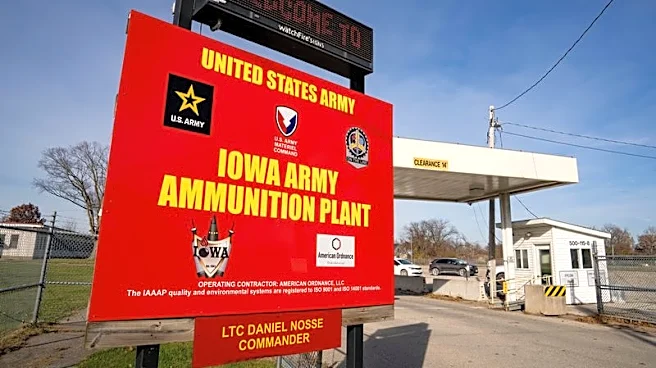
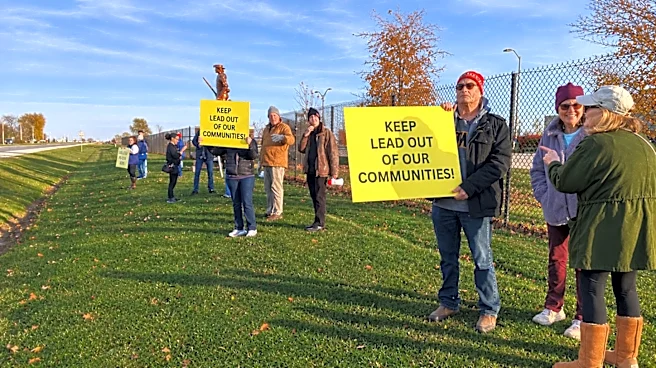

After a series of delays, roadblocks and backlash, the Army said it plans to go ahead with a controlled detonation of a stockpile of deteriorating explosive materials at an Iowa ammunition plant that could send a toxic plume of lead dust into the air on Nov. 25.
The material, called lead azide, is used as a primary explosive in detonations and degrades in storage over time. The Army said it must act now to avoid a spontaneous explosion as the weather cools and that it can't move the lead azide somewhere else to dispose of it because it could accidentally detonate.
Even the controlled detonation poses risks, however. The Army said windows of buildings surrounding the site in Middletown, in southeastern Iowa, could break, and lead is expected to spread
through the air and settle on surfaces around the state and potentially surrounding states.
"It is the unanimous judgement of our people – the Army, Navy, EPA, ATF, FBI, DARPA, DoE, CDC, HHS, FEMA and every other agency involved – that the Army should proceed with an extensively mitigated, carefully controlled detonation, which will occur this Wednesday morning, as previously scheduled, based on forecast wind conditions," Acting Secretary of the Army Adam R. Telle said.
The announcement came after days of last-minute delays and a failed lawsuit from environmentalists seeking to block a permit from the Environmental Protection Agency. Residents have been advised to take precautions, with a shifting timeline that will ultimately see them evacuating, staying indoors or cleaning surfaces right before the Thanksgiving holiday is underway.
When will the Army detonate the lead azide? Why was it delayed?
Telle said in a post to social media the night of Nov. 23 that the detonation will take place the morning of Nov. 25, but a specific time has not been released by the Army.
It was initially scheduled for Nov. 20, but postponed after outcry from Iowa residents, health experts and environmentalists over concerns to health and safety and a lack of notice to the public. Environmental groups filed suit in federal court and were granted a temporary stay of the EPA permit authorizing the blast, as the Army said it would hold off on the detonation until Nov. 23.
Previously, Telle described Nov. 23 as the "latest possible moment prior to a forecasted temperature drop, which would risk further destabilization of the material."
More delay followed. The Army said it planned to proceed with its schedule even if the permit was in limbo, citing alternate emergency powers.
Then, President Donald Trump weighed in on Nov. 23, and instructed the Army to hold off on the detonation unless the Eighth Circuit Court of Appeals ruled in its favor.
"I feel the proper course is to get rid of this longterm problem but, at the same time, have ordered the Military not to do so until such time as the Eighth Circuit agrees that we can go forward, and am further making this decision fully subject to the incoming Governor Elect, Rob Sand, agreeing to the operation," Trump said in a post to his social media platform. "If he or the Courts do not agree, we will have no choice but to not proceed with the controlled removal of these hazardous materials, and be forced to hold the incoming Governor responsible for any and all death or destruction caused by this very unfortunate, and longterm, situation."

Later on Nov. 23, the court allowed the blast to continue.
Telle, in announcing the detonation would proceed on Nov. 25, cited the court, the support of current Gov. Kim Reynolds and a statement from Sand saying that the decision should be made "based on the information they have from the people they brought in to do the job months ago and have been on the ground in Middletown for weeks."
Concerns grow over health, environmental impacts. How to stay safe
Detonating the barrels containing the lead azide is expected to create a toxic plume of dust that could travel 100 miles or more, officials say.
Lead poisoning typically occurs due to exposure over time, but small amounts of the substance can still cause serious health problems, according to the Mayo Clinic. Young children are especially vulnerable to lead poisoning, which can lead to brain and nervous system damage, according to the U.S. Centers for Disease Control and Prevention.
Though the level of lead particles in the air is expected to be below the level of protective actions needing to be taken, the Army said exposure could come from inhaling lead in the air or touching it on surfaces.
The Army made the following recommendations for people who live and work in the area:
- Consider avoiding the area
- If you cannot leave, stay indoors with windows and doors closed, and set heating and cooling systems to recirculate air rather than drawing in outside air.
- After the air exposure period has ended, wet-clean outdoor and indoor surfaces such as children's play surfaces, toys, tables and chairs, handrails, patios and decks, windowsills and cars.
Animals and crops could also be impacted, reported the Des Moines Register, part of the USA TODAY Network. Officials with Iowa State University Extension and Outreach and the Iowa Beef Center advised farmers and cattle producers to move livestock indoors and cover feed or use a leaf blower to blow off dust after the blast. Livestock should not drink from ponds or creeks and instead should drink from water tanks, they said.
The Army said the detonation should have limited, temporary effects on the environment that will be monitored.
Weather conditions could shift where lead goes
Weather conditions on Nov. 25 will have a big impact on how far and wide lead-containing dust will spread from the detonation site.
According to AccuWeather meteorologists, the weather in Middletown should be mostly cloudy and chilly with east to northeast winds at 8 mph and gusts up to 15 mph on Nov. 25. Factors that will be important in determining the dust's path will include wind direction and speed from the surface to about 3,000 feet above ground, plus how readily air mixes vertically.
“Wednesday’s forecast points to a different wind direction than we expected for the original operation planned last Friday, which could change which communities are downwind,” said AccuWeather expert meteorologist Alyssa Glenny. “The wind forecast for the actual detonation time, including winds above the ground, will be important in assessing where the dust could travel.”
The dust could reach parts of southeastern Iowa and north Missouri, AccuWeather reported.
Contributing: N'dea Yancey-Bragg, Thao Nguyen, USA TODAY; the Des Moines Register
This article originally appeared on USA TODAY: Detonation of volatile lead azide is on after delays, Army says