


They came to Flatbush, in Brooklyn, from a village in the mountains of Guatemala and from the West African nation of Guinea, from Ecuador and from Colombia, and on the afternoon of Nov. 11, they were living the small, unremarkable hours that make up a life in New York.
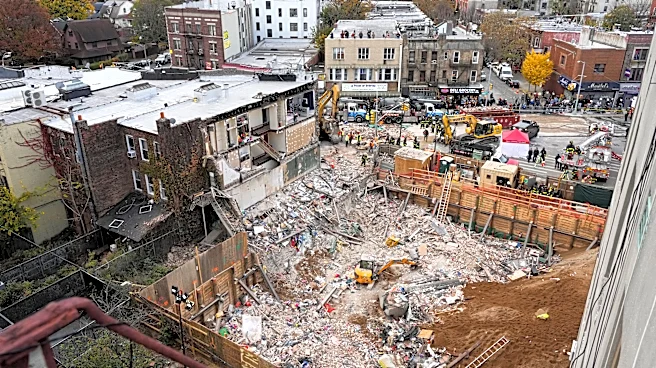
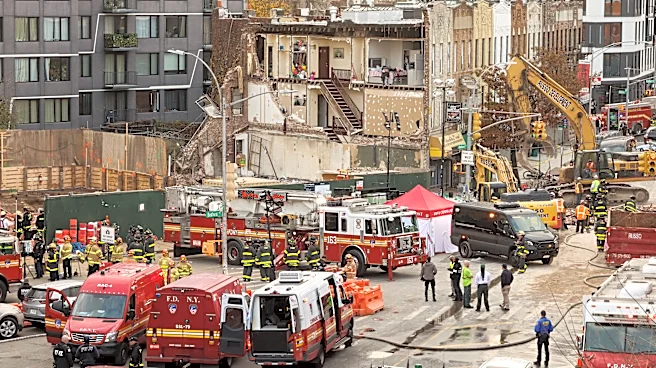
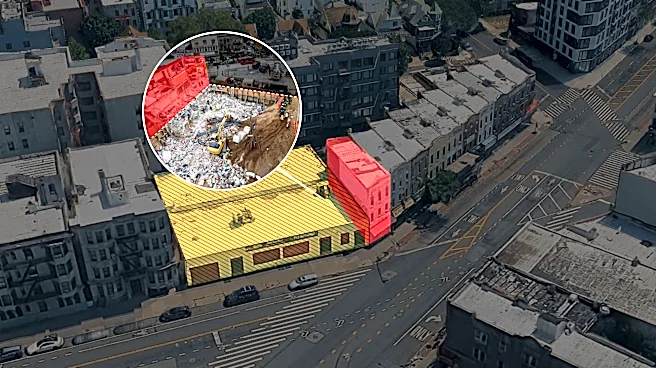
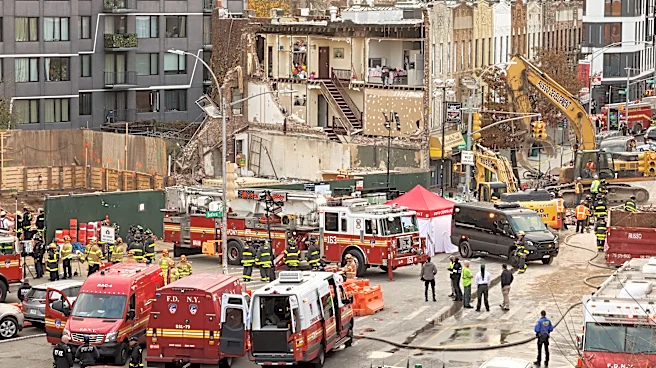
That day, the brick, nearly-century-old building at 1321 Flatbush Ave. gave way, folding toward the excavation beside it, and within seconds the ordinary afternoon was gone
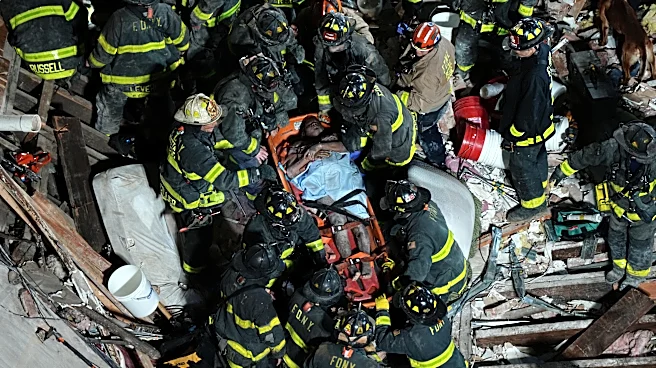
.Eight people died, among them two children. Eighteen more were hurt, four of them firefighters. The dead were fathers and fathers-to-be, cousins and roommates, young men who had crossed oceans and borders to build lives in a city that, just a few feet away, was being built by men like them.
building collapse prompts familiar scrutiny
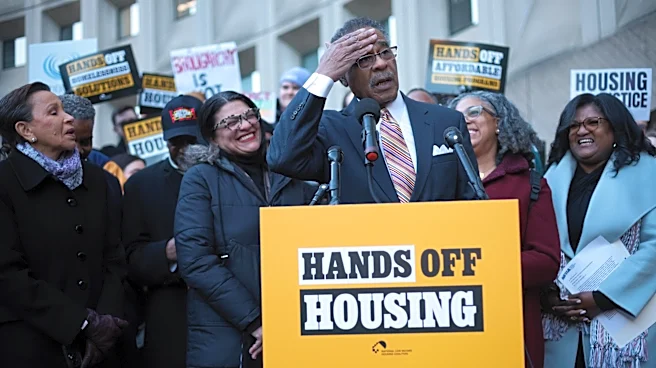
On the morning of Nov. 13, the grief spanning half the world gathered in one corner of Brooklyn at a news conference where devastating private pain became public.
A pastor opened with a prayer in the name of Jesus. A leader from the Jewish Community Relations Council recited the Hashkiveinu, asking God to shelter the grieving "against injury, hunger, displacement and sorrow." The president of the city’s Guinean community began with the Arabic verse Muslims recite in mourning. A husband told his story in French.
"They were co-workers. They were cousins. They were roommates. They were sons. They were daughters. They were children," said City Council Speaker Julie Menin. "May we know their names today and remember their names always."

Long before the collapse, the trouble next door was in the public record. City inspectors ordered the contractor to stop demolition in March because the site lacked protection for neighboring buildings, according to city records. When the work went on anyway, they cited it again in April. The order was lifted in May after a $10,000 fine. The building that fell had a string of 98 violations stretching back to 1972.
What made the building turn into a pile of rubble remains under investigation. The Brooklyn district attorney has opened a criminal probe, and the city is inspecting about 160 other sites where the companies behind the project also work.
"Buildings do not simply collapse without systemic failures," said City Council Member Farah Louis, who represents the neighborhood. "Grief without accountability is not enough."
'You would hear that thump'
Ciahola Lawrence had felt it coming for months.
The thumping from the lot next door began some days as early as 5 a.m., a deep percussion she felt in her body before she heard it. She tried to get used to it, she said, but she never could, and she kept telling her husband and neighbors that something was wrong.
"You would hear that thump and that movement in your soul," she said.
On Nov. 11, she stayed home with a headache. Around 3 p.m. she turned off her bedroom light, because she has always slept best in the dark, and drifted off. When the thump came again, she tried to ignore it. But something told her to open her eyes.
The room she had darkened was full of daylight.
"I kept saying, 'What is this?'" she said.
A few doors away, Mamadou Mouctar Balde had just opened his front door to leave for the store when he found a delivery man there asking for Mamadou. Balde said that was him, but the package was for the other Mamadou, his roommate on the couch. So Balde called his friend to the door, said goodbye and walked down the block.
He was gone about five minutes. When he got back, the building was a mountain of brick and dust, and his pregnant wife was somewhere inside it.
"Where is my wife? She's in there'
"Where is my wife? Where is my wife? She’s in there," he kept saying, according to Assemblymember Rodneyse Bichotte Hermelyn, who found him at the edge of the rubble.
Firefighters pulled out his wife from the rubble alive. She was badly hurt, but she and her baby survived. The two cousins she had been with, Mamadou Bhoye N’Diaye, 31, and Mamadou Bhoye Barry, 23, did not. They had come from Guinea less than five years earlier, their community’s leader said, "in pursuit of better opportunities and brighter future."
The young men’s uncle said the family was heartbroken, but that as Muslims, they would give even this pain to God. All the family asked of the city now, he said, was justice for whatever negligence had taken them.
Lawrence had known the family down the hall mostly in passing. They were a big household always coming and going, she said, with a mother so watchful over her children that Lawrence learned to step aside in the hallway and let them by.
After the collapse, she saw the mother standing alone.
"When I saw that lady and I didn’t see the family, I knew it was them," Lawrence said. "And they’re gone."
The children were Nicole Daniela Sabala Rodríguez, 9, and her cousin Kevin Santiago Reyes González, 10. Nicole’s father, Juan Daniel Sabala Guzmán, 31, died with them. Her mother, Estefanía Rodríguez, was in stable condition at a hospital Friday, according to the Colombian Consulate.
Gabriel Siguencia, 22, had been in New York about a month. José Luis Caguana Cosquillo, 26, used to pick up his 4-year-old son from preschool and was an avid soccer player. He and his wife were expecting another child. Edgar Sapón, 26, had left the highlands of Totonicapán, Guatemala, about three years ago to support his family.
The tragedy has sent the families on journeys in opposite directions. In Guinea, the parents of N’Diaye and Barry are seeking visas to reach New York and bury their sons. In Guatemala, Sapón’s family is trying to raise enough money to bring his remains home.
'I think he's scared'
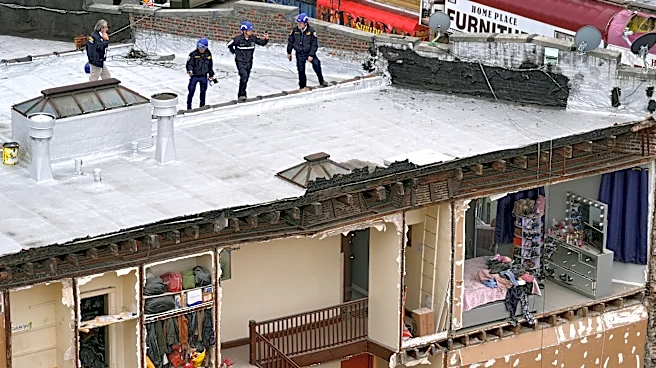
Lawrence and her husband, James Alexander Williams, escaped with only what they were wearing. The collapse peeled the wall off their building. Their apartment now sits open to the street like a room in a dollhouse, her belongings in plain view.
"I’m a strong person. I promise you," she said, her voice giving way. "I can look up in that building and I can see my stuff, but I can’t get it. This is all we have.”
Zariah Coleman’s first thought, when she came home and saw what had become of her building, was of her cat. She nearly ducked under the police tape to go get him, she said, until she realized she didn’t know what she would find on the other side.
"Before all this happened, we used to feel shakes in our building. It used to start shaking when they was working and stuff," she said. “And I just really hope they come and get our cat, cause he’s inside the house right now."
Rescuers had gone in to look for him, she said, but she didn’t think they had found him. "He’s hiding from them," Coleman said. "I think he’s scared."
Then she stepped away from the podium in tears.
Winston Sanchez, an electrician who spoke for the Ecuadorian construction workers, said it was not only a building that fell on Nov. 11. "It collapsed the lives of many relatives, brothers, fathers," he said.
Caguana Cosquillo’s wife, he said, is due to give birth on Sunday.
This article originally appeared on USA TODAY: A Brooklyn building fell in seconds. Grief reached around the world