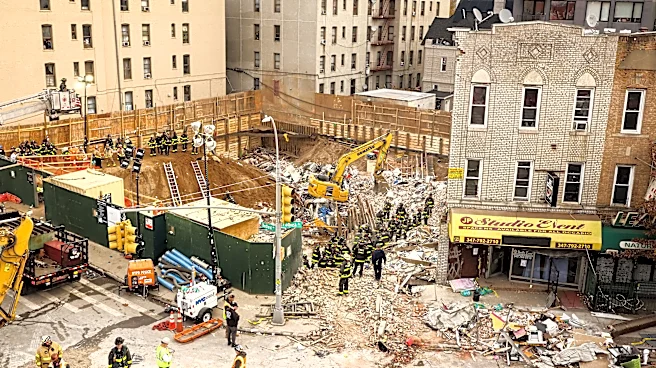






Tragedy struck the Flatbush neighborhood in Brooklyn on Nov. 11 when an apartment building collapsed into a nearby construction site, killing eight people and injuring 18. While we still don't know everything about the horrific events, people in the neighborhood are calling for answers from those who were involved, leading to an important conversation about housing in New York City.
“Grief without accountability is not enough,” said City Councilmember Farrah Louis, who represents the district, at a news conference on Nov. 13. “Buildings do not simply collapse without systemic failures, especially when records show a building with nearly 100 open violations sitting next to an excavation site, cited for violating a stop work order.”
While the cause
of the building collapse remains under investigation, what we do know is that the building that collapsed had 11 violations from the last year with the city before the events, and one man has filed a lawsuit about cracks in the building’s brick leading up to the disaster.
We also know that a stop-work order on the adjacent property, where a giant excavated hole existed, was required to pay a $10,000 fine after they failed to comply with a stop-work order back in the spring.

The people who died in this building collapse, including two children, should still be in our community today. This is undeniable. What remains to be seen is how the city will let this horrific event inform housing policy going forward.
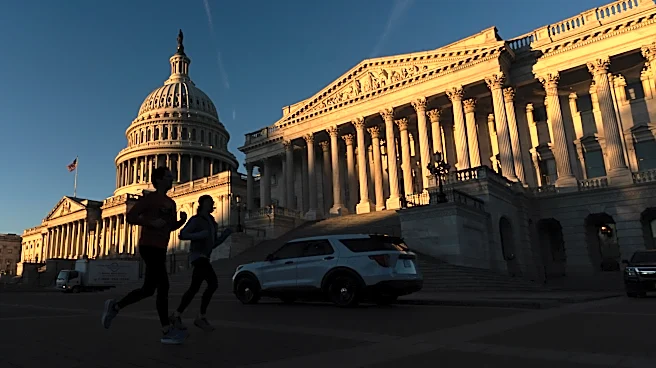
As Democrats take control of both chambers of Congress, affordable housing will be a major part of their mandate. Democrats at every level must find ways to regulate builders and hold landlords accountable to ensure housing is built safely. The housing crisis won't be solved in the next two years, but more oversight from the government can ensure that construction does not further harm the community.
New York's housing shortage echoes America's

New York City has a housing shortage – currently, 290,000 new units are needed to house every person who needs a place to live. Over the next decade, the number will balloon to 700,000. This will inevitably lead to higher rent prices.
Mayor Zohran Mamdani has made tackling the housing crisis a priority of his administration, promising to build 200,000 new affordable units and preserve 200,000 current affordable housing units over the next 10 years. But this plan goes beyond his time in office, even if he is elected for a second term. A new mayor could decide to speed up development by cutting red tape, or take a more measured approach that keeps costs high at the expense of native New Yorkers, who are being displaced.
It’s also notoriously difficult to build in New York, due to costs and the time needed to go through the process with the city. This is not a bad thing. Housing regulations are put in place for the safety of the community – it is when companies ignore these laws that disaster can strike.
In Flatbush, the construction site next to the collapsed building reportedly failed to take precautions that would have protected existing neighbors. The companies involved had a history of violations in the city. They shouldn't have been able to take on a project like the one in Flatbush in the first place, and they should have been made to pay more than a $10,000 fine for defying the law.
The owner of the building that collapsed owed more than $100,000 in city taxes and had 98 open violations with the Department of Housing Preservation and Development. Landlords like this need to be held accountable beyond a whisper network – they need to be held accountable for endangering community members.
In Bedford-Stuyvesant, the rapidly gentrifying neighborhood I live in, new developments are being built while deed theft pushes elderly Black homeowners out of the neighborhood, and skyrocketing rent prices make the neighborhood unaffordable for everyone else.
What happened in Flatbush is the worst-case scenario – when profit becomes more important than people, we all lose. The city must levy heftier fines and spend more time vetting construction companies, while landlords must be held accountable for subpar conditions and ignoring issues that threaten the safety of tenants.
Democrats will have to answer for affordable housing
The problem, of course, goes beyond the Big Apple – according to a Brookings Institute analysis from 2024, the United States could need anywhere from 1.5 to 5.5 million units to keep up with demand. It was a problem I saw in Durham, North Carolina, the city I lived in after college, where tech companies in the area are bringing new people to the region while housing has not caught up with demand.
Affordable housing has eluded Democrats for years because they don’t know how to talk about it correctly. Falling in line with developers is not the answer, but neither is completely giving up on new housing.
Now that they have majorities in both the House and the Senate, they must find new ways to prioritize lowering housing costs. If they can’t solve the problem over the next two years, they must be ready to provide answers to the American people for why that is.
This is an area where I hope to see future House Speaker Hakeem Jeffries excel. A bipartisan housing affordability bill passed into law in July is a sign of what could come with Democrats in control – if they are able to find common ground with Republicans that doesn’t cut corners to build as quickly as possible.
Follow USA TODAY columnist Sara Pequeño on Bluesky: @sarapequeno.bsky.social
This article originally appeared on USA TODAY: Brooklyn building collapse is why Democrats can't ignore housing | Opinion