









If humans are to live and work on the moon for years and years, they'll need to rely on a fleet of ground vehicles that can navigate difficult terrain.
Such rovers would be crucial to not just scout for life-sustaining resources, but to enable the sort of scientific discovery that makes it all worthwhile.
Fortunately, some of those vehicles due to power the early stages of NASA's ambitious Artemis moon program are being developed right on schedule, the space agency said in an October update. And when they start heading for the lunar south pole as early as the end of the year, the rovers will prove indispensable in setting the stage for humanity's long-awaited return to the moon.
NASA is in the midst of a three-phased mission of building a multibillion-dollar
lunar outpost it calls "Moon Base," where the first humans to reach Earth's natural satellite since the Apollo era can live longterm.
The first phase involves sending robotic rovers and lunar terrain vehicles (LTVs) for astronauts to the moon that can demonstrate technology, map the terrain, hunt for vital resources and collect data on how to operate in the extreme lunar environment. When astronatus reach the moon as early as 2028, the LTVs will then provide transportation to them as they gather geologic samples to bring back to Earth.
Here's a look at three of the vehicles – all of which are due to reach the lunar surface on a Blue Origin lander – that will be critical early on in establishing NASA's foothold on the moon.
NASA's VIPER to look for water, other resources

The moon's south pole is thought to be abundant with water ice – a valuable resource that could be extracted and used for drinking, breathing and as a source of hydrogen and oxygen for rocket fuel.
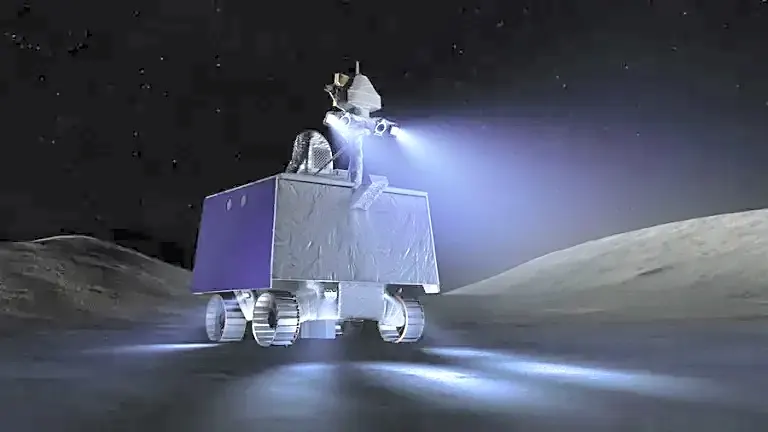
And NASA’s VIPER rover will be vital in the effort to find it.
When it reaches the lunar south pole as early as 2027, VIPER (Volatiles Investigating Polar Exploration Rover) will embark on a 100-day journey spanning more than 18 miles, NASA said in an Oct. 20 press release. The mission will take the vehicle across the region and into permanently shadowed craters, where ice may have formed and other valuable resources could be extracted.
Along the way, the observations it collects could help NASA "better understand the history of the moon, Earth, and the processes that helped shape conditions for life," the agency said.
The VIPER rover is fully built and at NASA’s Johnson Space Center in Houston, where it is undergoing final testing before it's transported to NASA’s Kennedy Space Center in Florida to launch to the moon, NASA said.
Astrolab rover to transport astronauts on surface

Astrolab, an aerospace company based in Hawthorne, California, is one of two companies that received about $220 million from NASA to build a vehicle capable of slowly navigating the moon's rough terrain.
Astrolab's Crewed Lunar Vehicle 1, or CLV-1, is a compact vehicle designed to carry astronauts and cargo with a weight limit of up to 2,000 pounds and a top speed of 6 mph, NASA has said. NASA astronauts recently donned mockups of Artemis lunar spacesuits to test a prototype of CLV-1 at the Houston headquarters of Axiom Space, an industry partner of Astrolab's.
The CLV-1, though, won't be Astrolab's first rover to reach the moon.
A robotic rover designed by the company, nicknamed FLIP, could reach the moon before the end of 2026 aboard Voyager Technologies’ Griffin-1 lunar lander. FLIP could not only study the environment of the south pole, but demonstrate technologies that could be key on its CLV-1 successor.
Lunar Outpost rover to be second, lighter vehicle for crew

Colorado-based Lunar Outpost is the second spaceflight company to receive the lucrative NASA contract for a lunar vehicle for astronauts.
Lunar Outpost's rover, nicknamed Pegasus, is lighter and can travel about 3 mph faster than Astrolab's.
Two Pegasus prototypes recently arrived at the Johnson Space Center for crewed testing that allowed NASA astronauts in pressurized spacesuits to evaluate its design.
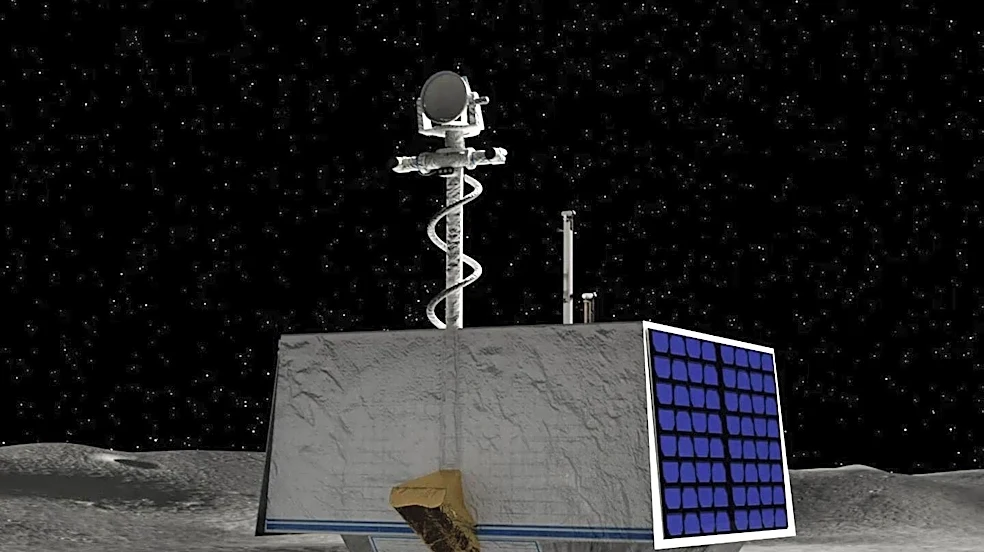
Lunar Outpost's robotic rover MAPP (Mobile Autonomous Prospecting Platform) previously operated on the moon in 2025 after hitching a ride aboard a lander developed by Houston-based aerospace company Intuitive Machines. That means the hardware and subsystems the rover tested are now flight-proven and can be replicated on Pegasus, according to NASA.
Crewed lunar landers to be ready by end of 2027 for launch
Each rover from Astrolab and Lunar Outpost would need to be capable of helping astronauts carry out three moonwalks per Artemis mission and travel up to six miles on a single battery charge, NASA said.
Both companies are due in the coming months to test drivable mockups of each vehicle with NASA crew to evaluate how the rovers operate in a simulated lunar environment. Assuming preliminary designs are reviewed by the end of 2026, both companies would be on schedule to have the rovers ready for NASA by the end of 2027.
Eric Lagatta is the Space Connect reporter for the USA TODAY Network. Reach him at elagatta@usatodayco.com
This article originally appeared on USA TODAY: Meet 3 lunar rovers that will set the stage for NASA's moon base