






Visits to Los Angeles County parks dropped dramatically following the launch of President Donald Trump’s aggressive immigration enforcement operations in the area, a new study has found.
The UCLA Latino Policy and Politics Institute and UC Berkeley Latinx Research Center analysis found summer weekend visits to six LA County parks dropped by 151,000 in 2025 and 2026, following Trump’s return to the White House and the launch of his deadly mass deportation campaign. The drop in visits was particularly sharp at parks in Latino neighborhoods, the study found. According to immigration enforcement research data, Latinos are most often targeted by U.S. Immigration and Customs and Enforcement.
"Parks are vital to the health of a community. They are where
many Angeleno families form memories grilling, swimming, celebrating family events, and decompressing in nature. And as costs rise, they are one of the few outings that families can still afford," report co-author G. Cristina Mora, co-director of the UC Berkeley Institute of Governmental Studies, said in a statement.
"Our research shows that federal immigration crackdowns emptied these spaces. Many parents were likely too afraid to take their children to playgrounds, fields, and lakes that belong to all county residents," she said. "More than a year after the initial raid surge, families have not come back."

The report covers Frank G. Bonelli Regional Park, Castaic Lake State Recreation Area, Kenneth Hahn State Recreation Area, Santa Fe Dam Recreational Area, Peter F. Schabarum Regional County Park and Whittier Narrows Recreation Area.
Researchers derived the change in the number of visitors at each park based on the change in the number of vehicle entries, tallying four visits per car entry. Santa Fe Dam and Whittier Narrows sit in heavily Latino communities and saw the greatest fall in visitors.
Compared to 2024, the number of vehicle entries at the parks covered in the study dropped 17% in 2025 and 14% lower in 2026.
USA TODAY has reached out to ICE for comment on the report.
The report indicating how ICE raids impacted the lives of Angelenos comes after nearly two years of radically expanded immigration enforcement that has changed life for many across the country.
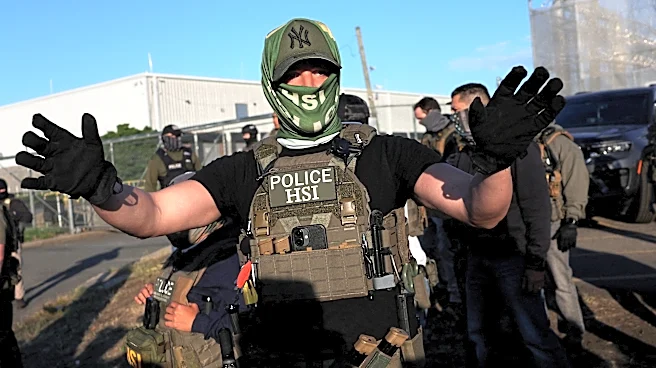
In Los Angeles, ICE raidedworkplaces,carried out widespread traffic stops and conducted stakeouts at routine legal check-ins.
"People have every right to be scared," Marisol Marquez of Centro CSO, an LA immigrant rights group, told USA TODAY following a Supreme Court ruling in September 2025 that allowed ICE to make indiscriminate immigration-related stops in LA. "Local small businesses are suffering because of the terrorism enacted on us by law enforcement."
Among the first places to see Homeland Security’s new immigration enforcement tactics on display was the city’s MacArthur Park. Immigration enforcement officials deployed in military vehicles to the park wearing masks and carrying assault rifles.
LA is not the only place where ICE enforcement has changed life for many, especially Latino residents. Across the country, cities saw life upended by expanded immigration enforcement.
"We went from being this community that walks our kids to school or goes out to parks. Now the streets are empty," Corina Pedraza, a longtime resident of Chicago's South Side, previously told USA TODAY. "People are living in fear of going out to get groceries, dropping their kids off at school. People are strategizing how to get three or five blocks to work."
In Memphis, organizers shared similar stories.
"People don’t want to send the kids to school, people don’t want to work," Mauricio Calvo, president and CEO of advocacy organization Latino Memphis, said following the deployment of National Guard troops to the city. “We’re in crisis mode."
Following outcry over the killings by Homeland Security personnel of Minneapolis residents Renee Good and Alex Pretti, DHS has mostly abandoned its more high-profile militarized tactics.
But ICE arrests have still continued to climb, hitting record levels this summer. The agency has adopted more discrete tactics, quickly picking people up off the street and leaving behind scenes of abandoned cars and work equipment, reporting by the USA TODAY Network in Indiana and Wisconsin have found.
USA TODAY and the Columbus Dispatch reported in September that an eerie quiet had fallen on immigrant neighborhoods in Miami and Ohio for fear of ICE.
"You can feel it everywhere you go," Marc Fequiere, executive director of the Haitian Community Network, said of the scene on the ground in Columbus, Ohio. "Our businesses are shutting down. People don't go out anymore. Parents are afraid to send their kids to daycare. A lot of people lost their jobs."
"Our businesses are empty. Churches are empty. The streets are empty. People have completely gone underground," Santra Denis, a member of the Haitian American Professionals Coalition, said of life in Miami. "It’s quite devastating."
Voter analysis that found Latinos in the midterm elections swung against Trump and after the Democrats took both the House of Representatives and the Senate, Trump admitted his immigration policy was "too tough."
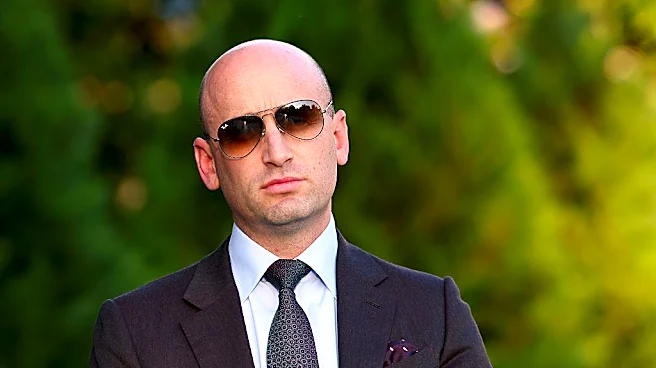
But among the president’s first moves following the midterms was to make Stephen Miller, seen as the principal architect behind the mass deportations campaign, his chief of staff. Trump’s critics said Miller’s appointment suggests the president is doubling down on efforts to deport people from the country.
This article originally appeared on USA TODAY: LA parks see dramatic drop in visitors amid Trump ICE raids, study finds