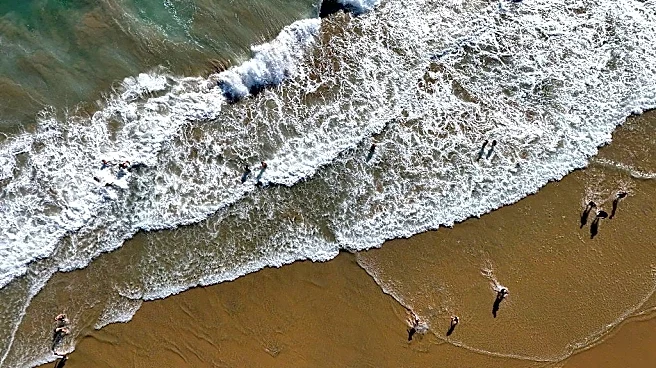






Dangerous surf, powerful rip currents, and sneaker waves are creating hazardous conditions along parts of the California coast, with forecasters warning that elevated tides could bring additional coastal flooding later this week.
The National Weather Service
has issued beach hazard statements for several coastal regions, including beaches in Southern California and along the San Francisco Bay Area and Central Coast.The threats vary by location, but officials are warning beachgoers to stay out of the water, avoid rocks and jetties, and remain alert for waves that can sweep across the shoreline with little warning.
Where are beach hazards in California?
- Southern California: A beach hazards statement for San Diego and Orange counties remained in effect through 6 p.m. Monday, Nov. 2. The National Weather Service forecast surf of 3 to 6 feet, dangerous rip currents, and minor tidal overflow during the afternoon high tide, expected around 3:30 p.m. The agency said tides are expected to increase later in the week, reaching 7 feet as early as Thursday in Orange County and Friday in San Diego County. High tides could peak at 7.5 to 7.8 feet over the weekend and into early next week.
- Los Angeles and Ventura counties: A separate beach hazards statement covered Ventura County beaches, the Malibu Coast and Los Angeles County beaches through Monday afternoon. Forecasters warned of dangerous rip currents and breaking waves associated with elevated surf, along with minor tidal overflow during high tides. Waves could wash people off beaches and rocks, while water could spill onto normally dry sand, lower parking lots and pathways. The National Weather Service also warned that additional coastal flooding impacts are likely into next weekend as tides rise to 7 feet as early as Friday. High tides could reach 7 to 7.8 feet over the weekend and into early next week, with elevated surf potentially worsening impacts, particularly along west- to northwest-facing beaches.
- San Francisco Bay Area and Central Coast: A beach hazards statement remained in effect through 8 p.m. Tuesday, Nov. 3, for San Francisco, the coastal North Bay including Point Reyes National Seashore, the San Francisco Peninsula Coast, Northern Monterey Bay and Southern Monterey Bay and Big Sur. The National Weather Service warned of an increased risk of sneaker waves and strong rip currents. Waves can sweep across the shoreline without warning, pulling people into the ocean from beaches, jetties, and rocks.
What are sneaker waves and rip currents?
Sneaker waves are unexpectedly large waves that can surge much farther up the beach than the waves that came before them. They can catch
people off guard, knock them off their feet, and pull them into the ocean.
Rip currents are powerful, narrow channels of water that flow away from shore. They can pull swimmers and surfers away from the beach, creating dangerous conditions even when waves appear manageable.
Both hazards can threaten people standing along the shoreline, not just those swimming in the ocean.
How to stay safe at California beaches
The National Weather Service recommends staying out of the water during hazardous swimming conditions and avoiding rocks, jetties, piers, and other shoreline structures.
Beachgoers should:
- Stay out of the water when hazardous surf and rip currents are present.
- Never turn their backs on the ocean.
- Stay away from rocks, jetties and piers, where waves can sweep people into the water.
- Avoid walking close to the waterline, particularly when sneaker waves are possible.
- Follow local weather, surf and tide forecasts and heed lifeguard instructions.
Even periods of smaller waves can be followed by a much larger sneaker wave. A seemingly calm stretch of water does not mean conditions are safe.
Brandi D. Addison covers weather nationwide as the Weather Connect reporter for the USA TODAY Network and contributes to Texas Connect coverage statewide. She can be reached at baddison@usatodayco.com. Follow her on Facebook here.
This article originally appeared on USA TODAY: California beach hazards: Rip currents, sneaker waves threaten coast