
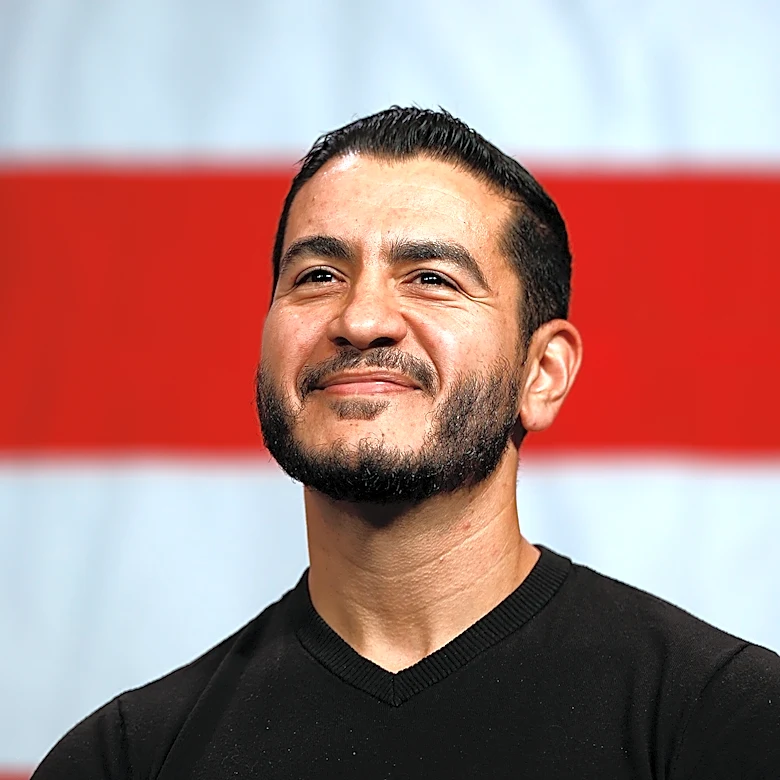


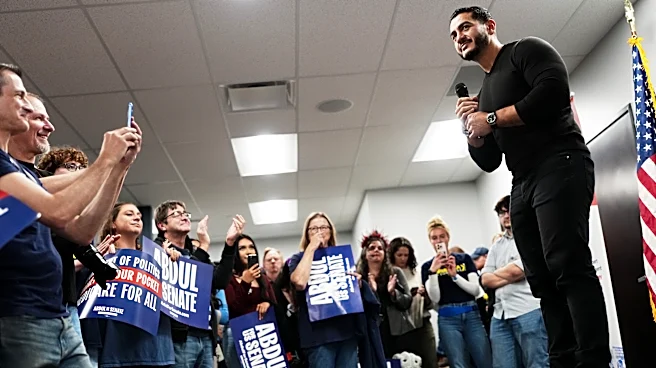

In a nation that prides itself on its diversity but often falls short in giving voice to those in minority communities, Abdul El-Sayed's win in the race for Michigan's open U.S. Senate seat stands as a mark of how inclusive and expansive American democracy – and its electorate – can and will be, given time and opportunity.
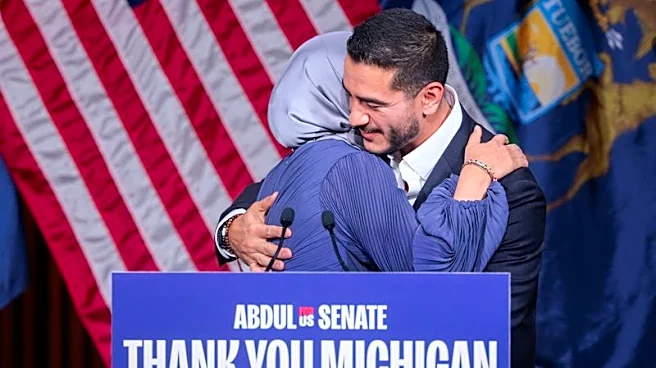
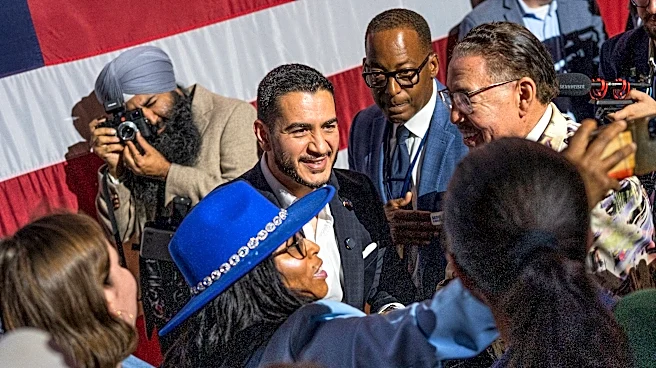
Early on Nov. 4, El-Sayed, the child of Egyptian immigrants and a native Michigander, was declared the winner of the Senate race, dispatching Republican former U.S. Rep. Mike Rogers after an ugly and bruising campaign that saw the nation's chief executive disparage and demean the Democratic nominee with racial epithets and false claims of being a terrorist, setting the stage for him to become, when the new Congress takes office
in January, the first Muslim to be a U.S. senator.
"It shows that our democracy is alive and kicking," said Osama Siblani, founder and publisher of the Arab American News in Dearborn – a city with one of the largest concentrations of Arabs and Muslims in the country – where El-Sayed defeated Rogers 82%-17%, despite that community backing Republican President Donald Trump two years ago. "It shows the Constitution works for people regardless of where they came from and regardless of who they worship."
"For Arab-Americans in particular," he added, "this will open the door for us to be involved at the highest levels."
It didn't come easy, however, and it didn't come without division.

But it did come with a conclusive decision, as the never-before-elected El-Sayed, who trained as medical doctor and worked in public health, rode a blue wave of Democratic enthusiasm, impressive turnout by younger voters, and economic headwinds facing the GOP to beat Rogers.
El-Sayed fought against hate, rode youth movement
It was, at times, a maddening campaign that also saw Democratic defections, raw feelings among Jewish voters, complaints of antisemitism and hate, along with tens of millions of dollars in spending often aimed at inflaming the worst kinds of xenophobic prejudices in a state with some of the largest Arab American and Muslim communities in the nation.
By taking positions that not only championed universal health care, getting corporate money out of politics and bringing down inflation, but also riding a cresting progressive movement challenging longstanding American commitments to Israel's security, El-Sayed exposed himself to both valid criticism and vulgar hate.
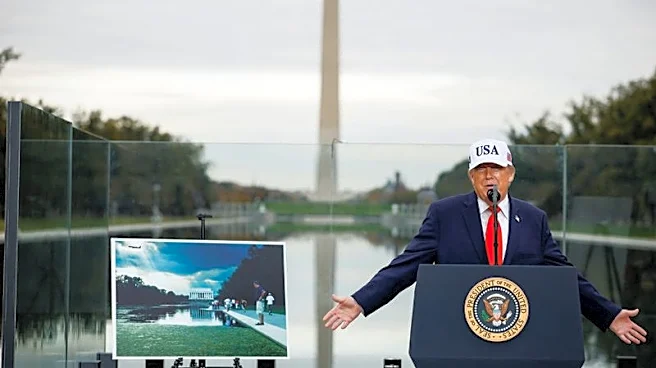
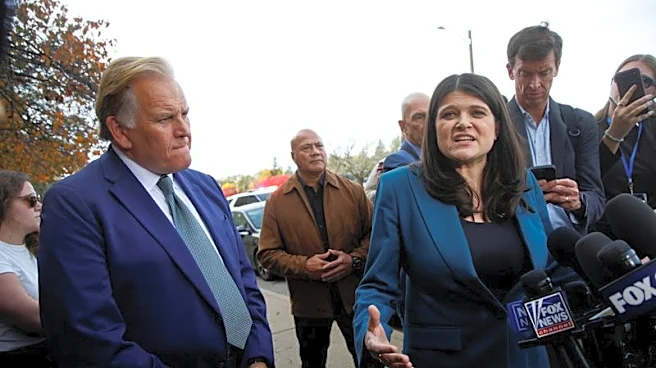
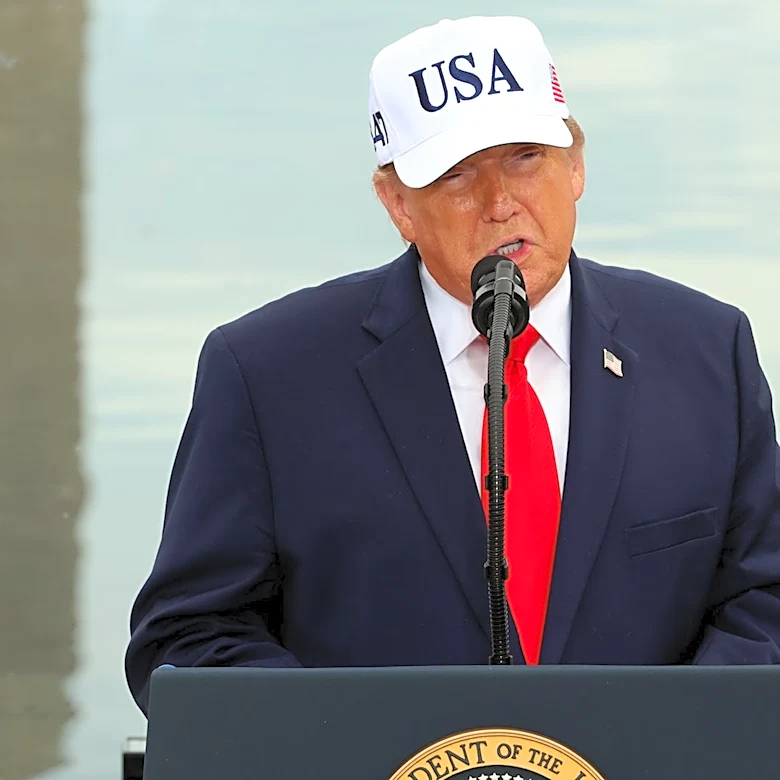
Trump derisively called him "Mohammed" and a "Jihadist," and accused him unfairly of connections with terrorist groups, claiming he wanted to institute Islamic law. Democratic U.S. Rep Haley Stevens, who El-Sayed defeated in the primary, turned her back on him and the Democratic Party in the final days over what she said was his too-soft commitment to Jewish voters – and still he won.
He won Dearborn, sure. But he also won in West Bloomfield Township, in Oakland County, a community with many Jewish voters and where controversial Internet influencer Hasan Piker – who supported El-Sayed – crassly suggested last week that the candidate's sending volunteers there was like a Black candidate sending doorknockers into a town full of Ku Klux Klan members, a remark El-Sayed denounced.
Anyone who wants to prejudge what diversity of opinion is capable of in purple Michigan might look no further.
“It’s not a comment on me, it’s a comment on America," El-Sayed told the Detroit Free Press, part of the USA TODAY Network, on Nov. 4. "There’s always a few small people who want to make America small like them, but Michigan showed just how big we really are. America showed how big our democracy allows us to be.”
"I’m just really, really grateful for the support and trust that I’ve earned from my state and I hope that I can earn that every single day from here on out,” El-Sayed said.
Unsurprised by the outcome, unsurprised by the support
It didn't surprise him that he won in West Bloomfield, for one thing, given that he grew up in neighboring Bloomfield Hills. “It’s not surprising to me that communities like the one I grew up in, with a large Jewish minority, chose to embrace religious pluralism," he said.
That support, however, was notable across the state, especially given the suggestions that this race would be far closer than it turned out to be.
As of 11 a.m. on Nov. 4, El-Sayed had a 53%-45% lead on Rogers, with 95% of the vote tallied statewide, according to Decision Desk HQ. And his margins in many of the most electorally significant counties across Michigan were impressive: In Washtenaw, with the University of Michigan in Ann Arbor (El-Sayed's alma mater), he won with 74% of the vote; and in Ingham County, home to Michigan State University in East Lansing and the state capital in Lansing, he had 69%. And in Wayne County, home to Detroit, he was winning 71%-27% despite Rogers' attempts and claims of having made significant inroads with Black Detroiters.
Detroit's election website results, while not complete, showed El-Sayed with 92% of the vote.
And he took many of the state's bellwether counties, or kept them close enough to forestall a win by Rogers. In Macomb, the Republican appeared to be winning by a slim 50%-48% margin. In Saginaw County, despite Rogers' efforts there, El-Sayed was winning 50%-48%. In Eaton County, west of Lansing, his lead was 51%-47%.
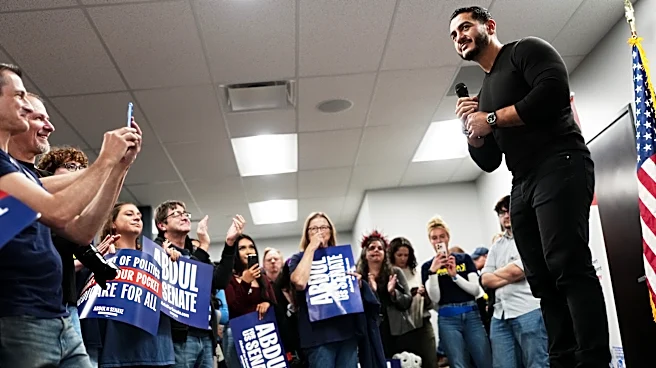
"We spoke of a brighter, a bigger and more hopeful Michigan," El-Sayed said in speech to supporters as he claimed victory at about 1:30 a.m. Wednesday, Nov. 4. "Theirs is an astroturfed campaign built to deceive and distract."
"The opposition tried to divide us," he continued. "At first, they pointed to my name and my faith as if, you know, 'He's a little different.' And when it didn't work, then they tried to guilt me by association. And when that didn't work, they went all in on one of the ugliest campaigns we've seen in our lifetimes."
And that didn't work either.

Mohamed Gula, CEO of Emgage Action, a Muslim civic organization that supported El-Sayed, said the candidate was undoubtedly helped by his embracing a narrative − one that included being critical of Israel and U.S. aid to that country as its counteroffensive against Hamas in Gaza continued − that became more mainstream, especially among younger voters. "He was an unapologetic candidate that many Americans, not just Muslim Americans, could really connect with because they were just feeling the realities of what we feel day in and day out," Gula said.
But his background, his religion, his ethnicity was part of his uniqueness as a candidate as well
“I think that the historic nature of this is something that our kids will even be proud of,” Gula said. “I think that his background was a blessing for everyday Americans because it brought out a certain type of trauma and healing that many Americans didn’t realize they had, especially post-9/11. And the fact that we had a candidate that was willing to stand in it so unapologetically and answer for that, but also center the issues that were most important to everyday Muslims and Americans. So it was an ownership. I would argue that it was a superpower, more than anything.”
Bringing all sides to the table, healing
That's not to say, however, that El-Sayed doesn't have work to do among his new constituencies, far from it.
There still are many Jewish voters, many of them Democrats, with deep concerns over his commitment to their safety and a belief that he is too eager to associate with critics of their faith, like Piker, or too blithe to minimize existential threats against their religious community, despite his firm disavowal of any and all kinds of political violence. When he refused, in a debate, to say whether Iran or Israel posed a bigger threat to the United States, it stung many of them to the core.
Running an ad that showed how former FOX News host Tucker Carlson – who has platformed Holocaust deniers – rejected Rogers and presumably preferred El-Sayed was an effective counter to Rogers' claim that some Democrats supported him. But it also inflamed concerns among many Jewish voters, even those who might otherwise be inclined to support him.
"I would like to see him tone down his inflammatory rhetoric," said Regina Hayut, a Jewish Democrat and cantor at Temple Beth Emeth in Ann Arbor. "In my eyes, it got worse as we got closer to the end. I’d like to see that turned around... I want him to think more carefully about how his words affect his various constituencies."
A member of the group calling itself Nonnegotiable Michigan, which called on El-Sayed to affirm a commitment to Jewish safety and Israel's right to self-sovereignty in its country, she declined to say who she voted for in the Senate election. But she wanted to make clear, she had no concerns about El-Sayed's faith.
"I will say, for me, his religion has nothing to do with my discomfort with him. I'd be delighted to have a Muslim senator sitting next to a Jewish senator (Democratic U.S. Sen. Elissa Slotkin) in the purple state of Michigan... That would be beautiful."
She said she hoped as he gains experience, he will remember that his job is to represent all Michiganders.
And that will include Republicans, despite how bruising this election was. After all, just two years ago, they were the ones who won, as Trump took the state for the second time in three presidential elections.
“Typically when you’re elected, you need votes from both the majority and the minority. The majority can’t accomplish everything themselves," said Michigan Republican Party Chairman Jim Runestad. "There has to be some level of cooperation. If you are a nasty, miserable, rotten person, both sides don’t want to deal with you and you’re marginalized out."
"It’s much more effective to immediately come in and start healing the bridges. When you get into the Legislature, then you have to start getting along with people and getting to know them, and I absolutely think that will happen.”
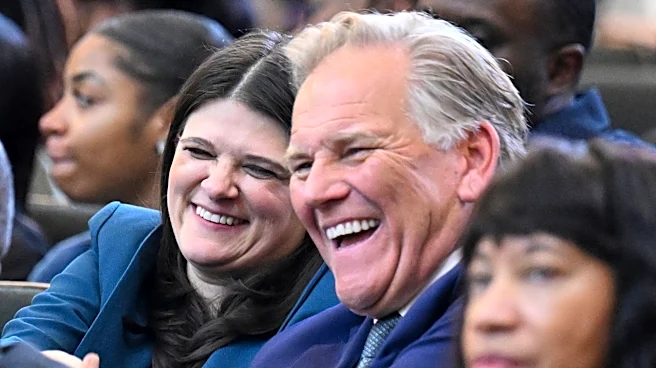
Former U.S. Rep. Andy Levin of Bloomfield Township, a progressive Democrat who supported El-Sayed, said it's hard to underestimate the importance, to Jews, of El-Sayed's election, however.
"I’m going to speak as a Jewish Michigander," he said. "I just want to convey how important this experiment in democracy has been to the Jewish community, in America, but in Michigan. We’ve had Jewish members of Congress since 1845. And I’m so proud that we have this voice and it’s been super huge to us. But for Jews, we knew during the civil rights movement that we better stand up for our Black brothers and sisters in America, because Black safety, Black voice, Black empowerment is good for Jews as a little minority."
"It’s been a struggle in the Jewish community to some extent," he said, referring to the divisions seen during the Senate race, "but I think so many of us understand that we should be proud and determined to elect the first Muslim senator.”
Class is in session
Next will come the task of preparing to be a lawmaker, as El-Sayed joins perhaps the most-exclusive and powerful 100-member legislative body on the globe – and one where every member has the power, individually in many cases, to hold up legislation, forestall nominations, and make himself or herself heard.
He will be asked to vote on military funding bills that not only provide war support but boost installations like Selfridge Air National Guard Base in Macomb County. He will be asked to decide on legislation that Michigan corporations, and its automakers, rely on, though he has taken on a mantle as a corporate antagonist.
And he will take on that role in a Democratic majority, with a Democratic U.S. House across the Capitol, and Trump facing his last two lame duck years in office.
Inflation will still have to be tackled, and a war with Iran – its continuation, its conclusion or its aftermath – will have to be dealt with. And El-Sayed said he would like to begin by repealing reductions in Medicaid and passing legislation to make union organizing more easily, though either would likely face a veto by the White House.
The pressure on a Democratic Congress to take action against the Trump agenda, on severe immigration measures, on health care cuts, on tariffs, will be enormous. And the prospects of a misstep, an embarrassing remark, or a slip up that results in a critical news cycle, will be great.
All eyes will be on El-Sayed just as they were another Michigander, U.S. Rep. Rashida Tlaib, D-Detroit, when she, in 2019, became the first (along with Ilhan Omar of Minnesota) Muslim women to be sworn into the U.S. House.

It is a historic opportunity to show what Michigan, and America, is capable of. And it is a moment fraught with danger, given the hate already shown toward El-Sayed in this campaign.
But he has his chance.
Omar Khorfan, a Bloomfield Hills resident who went to undergrad with El-Sayed, said back at school everyone figured the sky was the limit for El-Sayed. “The joke within out little collection of shabab, or guys, then was that anything short of a Nobel Peace Prize for Abdul would be a failure.”
El-Sayed himself has not shied away from his religion or his background or how he is different than your standard issue senator. He has also said that he was running to be a U.S. senator from Michigan who happened to be Muslim, not a Muslim running for U.S. Senate, much like John F. Kennedy wanted to be a president who happened to be Catholic, not a Catholic president.
But the significance is still there.
In his victory speech, as he often does, he spoke in Arabic. He introduced himself using his full name – Abdulrahman Mohamed El-Sayed − with its Arabic pronunciation.
But rather than saying, "God willing," when he talked about his chances of winning, as he often does, he employed another phrase, Alhamdulillah.
"Praise be to God," he said, translating for those who might not have understood.
Contact Todd Spangler: tspangler@freepress.com. Follow him on Twitter @tsspangler. Staff write Adrienne Roberts contributed to this story.
This story has been updated with additional information.
This article originally appeared on Detroit Free Press: Abdul El-Sayed's win: How it happened, impact of his historic victory