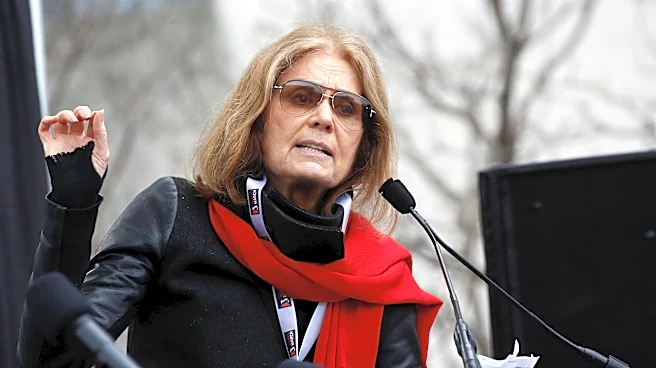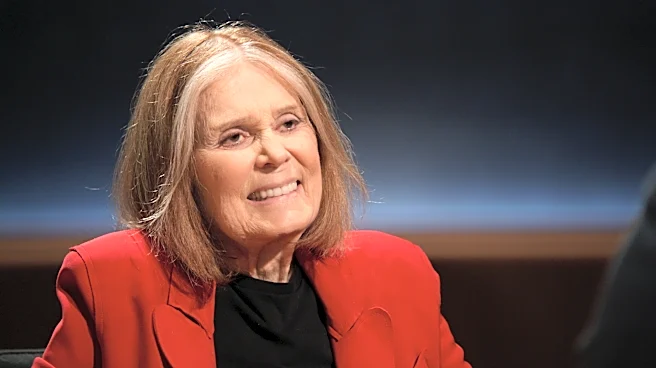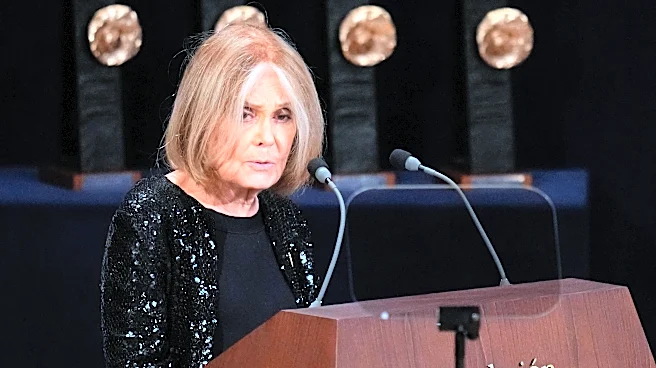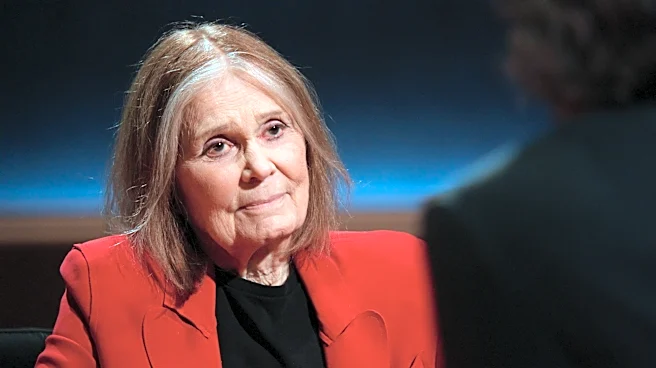




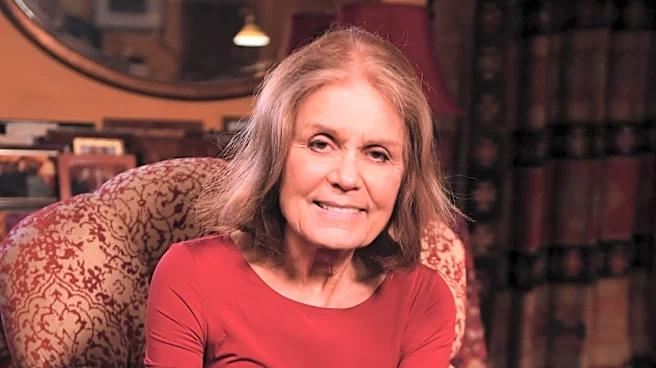
Hours after news of Gloria Steinem's death traversed the globe, the final words she's leaving behind were revealed in a sit-down recorded a year and a half before she died.
In "Famous Last Words: Gloria Steinem," now streaming on Netflix, the trailblazing feminist activist reflected on her childhood, opened up about her feelings and plans regarding her eventual death, and issued a message for those she leaves behind. She was 90 years old when the sit-down with series creator Brad Falchuk was recorded in February 2025.
The interview was at times biting (she called Hugh Hefner, the subject of her iconic 1963 exposé, "incredibly pathetic"), sometimes lighthearted (she confessed to enjoying "Dance Moms" and reality TV shows) – but, most of all, it remained
thoughtful as the award-winning journalist mused about the loves in her life and her part in advancing equality and civil rights for six decades.

"I hope I wasn't the face of the feminist movement because it's not right," she told Falchuk early in the conversation, pushing back against his assertion that she was the symbol of the advancement of women's rights. "Because it's a diverse movement and actually, on the issues in public opinion polls, women of color are more likely to support the issues than white women."
Steinem, who cofounded New York Magazine and Ms. magazine, rose from working-class roots to be one of the leaders of the women's rights movement in the late 1960s and '70s. She also cofounded the National Women’s Political Caucus, the Ms. Foundation for Women, the Free to Be Foundation and the Women’s Media Center in the United States.
On why she is among the most notable figures in the space, she posited, "It has more to do than endurance, than at that moment because I just lasted longer, because I've stayed at it longer. All my speaking partners had children or another career or did it for a period of time, but not as long a time as I have."
Gloria Steinem opens up about legacy, where she might be buried
When asked about her eventual death, Steinem expressed regret about what she would be missing.
"It feels so sad only because I'm so interested in what's going on," she said of the thought of her demise. She then joked, "I looked up to find the oldest woman in the world, and I found one in the Himalayas who says she's 135, so I have a goal."
Responding to Falchuk's question about whether she would be buried next to her longtime friend Wilma Mankiller, she said, "It's more difficult now because I think her ashes are around a tree in her former front yard, so we'll have to work it out."
At the time of the recording, she hadn't made plans for how her death would be celebrated or commemorated.
The award-winning author also weighed in on the state of the world, admitting, "We're struggling." She listed "religious restrictions" and "there's race and class restrictions" as setbacks to equality and added, "We have, right as we speak, Trump in the White House."
"We have no shortage of things we need to do in order to be more compassionate toward each other," she said.
After her death, Steinem shared, she hoped to be remembered as a catalyst for positive change.
"I don't know if we can contemplate our own nonexistence, but I just hope that I have, however accidentally, left behind some words or actions or stories or something that is useful to the people – and pleasurable, hopefully, for the people who are going to continue long after you and me," she said.
The Presidential Medal of Freedom Award recipient wanted to be remembered as a "person that tried to make the world a little more equal, compassionate, joyful, [and] funny than it was when I showed up."
Gloria Steinem's final message, in full
As with his other sit-downs, Falchuk left the set for Steinem to address viewers directly and privately.
"Hello, all you unique individuals out there. I'm so glad to be meeting you through the magic of the media.
"I wish I could meet each one of you in person but, in a way, this is what allows us now to see each other's lives, to influence each other's lives, to respect each other and to therefore perpetuate what we hope is a global democracy.
"Please feel free to respond in any way you can and please tell your own story. This is the most important thing we can do for each other, is to know each other through stories. And I hope, so much, that whoever you are listening right now, you are able to do what you love, to be also the unique person you are."
Contributing: Nicole Fallert
This article originally appeared on USA TODAY: Gloria Steinem's final message revealed in sit-down recorded before her death