
On Nov. 13, France marked 11 years since the Islamic State’s attacks on Paris that killed 132 people – 90 of them at the Bataclan concert hall – and wounded hundreds more.
Three days earlier, a French judge
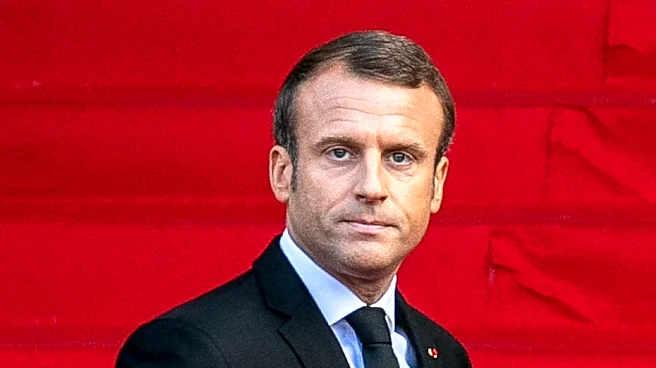
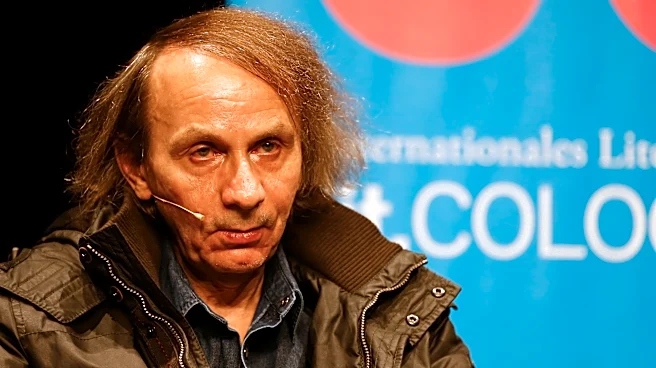
charged Michel Houellebecq, among the country's most famous writers, over remarks about Muslims.
Houellebecq is accused of "complicity in incitement to discrimination, hatred or violence,” according to French news reports. The case grew out of a 2023 complaint from the Union of Mosques of France. His lawyers say nothing he said amounts to incitement.
Americans who think the United States could use a few “hate speech” laws of its own should watch this case closely. France is showing where such laws can lead.
What Michel Houellebecq said about Muslims

At issue is a 2022 interview with the magazine Front Populaire.
“I believe that the wish of the native French population, as they say, is not for Muslims to assimilate, but for them to stop stealing from and assaulting them, in short, for their violence to decrease, for them to respect the law and other people,” Houellebecq said. “Or, another good solution, for them to leave.”
Houellebecq also warned of a coming backlash: “There will be attacks and shootings in mosques, in cafes frequented by Muslims. In short, Bataclans in reverse.”
His lawyers argue that a prophet of tragedy isn’t asking for it to come true.
And what do France’s Muslims want? A third sympathize with at least one Islamist movement, such as the Muslim Brotherhood, according to a 2025 French Institute of Public Opinion survey. Among those under 25, it’s 42%. And 46% say Islamic law should apply, in part or in full, in the country where they live.
Houellebecq has since expressed regret for his remarks. In January 2023, he met with the rector of the Grand Mosque of Paris, conceded the offending passages were "ambiguous," and agreed to rewrite them. The mosque dropped its complaint.
In a memoir published later that year, the writer called the remarks “stupid” and “dumb.” The Union of Mosques of France pressed ahead anyway.
The French government sends a clear warning
The French writer has also defended the phrase “great replacement.” To many, it describes the demographic fact that a growing share of many Western countries’ populations is non-White. That’s different from claiming the change is the product of a coordinated plot.
“I was very shocked that it was called a theory,” Houellebecq said in the magazine interview. “It’s not a theory, it’s a fact.”
On Oct. 30, two French lawmakers introduced a bill that would treat as incitement any speech that, “by invoking the replacement of one population by another or the necessity of remigration,” casts a group as a threat because of its origin.
But talk of demographic change isn’t itself verboten. One may notice such change, so long as one celebrates it.
Jean-Luc Mélenchon, leader of far-left party La France Insoumise, told El País in June: “Today 1 in 3 French people has a foreign ancestor. In my time it was 1 in 10. The New France is that – the real, concrete France.”
In charging Houellebecq, the French state sends a clear warning: Tread lightly where critiques of multiculturalism, or Islam, are concerned.
Houellebecq is a natural target. His 2001 novel, “Platform,” ends with Islamist terrorists attacking a sex-tourism resort in Thailand. A year later, a French court acquitted him of inciting racial hatred for calling Islam “the most stupid religion.” Even if he’s cleared again, the state will have punished him twice over. Consider the time, money and energy a successful defense requires.
His 2015 bestseller, “Submission,” imagines an Islamic takeover of France, aided by socialists. It was published that Jan. 7 – the day two Islamist gunmen killed 12 people at Charlie Hebdo, a satirical weekly newspaper that had lampooned the prophet Muhammad.
Houellebecq’s novels are critical of Islam. They are more critical, in my view, of a senescent Europe practically begging to be put out of its misery.
America's free speech consensus is fraying

Unlike France, the United States has no “hate speech” exception to free speech. The Supreme Court has held that the First Amendment protects even “the thought that we hate.”
Some would like to see that protection stripped. Most Americans (91%) call the First Amendment “vital to America.” But 24% say it “goes too far in the rights it guarantees,” according to a 2026 Freedom Forum survey. Last year, that figure was 13%.
College students are worse. In a 2026 Buckley Institute survey, 45% of undergraduates said physical violence can be justified to stop someone from using hate speech. Four in 10 said offensive speech should be subject to criminal prosecution.
Nor is support for free speech universal among professors.
In her 2024 book, “Fearless Speech,” George Washington University law professor Mary Anne Franks argues that “First Amendment norms have consistently exalted and elevated reckless speech that benefits the powerful at the expense of the vulnerable.”
Jeremy Waldron, a New York University School of Law professor, argues that “the position of minority groups as equal members of multiracial, multiethnic, or religiously pluralistic society is not something that anyone can take for granted. It is a recent and fragile achievement.”
The state, Waldron contends, must protect that fragile status with laws against hate speech. His argument seems to frame “multiracial, multiethnic, or religiously pluralistic” societies as incompatible with free speech.
The European Union, in requiring member states to criminalize hate speech, has all but declared the same.
What is the goal of prosecuting Houellebecq? The same as that of any crackdown on speech. An internationally renowned author will serve as an example to anyone considering similar blasphemy. The point is to make certain ideas first unsayable, then unthinkable.
Natalie Sandoval is an opinion fellow with the Intercollegiate Studies Institute. She graduated from Columbia University in 2024 with a degree in English. Prior to this role, she worked as an opinion columnist at the Daily Caller, where she focused on politics and cultural commentary. Follow her on X: @NatSandovalDC
This article originally appeared on USA TODAY: France is prosecuting a novelist for speech. America, beware | Opinion