




Most things take a little longer in Alaska.
Gas arrives in the state by barge, groceries too. Trips between neighboring communities can require boat or airplane rides, sometimes both. You can't even drive between the state's two largest cities, Anchorage and Juneau.
Given the state's nickname, "The Last Frontier," perhaps it's no surprise the Nov. 3 blue wave of Democratic victories has not yet washed over Alaska. That political change may eventually reach the 49th state, but we won't know for a little while longer, as election officials hand-count ballots from tiny communities where snowmobiles and fishing boats often outnumber cars.
Although most races across the country have been called, with winners giving victory speeches and losers conceding,
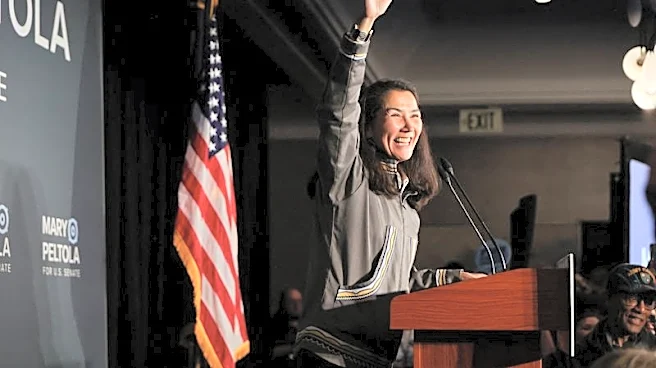
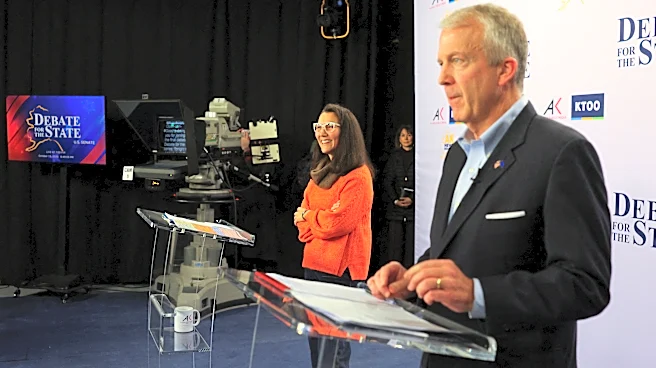
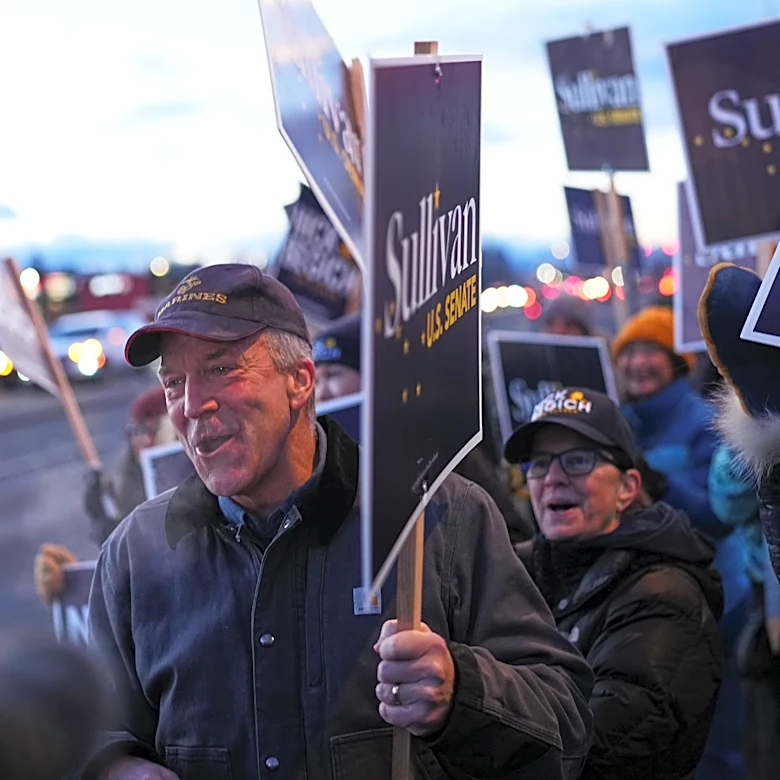
the results of Alaska's hotly contested Senate race remain unclear. As of 5 p.m. ET on Nov. 4, former U.S. Rep. Mary Peltola, a Democrat, held a hair-thin lead over incumbent U.S. Sen. Dan S. Sullivan, a Republican, at 48.2% to 47.9%. Just 626 votes separated the two. And workers are still counting.
"It feels so good to be one person in a movement," Peltola told supporters at an Election Day rally after polls closed. "I've been in different campaigns for three decades... nothing has felt like this. There is nothing that comes close to the way this feels."
But there's an extra wrinkle in a race that's already had several. Alaska uses ranked-choice voting for elections, and if neither Peltola nor Sullivan cross the 50% mark during the initial count, state elections officials will redistribute votes from lower-achieving candidates. That laborious process could take several more weeks, including waits for overseas military ballots to be counted.

The slow-moving counting is the latest twist in a race that has at times been overshadowed by the candidacy of a man no one expected to win: A second Dan Sullivan.
A retired schoolteacher from a particularly rural part of the state, the candidate listed on the ballot as Daniel J. Sullivan Jr. ran almost no campaign, and raised and spent almost no money in comparison to the two frontrunners, according to Federal Election Commission filings. As of Nov. 4, Daniel J. Sullivan Jr., had 3,583 votes. His name appeared on the ballot without a party affiliation.
Republicans long feared the candidate they dubbed "Decoy Dan" could confuse people enough to siphon votes from the incumbent, creating a path to victory for Peltola. Republican officeholders have largely controlled Alaska for several decades, but shifting demographics have opened the door to more Democrats.
The GOP earlier this year challenged Daniel J. Sullivan Jr.'s appearance on the ballot, but in June the Alaska Supreme Court ruled he would remain, even if some people thought it was a "bad faith" effort to confuse voters. He did not immediately respond to a request for comment.
Last month, The New York Times reported Democratic Party activists had recruited the retired teacher to run as a spoiler. President Donald Trump ordered the Department of Justice to investigate and said Peltola should face criminal charges, although she has denied any connection to the second Sullivan.
Prompted by Trump, the Justice Department has sent at least 20 letters to individuals or entities, informing them they are investigative targets or should preserve records as part of its probe into the presence of the two Sullivans, a law enforcement source confirmed to USA TODAY. The department has also served at least 120 subpoenas in its investigation, the source said.
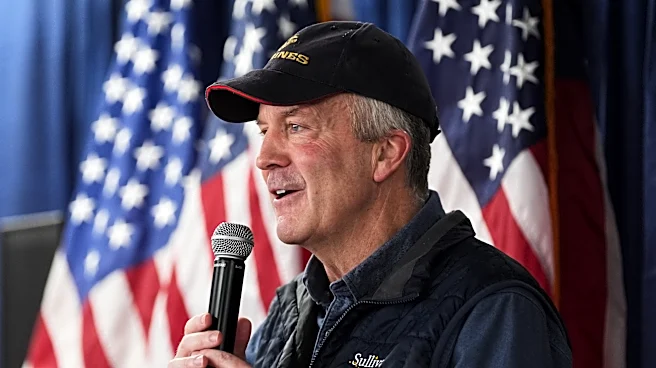
Speaking to reporters on Election Day, Sullivan, the incumbent, said the move to put a candidate with the same name as his on the ballot showed what Democratic Party leaders think of Alaskans.
"This is all about disdain for the people of Alaska," he said. "Think about it: First order of business is to trick people of their votes. And look, ultimately the scheme is working. There's going to be thousands of Alaskans who throw away their vote."
Peltola told her supporters that no one was confused about who they were voting for.
"They've tried to distract us. They've used shiny objects, lots of juicy gossip. Alaskans aren't having any of that," she said. "We know B.S. when we hear it. We know distractions when we see it. And we are not falling for any of their funny business."
Russell Luke, an assistant professor of political science at the University of Alaska in Fairbanks, said he believes most Alaskans were clear on exactly which Sullivan they were voting for, especially given the media coverage of the issue. He said Sullivan, the incumbent, was "clearly marked," on his own ballot.

"I don't think confusion was a driving factor," Luke said. "I think the vast majority of Alaska voters were aware of this controversy."
Luke said he suspects most Alaskans also understand that a delay in the results was always going to happen, given how close pre-voting polling showed the race.
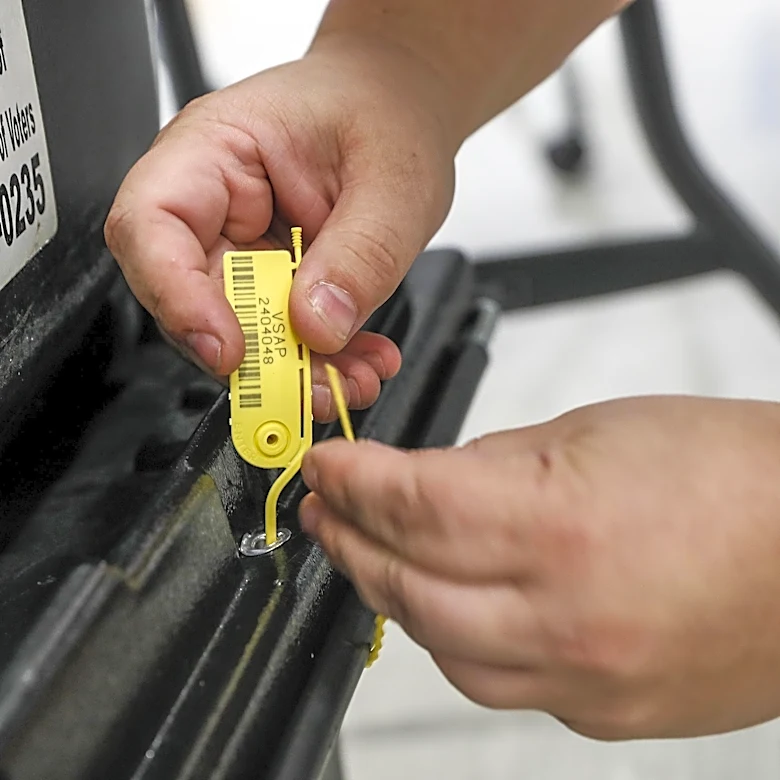
In Alaska, virtually all votes are cast on a paper ballot. In urban areas, including Anchorage or Fairbanks, those paper ballots can be electronically counted. But in rural areas of the state, which covers 586,000 square miles of land, those paper ballots must be transported to a central office to be counted, although initial tallies are done by hand at 131 local sites, according to the Alaska Division of Elections.
More time will be needed for random audits to confirm the results, and voters can also call for a recount if the margin remains narrow.
Under the ranked-choice system, voters can rank candidates rather than just voting for one. A candidate getting more than 50% automatically wins. But if no candidate surpasses 50% support, the lowest-ranked candidate is removed from the running, and his or her votes are then awarded to their supporters' second-choice candidate. That process continues until there's a clear winner. State elections officials will begin that process Nov. 18, and have until Nov. 25 to certify a winner.
"Most people understand it takes more time here - it takes time for votes to percolate in," Luke said. "Those types of realities make it take a much longer time."
Contributing: Aysha Bagchi, USA TODAY
This article originally appeared on USA TODAY: In The Last Frontier, a long wait for election results