


It’s too early to declare victory, but something has shifted within the Democratic Party.
A party that was floundering in polls following the 2024 elections suddenly has both attention and momentum, with Democratic voters showing up in shocking numbers in several states. Political journalists are no longer speaking of the party in a tone evoking funeral dirges. Voters seem energized by the competitive primary season where both progressives and moderates netted wins across the country.
These are improvements, but they are not the solutions. For Democrats to truly be effective as a party, they must accrue power. They can only do that if their base shows up in the general election this fall.
| Opinion
The polling on Democrats is changing. Can they take advantage?
This primary season has spouted countless think pieces about the Democratic Party and what is “too extreme” or “not extreme enough.”
Some pundits chose to theorize about whether democratic socialism is here to stay, and what that means for us as a country that has feared anything left of capitalism since the Cold War. They want to talk about who these politicians are and make grand theories about why they won and who, exactly, voted for them, because it is more fun to exist in the theoretical than to lay things out plainly. That’s because a pragmatic approach provides no definitive answers, either.
At the end of 2024, it seemed as though Democratic Party leaders had given up, and voters could tell.
A slapdash presidential campaign for former Vice President Kamala Harris, in which she was existing within the shell of former President Joe Biden’s reelection bid and had to adhere to his principles instead of forging her own narrative, left voters feeling as though the party had no direction, no clear message beyond “Trump bad.”
The party had no definitive stance on the economy or the unfolding conflict in Gaza, and could barely muster an emphatic stance on "Medicare for All."
Polls showed voter attitudes. A survey of Democratic voters performed by The Associated Press-NORC Center for Public Affairs Research found that intraparty favorability had plummeted from 85% in September 2024 to 67% in October 2025. In a survey of all voters published May 1, Pew Research Center found that 59% of Americans held an unfavorable view of the Democratic Party – an improvement on the previous year.

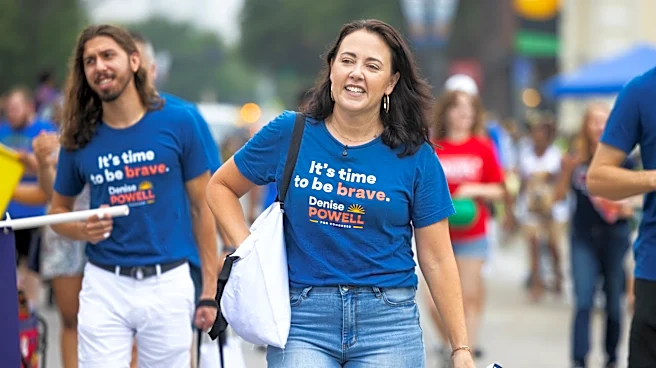
But Democrats saw a burst of momentum following the successful campaign of New York City Mayor Zohran Mamdani, prompting people in the party to wonder – and fear – whether progressives could win elections. More Democrats began paying attention to the midterm primaries, leading to varying degrees of success for both progressives and moderates.
According to recent Emerson College polling, 51% of voters support the Democratic candidate on a generic ballot. A Reuters/Ipsos poll shows that 42% of registered voters would vote for a Democratic congressional candidate, versus 37% who would vote Republican.
These are signs the party is on the mend. And although Democrats could be doing even better if the party had been campaigning throughout the past two years, now is not the time to stop caring.
Democrats have a choice to make going forward

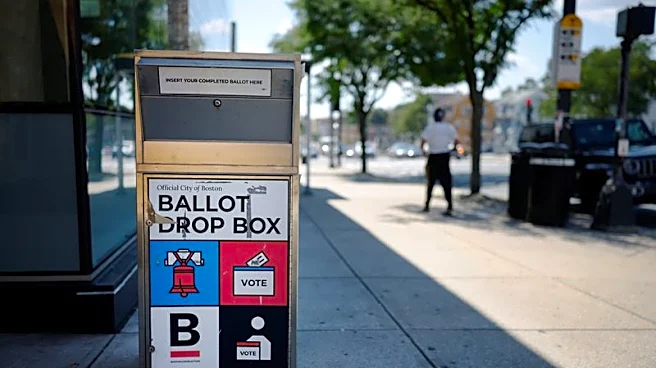
To win in November, Democrats must set aside their differences and look at what's working. Clearly, having competitive primaries has improved voter turnout, but members of the party must look past their own echo chambers to face the true battle at hand: defeating Republicans.
OK, so perhaps your preferred candidate didn’t win. Maybe you wanted democratic socialist Francesca Hong to be the next Wisconsin governor. Maybe you wanted the moderate Haley Stevens to be the next Democratic U.S. Senate nominee in Michigan. Maybe you don’t want New York progressives to be the ones leading you in the U.S. House of Representatives. That happens – but you still have to vote.
The worst thing Democrats could do at this moment is allow Republicans to define us and stay home from elections out of fear that the party isn’t exactly what you want it to be. For years, Republicans have allowed extremism to fester in the wings because their primary goal was winning. They would rather have fascism than a Democratic president, so long as that fascist has an “R” by their name.
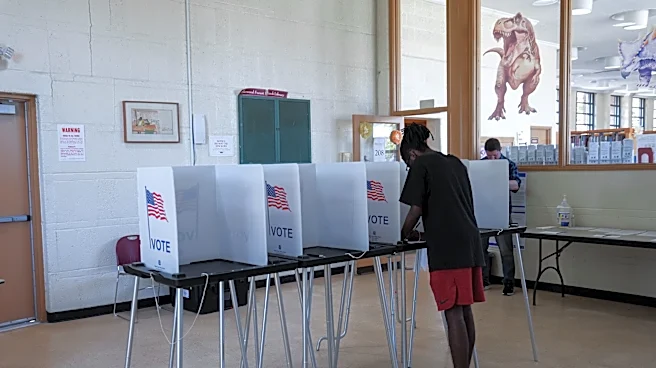
The shifts we’re seeing within the Democratic Party mean absolutely nothing if there is no follow-through. Regardless of whom you voted for in the primary, it is imperative that we all head to the polls this fall with one goal in mind: winning.
If there’s one thing Democrats can all agree on, it’s that we no longer want to see Republicans in power. That is the bare minimum, and it’s the only thing uniting us at this point. So we might as well try to defeat them.
Follow USA TODAY columnist Sara Pequeño on Bluesky: @sarapequeno.bsky.social
This article originally appeared on USA TODAY: Democrats lead GOP in polls. Here's what has to happen next. | Opinion