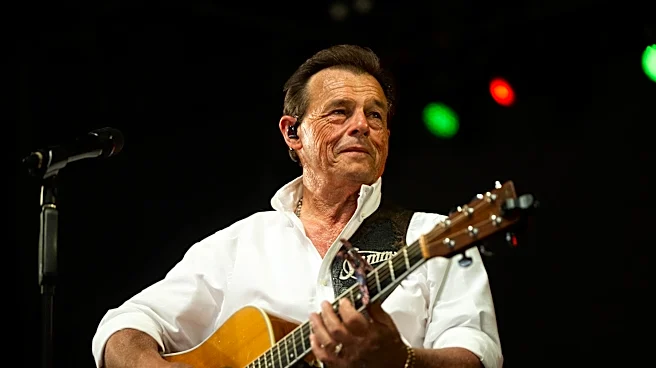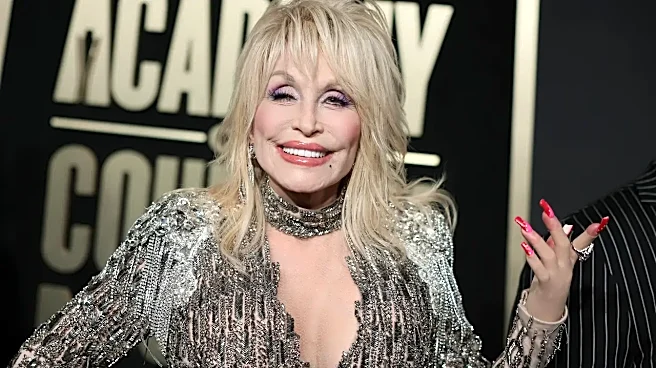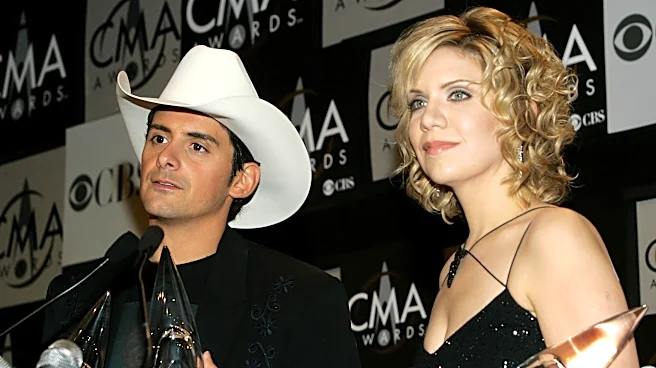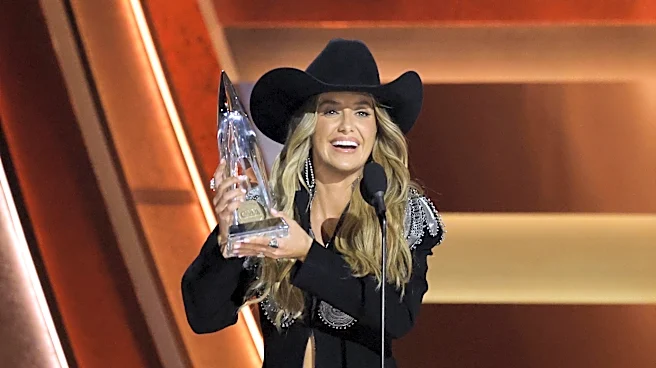


Black country fans comprise one of the fastest-growing demographics and diverse artists of color have put out viral hits in recent years, yet this year's slate of 60th Annual CMA Awards nominees is entirely white. It's the first time since 2017 the nominee field has been entirely white, spanning 63 individuals and 11 groups or duos across 12 categories.
"There's been a regression, especially since 2020, of support and [record label] signings," said singer-songwriter Rissi Palmer, highlighting what she sees as the decreasing visibility of people of color in country music.
In previous years, a small but consistent handful of Black or Hispanic artists, songwriters, producers and video directors have received nods at the annual show, with a few artists like
Darius Rucker, Jimmie Allen and Tracy Chapman winning awards. However, even when nominated, Black and brown artists rarely take home awards. The Tennessean spoke with numerous artists and industry insiders who shed light on why, despite an increasingly diverse country community, the systemic concerns of years past continue to persist.
"The real issue is who gets invested in, who gets played, who gets marketed, who gets celebrated and ultimately who gets the opportunity to build a lasting career in country music," said Black Music Action Coalition CEO Willie "Prophet" Stiggers. "Black artists helped build this music. The question now is what will Music Row do with that truth?"
Meanwhile, the Country Music Association's incoming CEO, Brittany Schaffer, highlighted multiple programs the organization has created to help broaden membership and input from diverse communities. Performers at CMA Fest, for example, were far more diverse than award nominees.
"The Country Music Association exists to serve the entire country music community, and we want every artist, songwriter and industry professional who calls this genre home to know there’s a place for them here," Schaffer said.
How CMA Awards voting can leave diverse artists behind
A field of nominees for the CMA Awards is chosen by CMA members, who each vote in three rounds to select the final nominees and eventual winners. The CMA currently includes more than 7,000 voting members who fall into 17 professional categories, including artists, marketers, talent buyers, musicians, songwriters, publishers and others.
Two industry veterans with record label experience confirmed that, for voters employed by labels and other music organizations, company leadership can influence who CMA members vote for. Organizations may even coordinate voting if multiple companies were involved in the success of a particular album or song. Sometimes, this makes it even harder for independent artists to compete. The same could be said of other awards in the industry as well.
"Only a couple of Black artists and artists of color in the country music genre still have a record deal," the country artist Breland said. This holds true for artists of many backgrounds. Yet even if an artist has backing from a major label, the organization may encourage employees to focus support on someone else.
In the first round, voting members can write in any artist or project they think is deserving, as long as the work falls within an eligibility window for that year's show. Over the next round of voting, the field is narrowed further. A final round of voting decides the winners before the televised awards show.
Who would have been eligible?
There were plenty of people who could have been considered this year, with impactful work that fell inside the eligibility window of July 1, 2025 through June 30, 2026.
Chief among them was Shaboozey, whose platinum No. 1 collaboration “Amen” with Jelly Roll included two of the genre's most visible stars. The song won the 2026 Grammy Award for best country duo/group performance in February.
Other artists with successes to consider include previous nominees like Kane Brown and The War and Treaty, as well as potential new artist of the year nominees like Kashus Culpepper. Culpepper is represented by Big Loud Records, the same label behind 2026 new artist of the year nominee Stephen Wilson Jr.
That doesn't even count artists like Pynk Beard, 2'Live Bre, Madelyn Roberts, Maurice the Music, K. Michelle and Sunny Black, who opened on Jelly Roll's tour this year, plus Latina artist Moriah Smallbone, all of whom are making strides with new music. Others like Salvadoran-American artist Angie K, who released a new album this year, and Taiwanese-American songwriter Gabe Lee, who spent this year touring and has garnered a devoted audience in the Americana/folk scene, fell below thresholds for consideration based on the CMA's criteria.
The issue extends beyond who makes the ballot. People of color remain largely absent from the wider country music conversation on the radio and at mainstream music festivals beyond CMA Fest. Industry insiders have pointed to these disparities as evidence of systemic barriers that can make it harder for artists of color to gain recognition, secure institutional support and build the kind of mainstream success that leads to awards consideration.
"In order to be nominated for a CMA [award], there are certain metrics that you have to hit," said Palmer, who charted three singles on country radio in 2007 and 2008.
Palmer explained that when established measures of success prioritize radio play, sales, and access to traditional industry networks, artists who have been historically excluded from those spaces can find themselves at a disadvantage before the nomination process even begins.
"If you're not being supported by country radio… it's not going to translate into you being able to meet the metrics that are necessary," she told The Tennessean.
The result is a cycle of limited institutional recognition making broader commercial success even harder to achieve.
Meanwhile, 2026 marks a relative high-water mark for female artists and writers. Women grabbed almost 29% of the field in a year dominated by Ella Langley’s “Choosin’ Texas.” The song is now the longest-reigning No. 1 in Billboard Hot 100 history, and features a heavily female cast of creators. However, Palmer noted that the step forward is "not reflective of the female country artist landscape at all, namely Black and Latinx artists."
The history of representation at the CMA Awards
According to University of Ottawa musicologist Jada E. Watson, who conducted a widely cited study examining representation in the country music industry, 1.6% of CMA Awards nominees between 2000 and 2020 were people of color. The Academy of Country Music had slightly more diversity in its nominations for the ACM Awards, but neither even reached 6% by 2021.
It's no secret the country music establishment has historically been slow to accept and embrace minorities and women. However, representation has inched forward in some regards. Charley Pride was the first Black artist to win a CMA award and he remains the only Black artist to win CMA entertainer of the year. He did so in 1971, while also winning male vocalist of the year in 1971 and 1972.
From 2020 through 2026, the CMA Awards featured 18 nominations involving a person of color, with seven individual acts nominated. Jimmie Allen, Brown, Shaboozey and The War and Treaty have all earned repeat nominations in consecutive years.
While the Mexican-American country singer Freddy Fender won a CMA award in 1975, and The Mavericks, including Cuban-American singer Raul Malo, won awards as the vocal group of the year in 1995 and 1996, other ethnicities have rarely been represented, including among songwriters and producers.
Breland, who has released a series of hits and collaborations starting with 2019's viral "My Truck," said representation in the genre has begun to stagnate.
"Country music is a microcosm of what we're seeing in America. Back in 2020 and 2021, there was a big national push following the George Floyd protests to invest in the Black community in a meaningful way. And in country music, we saw that as well," he said, pointing to a broader pullback from diversity, equity and inclusion efforts in the U.S. trickling down into a lack of prioritization among country music organizations.
He added that independent artists have a harder time getting songs on popular playlists.
"The issue starts way before we even get to the awards. The awards are the end result of the issue," Breland said. "My experience has been more so that I've had issues with the institution."
According to many of the experts interviewed by The Tennessean, the lack of diversity at the CMA Awards reflects broader barriers within country music that begin before awards season. Breland underscored the direct correlation between radio airplay and awards like the CMAs.
"Country radio still plays such a big part in viability for an artist," he said. "If you have a single that radio doesn't play, it's infinitely harder. Or you might not even be eligible for song of the year."
What advocates and artists say needs to change
Artist manager and Black Opry co-founder Holly G has been lobbying the country industry for better representation for years. She said when it comes to nominations, the primary obstacle is the awards criteria themselves.
Country radio success is still a dominant factor under consideration for each major category. But as streaming platforms and social media continue to gain traction, she said the way artists are considered for recognition should change, too.
Holly G asked: "If we see that the way that we're nominating is leaving people out, why don't we just change the nomination?"
She said a category like "streaming song of the year" would not ensure any particular artist or background was included, but it could make broader representation possible.
Palmer described it as a "chicken-and-egg" dilemma. Artists need a large promotional budget to get radio support. In order to have a large budget, they either need independent wealth or the support of established industry players like record labels. She said that without support from "the Nashville industrial complex," it's almost impossible for a country music professional, whether a producer, songwriter or artist, to "get a nomination."
Meanwhile, Breland said that people of color can still face barriers even if their song gets played by country radio and becomes a hit.
"I had a No. 1 single on country radio with Dierks Bentley and HARDY [2021's 'Beers On Me']," he explained. "A lot of stations I discovered, including in Texas, were literally cutting my verse off of the song and just playing the other verses from the other artists. And I never really got an explanation as to why that was."
Following that, Breland said his next single did not reach country radio's Top 50, despite being "one of the top-streamed songs in the markets that were playing it."
For its part, CMA leadership emphasized that the organization doesn't determine who gets nominated and is making efforts to increase diversity within its membership.
A written statement from Schaffer, who will take over for longtime CMA CEO Sarah Trahern in January 2027, said the organization will "continue to work to engage a broader community." Since 2023, efforts have included expanding membership beyond those working full-time in country music, including students and a variety of business professionals.
"Our Member Ambassador program taps current members to build community and bring new members into CMA," Schaffer added. "Country Forward, which takes place during CMA Fest and CMA Awards weeks, has become a place where new and prospective members connect with the broader industry, and we’ve seen those connections lead to real opportunities."
Schaffer also noted efforts to invest in a new generation of female leadership through its Women’s Leadership Academy, as well as the CMA EDU professional development pipeline.
"We know we’re not done, and we’re committed to continuing this work so that CMA reflects the full range of people working in country music today," Schaffer said.
According to Angie K, the continued work of the entire music community, including the artists themselves, will ultimately be the key to that outcome.
"I think it is also important to remember that CMA doesn’t choose the nominees. It’s voted on by us, the members," she said. "I hate to admit this, but I didn’t vote on every round this year, maybe that vote would have made a difference… But the thing is, there are more of us unsigned than not. And the second we start realizing that, the labels stop winning. And that stage will start to reflect what we see here on the indie side of Nashville. Which is an incredibly vibrant, diverse community of country artists. But it’s gonna take all of us, including myself, to start participating a lot more."
According to the Live Nation Global Country Music Survey in 2025, Black country music fans are among the fastest-growing demographics dedicated to the genre and many fans of all backgrounds are now discovering new artists through social media, not just country radio stations. Music lovers around the world are increasingly drawn to country music, with London and Mexico City identified by Live Nation as hubs with high demand for roots music. Slowly, institutional recognition may begin to mirror that shift.
CMA has other opportunities for representation outside of nominees
Many artists said institutions like the CMA can prioritize representation even when artists of color aren't on the ballot yet.
Breland emphasized the importance of having artists of color presenting and performing at major awards shows, sharing how an appearance on the 2022 ACM Awards with Thomas Rhett "changed the trajectory" of his career although he wasn't nominated.
Presenters for the 60th annual CMA Awards have yet to be announced, but so far no artists of color have been included in the list of performers. Performers will include Tim McGraw, Miranda Lambert, Tucker Wetmore, Zach Top, Kacey Musgraves, Cody Johnson and The Red Clay Strays, in addition to the night's most nominated star, Langley. More performers will be announced as the show approaches.
Meanwhile, Breland and Holly G did acknowledge official events like the CMA's Country Forward and ACM's Charley Pride brunch as examples of institutional support. However, they noted that events like these are often separate from the televised shows.
"It feels like it's very behind closed doors sometimes," Breland said. "Why not make it a part of the awards ... where that visibility is actually going to mean something?"
The 60th annual CMA Awards will take place Nov. 18 at Nashville's Bridgestone Arena, airing live on ABC at 7 p.m. CT. View a full list of the nominees here.
This article originally appeared on Nashville Tennessean: CMA Awards 2026 includes no nominations for people of color | Exclusive