






Public health officials in North Carolina are warning that people who visited a mobile petting zoo between late July and late August may have been exposed to rabies after multiple baby goats tested positive for the virus.
The North Carolina Department of Health and Human Services confirmed multiple rabies cases in baby goats associated with Farm Adventures mobile petting zoo, a business based in Iredell County that hosts events in the surrounding area. Health officials said people who had direct contact with the goats between July 28 and Aug. 27 should seek a rabies risk assessment.
The warning applies to visitors who interacted with the animals either at the petting zoo's location in Harmony, North Carolina, or at off-site events hosted across
several counties in the state. Authorities emphasized that the risk is limited to people who attended events hosted by the petting zoo and had close contact with the goats.
Because baby goats are often bottle-fed, handled closely and cuddled by visitors, health officials said they are working to identify anyone who may have been exposed to infected saliva.
"Rabies is a serious illness that is almost always fatal, so it's important for residents who may have been exposed to take immediate steps to protect health," Mecklenburg County Health Director Dr. Kimberly Scott said in a statement on Aug. 29. "Parents and caregivers should call on behalf of children who may have interacted with the goats. Residents should not wait for symptoms before calling."
Baby goats euthanized to prevent further spread
The Iredell County Health Department announced on Aug. 28 that there was a potential rabies exposure linked to a local mobile petting zoo.
Three baby goats from the petting zoo tested positive for rabies after an exposure incident involving a skunk on the farm in late July, according to the county health department. Officials said all remaining animals at the facility have been placed under quarantine as a precaution.
In an Aug. 29 update shared by Davie County Health and Human Services, officials said a fourth goat was presumed to have been infected with rabies, although it was not tested. Farm Adventures confirmed that all four baby goats were euthanized to prevent further spread of the virus.
"The baby goats were kept in a separate pen, away from the others, and were too young to receive their vaccinations," the petting zoo said in a statement. "We unfortunately encountered a skunk in their pen, which we promptly removed and disposed of. However, during this process, the skunk was able to bite the goats."
Officials said they are evaluating potential exposure events and investigating appearances by the mobile petting zoo at public and private gatherings in Iredell, Mecklenburg, Davidson, Watauga, Burke, Davie and Durham counties.
Farm Adventures said it did not realize the goats had been bitten, and that it was working with public health officials, the North Carolina Department of Agriculture and animal control in the investigation. The owner of the petting zoo has cooperated fully with state and county authorities, according to officials.
What is rabies?
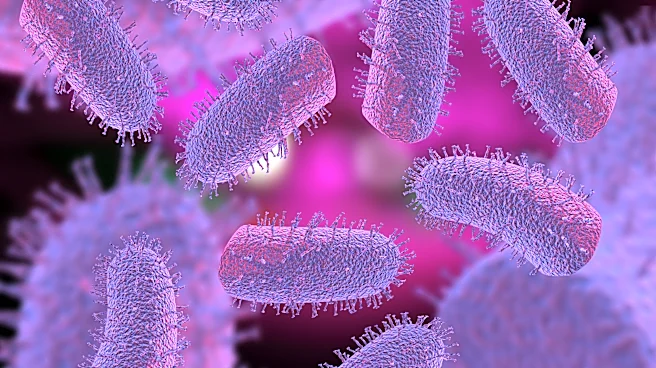
Rabies is a fatal but preventable viral disease that primarily affects the central nervous system, according to the Centers for Disease Control and Prevention. It can lead to severe brain damage and death in humans and some animals.
Rabies is often found in bats, raccoons, skunks, and foxes, but any mammal can be infected. According to the CDC, the rabies virus is transmitted through direct contact with saliva through broken skin or mucous membranes in the eyes, nose, or mouth. Rabies can also be transmitted through direct contact with brain or nervous system tissue from an infected animal.
Human cases are rare in the United States, where fewer than 10 deaths are reported each year, and at least 7 out of 10 of those are the result of exposure to an infected bat. Health officials said no human cases have been reported in North Carolina since 2011.
How to prevent the spread of rabies
Avoiding contact with wildlife remains the most effective way to prevent rabies transmission, according to the CDC. People should not approach wild animals that appear sick, injured, or dead, including nocturnal species such as bats and raccoons that are active during daylight hours.
Animal control officials should be contacted when assistance is needed, the CDC recommends.
Pet owners can reduce the risk of rabies exposure by keeping pets up to date on rabies vaccinations, according to the CDC. Health officials also recommend limiting pets' contact with wildlife as much as possible.
Pets and people can be protected by vaccination, the Mayo Clinic says. People usually receive the vaccine after exposure, but those in high-risk situations may receive it before exposure.
The rabies vaccine, if administered immediately after exposure, is nearly 100% successful at preventing the disease, according to the World Health Organization.
Contributing: Emily Vetter and Mary Walrath-Holdridge, USA TODAY
This article originally appeared on USA TODAY: Rabid goats at North Carolina petting zoo may have exposed visitors