




WASHINGTON – In addition to flipping from Republican to Democratic control, the Senate will have an unusually large class of new members could look to make a mark in the tradition-bound chamber by thwarting President Donald Trump's nominees and legislative priorities.
Some Democrats have talked about blocking Trump's potential nominees to the Supreme Court because Republicans had blocked one of Democratic President Barack Obama's choices for nearly a year. Other proposals aim to set term limits or increase the size of the court.
"I think we’re probably getting to a place where a Supreme Court nomination by a president in one party where the Senate is controlled by the other would be extreme difficult to get done, even at the beginning of a term,"
John Fortier, a senior fellow at the American Enterprise Institute, told USA TODAY.
Legislation could also become thornier. Congress postponed decisions until Dec. 11 about how to fund the government but the prospect of having Democrats in charge in January could lead to another partial shutdown.
"Obviously the appropriations could break down," Fortier said. "At the end of the day, we’ll have to resolve that it might be ugly."
Trump said he would find a way to make deals with Democrats under the threat of vetoing their legislation.
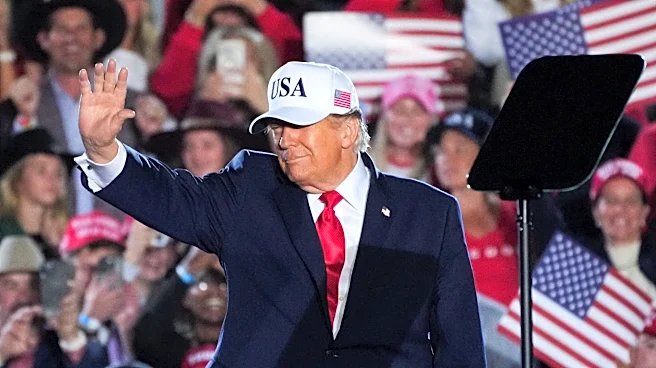
"We’ll figure a way. Look, I have a strong veto," Trump told reporters as he left the capital Oct. 27 for a pair of Texas rallies. "I hope that won’t be the case. But if it is, it’s happened before with many presidents. You have a strong veto and you end up working out deals."
Trump has appointed three of the nine Supreme Court justices. He has discussed the prospect for at least one more vacancy during the remainder of his second term, which some Democrats would like to prevent.
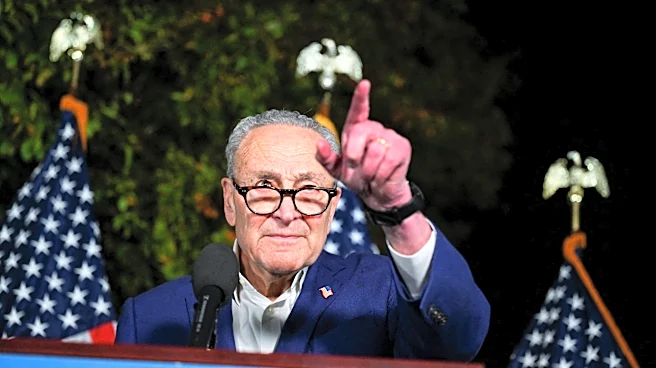
"Look, the bottom line is, one of the reasons that we want to do everything we can to take back the Senate is to not let Trump put such horrible justices, MAGA justices, on the Supreme Court and the lower courts," Senate Minority Leader Chuck Schumer, D-New York, told reporters Sept. 30.
Schumer told reporters Nov. 3 that Democrats could work with Trump, but only if the president changes his ways to listen to voter concerns about the high cost of living.
"Will he change? I don’t know. But we’re going to fight Trump tooth and nail, and focus on the issues no matter what he does," Schumer said. "We’ll see if he’ll actually change his ways and join. But whether he does or not – because I don’t think he will – we are going to keep fighting for the people."

Turnover in the Senate has averaged a dozen seats at the end of each term since 1990 through retirement, electoral defeat or seeking another office. With at least 18 new members arriving with two contests unresolved, the turnover eclipsed the recent high-water mark of 16 set amid the financial crisis in 2010.
Only one-third of the Senate up for reelection every two years, which limits change in the chamber. The larger waves of turnover tend to follow crises, such during the 1970s after Watergate and the Vietnam War. The largest freshmen class under direct elections by voters, which began in 1914, was 22 set in 1946 after World War II.
Two races remain unresolved. In Alaska, GOP Sen. Daniel S. Sullivan faces Democrat Mary Peltola. In Mississippi, GOP Sen. Cindy Hyde-Smith faces Democrat Scott Colom.
The changes this year included the departures of three Republican senators whom Trump chased out. Sens. Bill Cassidy of Louisiana and John Cornyn of Texas lost GOP primaries, and Thom Tillis of North Carolina retired.
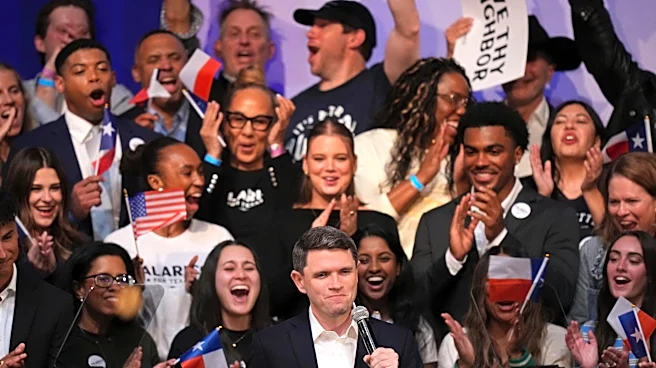
Republican Julia Letlow kept the Louisiana seat in Republican hands. But James Talarico became the first Democrat to a win a Senate seat in Texas since 1988. And Democratic Gov. Roy Cooper won Tillis' seat.
Eight senators retired: Democratic Sens. Dick Durbin of Illinois, Gary Peters of Michigan, Jeanne Shaheen of New Hampshire and Tina Peters of Minnesota; and Republicans Joni Ernst of Iowa, Mitch McConnell of Kentucky, Steve Daines of Montana and Cynthia Lummis of Wyoming. McConnell had been the longest-serving party leader in the chamber and Durbin was the assistant Democrat leader for more than two decades.
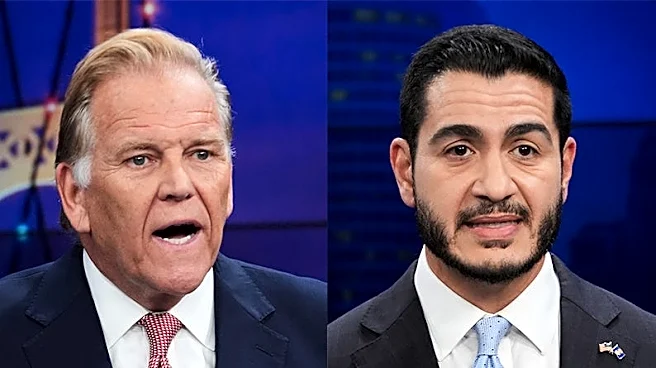
Among the Democrats, Durbin will be succeeded by Juliana Stratton. Abdul El-Sayed will become the first Muslim senator in Gary Peters' seat. Chris Pappas will become the first openly gay senator by winning Shaheen's seat. Peggy Flanagan won Tina Peters' seat.
For the Republican seats, Democrat Josh Turek won Sen. Joni Ernst's seat in Iowa. Andy Barr won McConnell's seat in Kentucky. Kurt Alme won Daines' seat. And Harriet Hageman won Lummis' seat in Wyoming.
Two other Democratic challengers flipped Republican seats. Adam Hamilton won GOP Sen. Roger Marshall's seat in Kansas and Troy Jackson beat GOP Sen. Susan Collins in Maine.
Two Republican senators ran for governor and won: Sen. Tommy Tuberville of Alabama and Marsha Blackburn of Tennessee. Candidates knew to run for Tuberville's seat. But Blackburn's departure will create another vacancy.
Four senators who were appointed to fill the seats had to defend them in their first elections. Two succeeded.
Sen. Ashley Moody, R-Florida, was appointed to succeed Secretary of State Marco Rubio, held on to her seat. And Republican Kevin Hern succeeded Sen. Alan Armstrong, R-Oklahoma, was appointed to succeed Homeland Security Secretary Markwayne Mullin.
Sen. Jon Husted, R-Ohio, who was appointed to succeed Vice President JD Vance, lost to Democratic former Sen. Sherrod Brown. And Sen. Darline Graham, R-South Carolina, who was appointed to succeed her brother, the late Sen. Lindsey Graham, lost to Democrat Annie Andrews.
This article originally appeared on USA TODAY: Democratic Senate could shake up Trump nominations, legislative priorities