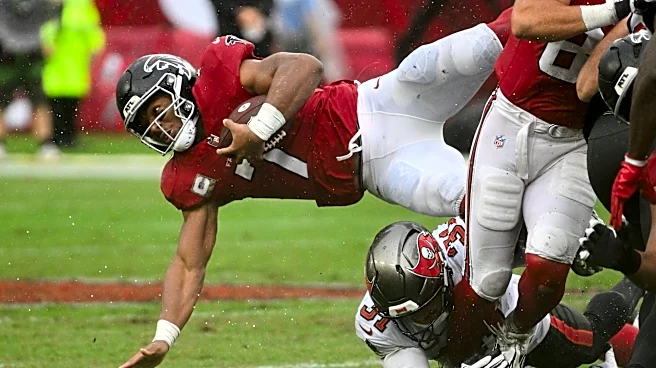








Woods Curry, an emergency medicine physician who was part of the team that saved Buffalo Bills safety Damar Hamlin in 2023, had a non-medical update about the NFL player this week.
“It looks like he's going be a starting safety" in the Bills’ next game, Curry told USA TODAY Sports. “That's what the news says."
But recent news about the world of emergency medicine and sports has been grim.
Hamlin, 28, has made a remarkable comeback since he suffered sudden cardiac arrest during a Monday Night Football game between the Bills and Cincinnati Bengals Jan. 2, 2023 at Paycor Stadium in Cincinnati.
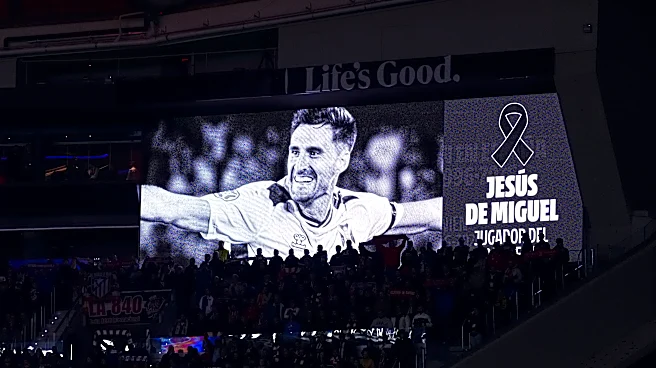
But Jesus de Miguel, a 30-year-old professional soccer player in Spain after a jarring on-field collision with the opposing team’s goalkeeper.
El Dia and Canarias7
reported the preliminary autopsy report cited “accidental chest trauma” as the cause of death.

There are conflicting media reports about when CPR was administered in Spain and if an automated external defibrillator (AED) that can shock a heart back into normal rhythm was used. Elvira González, president of Spain's Association of Nurses, Emergency Medics and Caregivers, told the Associated Press on Wednesday that the organization is seeking more details.
"There is contradictory information," Gonzalez said. "The first thing we need to know is where and when he supposedly recovered a pulse."
Curry, an Associate Professor of the University of Cincinnati Clinical Emergency Medicine and physician at UC Health, said both CPR and AED were critical in saving Hamlin.
“For every minute that you delay shocking someone (with the AED) from the time of collapse, their chance of survival goes down about 10%,’’ he said. “In the United States, an ambulance arrives on average eight to 12 minutes. after you call 911. So you can imagine how much lower survival gets if you wait for EMS to arrive rather than if you just go ahead and start doing chest compressions and put on the AED.’’
Also, the use of CPR and AED are “equally important," according to Curry.
Spain's police have opened an investigation, a standard procedure for non-natural deaths.
"We can't say if they acted correctly or incorrectly, but we can demand that all the emergency procedures follow international standards of correct practice," Gonzalez told the AP.
The Spanish soccer federation's regulations require the presence of a physician for the entirety of a game and that an ambulance with "advanced life support" must be present at every match.
Stadium protocols in place
AEDs should be in place at all sporting events and AED availability at professional soccer games would be considered the standard of care, according to Jonathan A Drezner, Director of the University of Washington Medicine Center for Sports Cardiology.
FIFA, which oversees the World Cup and is the global self-regulatory governing body of soccer, recommends pitch-side AEDs and has so for years, Drezer added.
“Survival from Sudden Cardiac Arrest is higher in North America and European countries with better emergency preparedness and access to AEDs, with lower survival in less-resourced countries,’’ Drezner told USA TODAY Sports.
The NFL requires multiple AEDs in stadiums. The night Hamlin went down, the defibrillator was on the home sideline at the 30-yard-line, according to Curry. He said it was stationed with the rest of the emergency equipment and field paramedics that night.
The defibrillator was applied by the field paramedics in the first few minutes after they arrived at Hamlin's side.
While Hamlin survived, Curry acknowledged the variety of outcomes in emergency situations – even with well-trained medical staff.
"In general we still see unfortunately collapses and cardiac arrests all over the world where good-meaning people who are well trained kind of fall into that that trap … of what's most likely rather than what's most deadly," Curry said.
That would be sudden cardiac arrest. That would require CPR and an AED.
“And you know in an emergency scenario, people sometimes forget to do the things that I think come naturally."
'High stakes'
Like sport itself, the emergency action plan (EAP) depends on practice.
Curry said the medical team prepared for catastrophic on-field events during NFL games at Paycor Stadium does an in-person training at least twice a year before the season.
“We do kind of less formal touch bases throughout the season itself,’’ he said. “But yeah, we do multiple scenario based trainings down at the practice facility and in the stadium to be ready for these emergencies.
“This is rare,’’ he added of the medical emergencies. “And this is rare, but this is obviously high stakes because this is a fatal event until it's reversed.’’
Screening athletes for heart issues is another provides a layer or prevention.
“Any fatal cardiac arrest in sports is tragic and my heart goes out to his wife and daughter, his family and friends and his teammates and supporters,’’ Curry said. “It's unbelievably difficult time.’’
But he also said he found himself reflecting on Hamlin’s outcome.
“I think that all of us that were on that care team still have emotions related to that event," Curry said. “Certainly, we're very happy that we had a different outcome than in this case, and we're very proud of Damar and the work that he has done, both as an athlete and as an advocate for cardiac arrest."
This article originally appeared on USA TODAY: Tragic soccer death raises questions years after NFL player was saved on the field