







On the Thursday, August 13, 2026, episode of The Excerpt podcast:
With hundreds of small private colleges facing severe financial pressure, what happens to the students and communities left behind when those colleges close? Investigative Journalist Jon Marcus from The Hechinger Report breaks down why fewer than half of affected students ever finish their degrees and what red flags families should watch for.Hit play on the player below to hear the podcast and follow along with the transcript beneath it. This transcript was automatically generated, and then edited for clarity in its current form. There may be some differences between the audio and the text.
Podcasts: True crime, in-depth interviews and more USA TODAY podcasts right here
Dana Taylor:
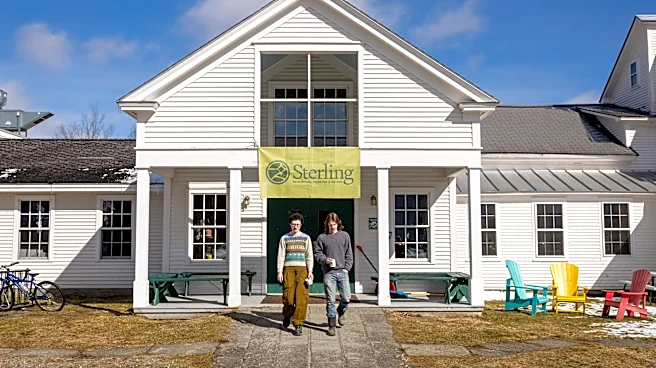
Sterling College, a tiny private campus on a 130 acre farm in rural Vermont, offered the kind of hands-on close-knit education many students say they crave. In May, it closed. If hundreds of small colleges like Sterling shut down, what happens to the students and communities they leave behind?
Hello and welcome to USA TODAY's The Excerpt. I'm Dana Taylor. Today is Thursday, August 13th, 2026. Joining me to dig into that question is Jon Marcus, an investigative journalist with the Hechinger Report.
It's good to have you here, Jon.
Jon Marcus:
Thank you so much for having me.
Dana Taylor:
You wrote about Sterling College in Vermont during its final semester. Can you give me a brief overview of this school? What kind of place was it and who did it serve?
Jon Marcus:
Yeah, it was a really unusual opportunity for us to visit a college whose students knew that it would close. Because often when colleges close, they announce it during the summer when nobody is on the campus. This college gave its students a runway, which is important for the very practical reason of helping them find another place to transfer. But it also allowed for some closure, if you'll pardon the use of that word around a college closing. And it allowed us to see the real emotional toll that a closing of a college, a very small college in the middle of a very remote part of Vermont might have. Because the practical reasons for this, relative to transfer, are really important because as you said in your introduction, there are huge implications for communities and for students that we can talk about as well.
Dana Taylor:
Students in your story, they clearly value the intimacy and sense of belonging at a place like Sterling. Why do you think there's such a disconnect between what some students say they want and what the higher education model seems to or seems able to sustain or even value?
Jon Marcus:
Oh, that's a big question. I think one of the reasons that colleges are closing is because of that disconnect but it depends on the student and the college, what students are looking for. And I think to be frank, what most students are really looking for, and their parents importantly, is a return on the investment that they make in their college education. And that return, there have been some questions about that return. There have been questions about students who graduate and are underemployed. There are questions about whether the earnings that result from a degree merit the debt that students take with them after they graduate. And those are legitimate questions.
The proportion of students who go straight to college from high school has been declining dramatically. We've been very focused, I think, as a country on the demographics. There are fewer 18-year-olds, that's just a mathematical fact. People stopped having children during the Great Recession and the birth rate never recovered and so that's 18 years ago. If you think about it, this fall, that hits colleges. 18-year-olds are freshmen and there are going to be fewer of them so there will be more colleges closing as a result.
But it's also true that those 18-year-olds that are graduating from high school are making the conscious choice to not go, and I think largely that's because they don't see a return. And there are some returns and there is a value in going to college. Somebody has to go to college but they don't see it and colleges have not done a great job in advocating for themselves. And they're doing even less of it now because colleges, as you know, are under political attack. And their response has been, frankly, to not say anything about anything. And they're afraid of making themselves a target. There's really a vacuum being filled by critics and the result of that is that fewer students are going to college.
Dana Taylor:
Jon, you know that fewer than half of students at colleges that close go on to continue their education. What does that look like in real life for those students and their families?
Jon Marcus:
Yeah, this is a really important element of colleges closing. And as you also mentioned in your intro, we're talking hundreds of colleges. To be precise, 442 private nonprofit colleges that are currently at risk. About 120 of those are at very severe risk of closing so we're going to see a lot more of this. Only half of students at those colleges transfer somewhere else, the rest of them just give up on a college education. Many of them already have debt, they never get a credential. They don't earn enough money to pay back that debt. There are now in this country above 42 million people who started college but never finished. That's the population of Canada of people who, if you think about it, are not only not benefiting from the amount of education that they paid for but are probably not very happy about their experience and telling their own kids not to go.
Of that half, really importantly, of that half of students who do transfer, half of them still don't graduate because in many cases, their credits don't transfer or the price goes up or they have some other obstacle in their way. This is going to take a huge toll. Of those 442 colleges that are at risk, this is a projection by the Huron Group, a consulting firm. Of those 442 colleges, they have about 667,000 students. And all of those are facing the prospect of their college closing and half of them might go on and half of them will finish. That's a huge problem.
Dana Taylor:
If or when these colleges close, what does rural America lose and what does the country as a whole lose?
Jon Marcus:
That's such a good question and so important and something that I learned that surprised me when I visited another college. It also happened to be in Vermont, which has had seven colleges closed in the last 10 years because the population in Vermont is aging. And so I visited this other college expecting to learn that the impact was on home values and tax revenue for the town and the local businesses and the pizza shops where the students used to go. And yes, there is an impact on those things. But the biggest impact and the most important one, especially in rural places, is that these colleges were a pipeline that brought young people to those isolated communities, those aging communities who stayed, started businesses, or went to work in those communities. That pipeline is gone and that is a massive blow to rural America.
Dana Taylor:
Former Sterling President Scott Thomas describes rural college closures as leaving craters in their communities. How does a rural college shutting down differ from a closure in a metropolitan area? And are small private colleges in urban areas facing similar risks?
Jon Marcus:
There are some private colleges in urban areas that have closed. I think where we see this happening in general is in places rural, suburban, or urban where the populations are declining and the demographics are a challenge. Massachusetts has had a number of colleges close in urban areas in and around Boston, for example. And so the crater comment, that's really interesting and important. If you have a college closed in an urban area, and there's one not far from me, I live in Boston, a senior living community has been built there, which I find really ironic because it exemplifies what's going on in our society. Our society is aging, we have fewer young people and more old people. It's fascinating to see a college that was once made up of 18 to 22-year-olds now at the site of a very high-end senior living center.
Urban campuses that closed, that's an easier thing to fill. We have a lot of demand for real estate in those places. There's much less of that in areas like where Sterling College was, which literally I was chatting with students, we were walking down the main street of the town and there were no cars. I mean, there was no cell service which was amazing to me that people in college, college-age Americans could live without a cell phone but they did in this college because there wasn't a signal. That's how remote some of these places were. Sterling College, there had been some hope to reopen it as an outdoor adventure center. That fell through so it's now up for sale. We have these empty campuses that are just abandoned.
Interestingly also, if people who are watching this don't think that it matters to them because they don't live in a rural area, they don't have kids in college, or they've already gotten their degree, it does matter because in many cases like Iowa Wesleyan University in Iowa, a university that closed in Iowa had at the end of its life depended very heavily on loans from the US Department of Agriculture. In essence, taxpayer money. And the amount that it owed the US government was more than the value of the land if they can ever sell it so we end up paying for this also as taxpayers.
Dana Taylor:
Jon, do the closing of Sterling and Green Mountain colleges strike you as an early signal of a fundamental reshaping of higher education in America?
Jon Marcus:
It's a signal, yes, but not early. This has already been going on for a while, many of these colleges would've closed earlier if it hadn't been for pandemic funding. Colleges received federal money, as did many other industries during the pandemic, that only prolonged the end. When that money ran out, we began to see a college close every week last year. And now again, we have projections that we're going to see significant additional colleges closing. So many, by the way, and we've written about this, that many states now have funds that they've set up that they've asked colleges to pay into to reimburse students if they close. The irony of that is that it's only hastening the end because that puts additional expense on colleges.
That rule was largely started to reimburse students that went to for-profit colleges, it's now being applied to nonprofit colleges. And another sign of the end of so many of these colleges is there's now a business that will record a virtual reality tour of a college that closes so that the alumni can go back and experience the nostalgia of walking around a campus that no longer exists. And they're doing that right now with a college outside Chicago that's just closed and have an interest in expanding that business to other colleges. That's how much this is happening.
Dana Taylor:
Looking ahead 5 to 10 years, what warning signs should private colleges and policymakers be watching most closely?
Jon Marcus:
Not only them but consumers. Here's what you need to know. We often, as we've just been doing, talk about debt in higher education in regards to how much students owe, but universities have been borrowing an enormous amount so it's important to look at institutional debt. How much does the institution owe? Iowa Wesleyan owed more money than it was worth. You also want to look at operating budgets, huge numbers of universities have been running deficits for year after year after year. There's one near... Again, another institution near me in Boston that has been running eight-figure deficits for 8 of the last 10 years. And there's only so long that you can do that before you're done so that's an important thing to look at.
And you can ask and you can find this for nonprofits, it takes a little bit of digging but because they're nonprofit, they have to file certain financial documents publicly. Some states, including Massachusetts, now require institutions that are having financial problems to disclose that. The downside is that once you disclose that you're in trouble, people stop coming and you're done. It's a self-fulfilling prophecy. That happened to a small Catholic college in Western Massachusetts this past year called Anna Maria. It was disclosed that they had financial problems, they were still operating at the time. They were done within weeks. Those are the things that people need to be looking at.
Dana Taylor:
And then finally, just pushing that a little bit further, what question should families be asking in this moment besides, can my child get in? Briefly, should they be scanning the fine print for consumer protections?
Jon Marcus:
Yes. It's interesting, I visit colleges a lot. I talk to student tour guides and ask them what families are asking. And they are asking, will this college be around in four years? That never used to happen. Yeah, students and their families need to ask these questions. Again, important distinction. This is mostly affecting private nonprofit colleges. Some public universities are merging campuses or putting some programs online. But if you go to a private nonprofit college or you're interested in a private nonprofit college, ask about the financials and don't necessarily believe the first answer.
On the upside, one last point, this does work out to the consumer's advantage because it's now a buyer's market. You can ask... You're more likely to be accepted, acceptance rates have gone up. Most Americans think it's impossible to get into college. It's not. It's much easier than people think unless you want to go to Caltech or Harvard. And number two, negotiate for more financial aid because colleges need you and your money and they're willing to give you more of a discount to get it.
Dana Taylor:
It's so good speaking with you. Thank you, Jon.
Jon Marcus:
Thank you so much for having me.
Dana Taylor:
If you'd like to make the Excerpt part of your weekday routine, just tap like and subscribe. New episodes are available every weekday morning. I'm Dana Taylor. Thanks for listening.
This article originally appeared on USA TODAY: Why hundreds of private American colleges are shutting down | The Excerpt