







The U.S. Department of Agriculture will reopen a cattle port in Arizona after closing it more than a year ago to prevent the spread of the New World screwworm in America.
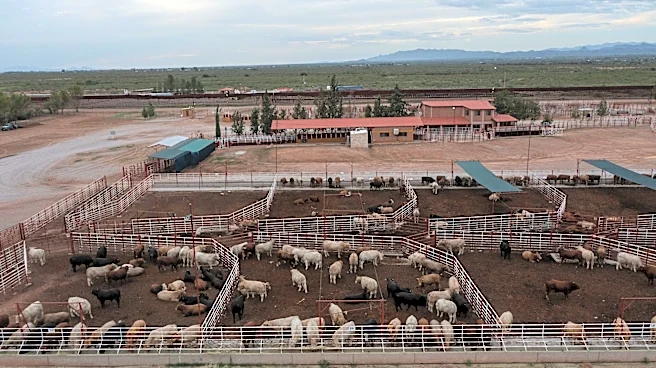
The USDA announced it would reopen the cattle crossing gate between Agua Prieta, Sonora, and Douglas, Arizona, on Aug. 24 as part of a phased plan to reopen southern border ports closed because of the threat of the parasitic fly.
"The closure of the Southern ports of entry for the last year has been a tough but necessary action to control the spread of NWS in Mexico and protect the American livestock industry," USDA Secretary Brooke L. Rollins said in a July 24 statement. "Thanks to the work across the federal government as well as state, local, and industry partners, it is now
safe to reopen the Douglas, Arizona, port in 30 days to resume the hundreds year old movement of cattle."
The port was closed on May 11, 2025, because of the rapid spread of the New World screwworm across Central America and Mexico. More than a year later, on July 3, 2026, the U.S. confirmed its first screwworm case in Zavala County, Texas.
@USDA is fully engaged with our partners both foreign and domestic about the confirmed case of NWS in Sonora, 292 miles from the border. Rapid detection and reporting facilitate our layered and aggressive response approach.
— New World Screwworm Rapid Response (@Screwworm_RR) August 20, 2026
We have no plans to change the Douglas, AZ port…
On Aug. 20, the USDA confirmed on social media that Sonora, Mexico, had confirmed a screwworm case but said it would not change its plans to reopen the port.
"The necessary resources — personnel, technology, laboratory support and interagency coordination — are in place and ready in Douglas," the social media post read. "We remain committed to continuous monitoring and will adjust protocols as conditions warrant to maintain the highest standards.
As of Aug. 23, the U.S. has 46 cases — all but one detected in Texas — with only two cases currently classified as active. The last confirmed case was reported on Aug. 16 in Texas.
Imports through the ports are expected to resume around 2 p.m. local time on Aug. 24, according to the El Paso Times, part of the USA TODAY Network. The USDA is also considering opening ports in Santa Teresa and Columbus, New Mexico, next if the Douglas reopening succeeds.

U.S. screwworm update
As of Aug. 23, the USDA has confirmed 46 total cases across 17 counties in the U.S. — 16 in Texas and one in New Mexico.
The last reported confirmation of the parasitic fly in the nation was on Aug. 16 in a sheep in Val Verde County, Texas. So far, the U.S. has seen only three confirmed cases — all in Texas — in August, compared with 26 in June and 17 in July.
What is a screwworm fly?
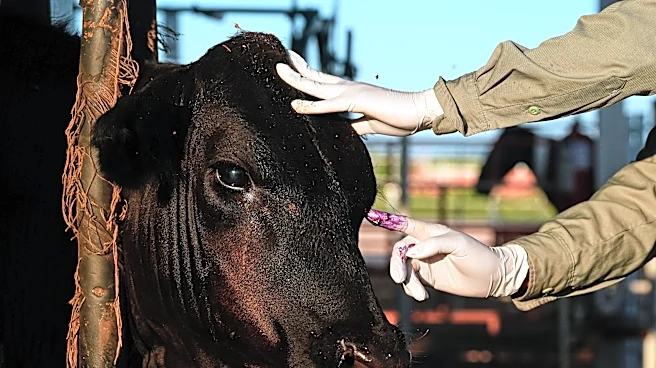
According to the USDA, the New World screwworm is a parasitic fly that affects livestock, pets, wildlife and — less commonly — people and birds. The fly's larvae feed on the living tissue of warm-blooded animals.
Screwworm infestations begin when a female fly lays eggs on a wound or body opening. The eggs hatch into larvae that burrow into the wound and feed on living tissue; then, after about seven days of feeding, the larvae drop to the ground, burrow into the soil and pupate.
What a screwworm fly looks like
Adult New World screwworms have orange eyes, a metallic blue or green body and three dark stripes across the back, according to the USDA.
Telltale signs of a screwworm infection include growing wounds or lesions and feeding maggots on living animals.

Map of U.S. New World screwworm cases
Jeff Abbott covers the border for the El Paso Times and can be reached at:jdabbott@usatodayco.com; @palabrasdeabajo on Twitter or @palabrasdeabajo.bsky.social on Bluesky.
Mateo Rosiles is the Texas Connect reporter for USA TODAY and its regional papers in Texas. Got a news tip for him? Email him at mrosiles@usatodayco.com.
This article originally appeared on USA TODAY: USDA reopens Arizona cattle port as screwworm cases hit Mexico, Texas