






A small but important change to California's state code may be one of the last hurdles Sacramento needed to clear in its campaign to convince Major League Baseball to select it as the permanent home of its newest western expansion team.
Although Major League Baseball leadership has not yet formally announced an expansion process, it has shown interest in expanding the league to 32 teams, with one new team in the West and one in the East. As a result, cities across the country, including Salt Lake City, Charlotte, Portland, Orlando, and even Sacramento, have been preparing plans for the moment MLB makes the announcement.
Earlier this year, Regional leaders from the Greater Sacramento Economic Council announced plans for an MLB team called "The
Sacramento Pitch," including commitments ranging from a "fully entitled 50-acre stadium site" to nearly $2 billion in public and private funds.
Of the nearly $2 billion funding package, the City of West Sacramento committed $1 billion, which it would contribute through taxes collected via an infrastructure revitalization financing district in the area, existing hotel taxes, and additional sources.
However, one caveat remained amidst their plan.

Under the letter of the law, it was unclear whether cities could technically create an infrastructure revitalization financing district for sports or entertainment purposes. These districts are traditionally created to help finance large-scale, communitywide economic development projects via tax revenue generated by the future project.
Although it may not seem like much, California Senator Christopher Cabaldon (D-West Sacramento) believed this "legal ambiguity" could become a headache for the city in future negotiations if the state left it unclear. Instead of waiting for it to become a problem, Cabaldon decided to tackle the issue head-on and introduced Senate Bill 226.
"This will be a competition with other states and other places, and we want to minimize the likelihood of mischief that would then potentially threaten the entire financing for the project," Cabaldon said during a hearing with the California Senate Standing Committee on Local Government.
"The City of West Sacramento, through the use of this infrastructure revitalization district instrument as well as others, is in a position to be highly competitive with private sector partners in the region in the battle with other states to bring that expansion team to California," he added.
"When a community is putting together an infrastructure revitalization project for hundreds of millions or billions of dollars. That kind of investment requires certainty for it to occur."
The bill made no substantive changes to California's legal code; it added only one new line to the existing code.
"Acquisition, construction, or repair of commercial or industrial structures for private use, including, but not limited to, entertainment or sports facilities," the law reads.
The bill faced little pushback in the General Assembly, and California Gov. Gavin Newsom ultimately signed it into law on Sept. 30.
With this bill's passage and the inadvertent removal of the "legal ambiguity," project leaders can focus on selling Sacramento as a viable option to host MLB's next team.
The focus of Sacramento's pitch is not only the nearly $2 billion it's committing to the project, but also highlights that Northern California has one of the largest "U.S. media markets with just one major professional sports team" in the West, according to Barry Broome, president and CEO of the Greater Sacramento Economic Council.
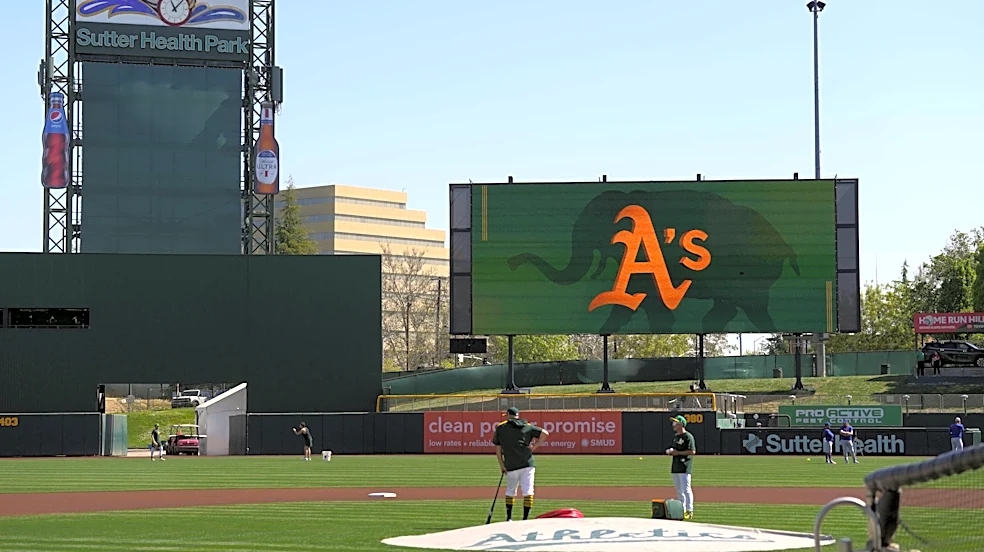
In addition, Sacramento has been the temporary home of the Oakland Athletics for the last two years while they build their stadium in Las Vegas.
During that period, local fans have gone out to support the team, even as it has remained near the bottom of its division standings.
"Baseball is in the blood of Sacramento," Broome added.
Noe Padilla is a Northern California Reporter for USA Today. Contact him at npadilla@usatodayco.com, follow him on X @1NoePadilla or on Bluesky @noepadilla.bsky.social. Sign up for the TODAY Californian newsletter or follow us on Facebook at TODAY Californian.
This article originally appeared on USA TODAY: Sacramento's MLB expansion bid was made a bit easier due to new law