







Six years after the COVID-19 pandemic, Americans still feel gloomy and no once-a-month economic report seems to make them happy.
Since the pandemic, the economy and jobs market have recovered but consumer sentiment
hasn't. Sentiment has ebbed and flowed in the last six years, but has never climbed back to pre-pandemic levels, University of Michigan Consumer Sentiment Index data shows. The Conference Board's Consumer Confidence Index also dropped in September.The gap between how people feel and the ongoing strength of spending and the economy is a unique post-pandemic phenomenon economists can't quite explain. Historically, consumer sentiment has been a fairly reliable leading indicator of where the economy's headed, based on the idea that if
the consumer feels confident and optimistic, they'll spend more. If not, they won't and the economy's headed for a soft patch. Consumer spending accounts for about 70% of the U.S. economy.
Although Americans and media spend much time lamenting over consumer malaise and its roots, economists and some policymakers are moving on.
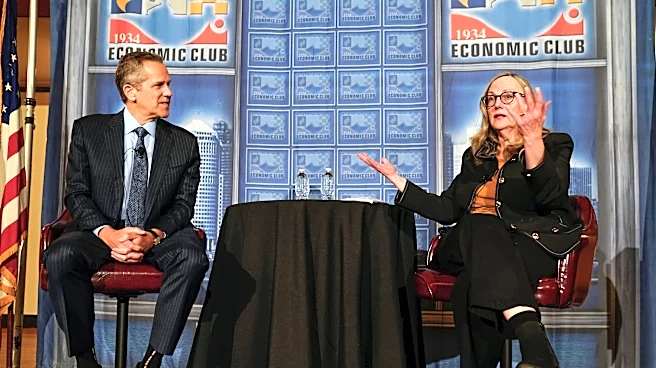
"From our perspective at the Chicago Fed, we were interested in consumer sentiment for a narrow reason, which is it was a good leading indicator of consumer spending," Chicago Federal Reserve President Austan Goolsbee told journalists at an event discussing the consumer sentiment disconnect. "And over the last six years, it has become a much less good leading indicator of consumer spending."
What do the Fed and economists look at?
When subjective measures like consumer sentiment inexplicably stray from their historic roles, Chicago Fed economists lean more on quantifiable, objective statistics like inflation, spending, hiring and economic growth to make forecasts, Goolsbee said.
Latest statistics show the economy and consumers, despite persistent gloom from the latter, remain resilient. The Fed's preferred gauge of inflation, the personal consumption expenditures price index, showed price increases stabilized and that consumers continued to spend heavily .
Consumer spending in August surged 0.9% from July, and it wasn't just because they paid higher prices or had to buy essentials. Adjusted for inflation, spending grew 0.6%, its strongest monthly gain since March 2025.
"Americans are still ramping up their discretionary spending across both goods and services, suggesting consumers are increasing their spending because they want to and not because they have to," Bank of America said last month in an analysis of card spending of its own customers.
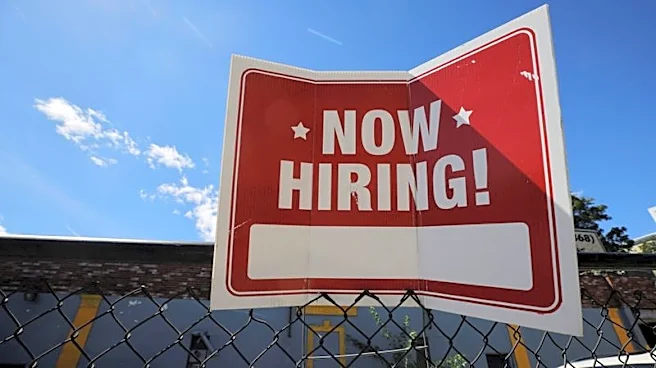
The Labor Department's monthly jobs report showed September payroll growth softened and wages last month didn't keep up with inflation, but economists said that was more reflective of a 'low hire, low fire' situation rather than layoffs.
"Companies are not adding many people, and they are not laying many off either," said Ken Mahoney, chief executive at Mahoney Asset Management. "A lot of firms already right-sized earlier, and AI may be taking a little of the edge off new hiring, but this is not a wave of firings. The 12-month average gain going into this report was only about 45,000 jobs a month, so September fits a slow trend more than a break in the economy."

Consumer gloominess doesn't matter?
Consumer sentiment as a leading indicator for spending is less useful for economic analysis and Fed decisions nowadays, but digging deeper into the data could be useful, researchers at the event said.
Surveys often report the median, or the precise halfway point of all responses, but the real story may be in the distributions, researchers said. Distributions encompass all the responses and can show patterns on the edges that medians can hide.
A distribution could reveal for instance, if a small group is responsible for the vast majority of spending. That information could be helpful, researchers said.
"If we got into a world where 90% of the spending was done by 10% of people, we have to think about what does it mean for overall GDP (gross domestic product) growth and what is it going to mean for overall employment," Goolsbee said.
Deeper dives into subsections of consumer sentiment surveys such as inflation expectations also interest Goolsbee.
"There are some measure of expectations in those data, and let's expand out some of those measures as being, perhaps, better indicators of where we are in the business cycle than just sentiment," he said.
Jerome Powell, the last Federal Reserve chairman, often emphasized the importance of keeping long-term inflation expectations "well anchored."
While Goolsbee said he prefers financial market-based measures of inflation expectations, such as signals from Treasury yields, he said some economists argue that survey-based expectations are better.
"I put out the call for research" on that, Goolsbee said. "Tell me if that's a good measure."
Medora Lee is a money, markets and personal finance reporter at USA TODAY. You can reach her at mjlee@usatoday.com and subscribe to our free Daily Money newsletter for personal finance tips and business news every Monday through Friday morning.
This article originally appeared on USA TODAY: Americans feel more and more glum, data shows. Economists are over it