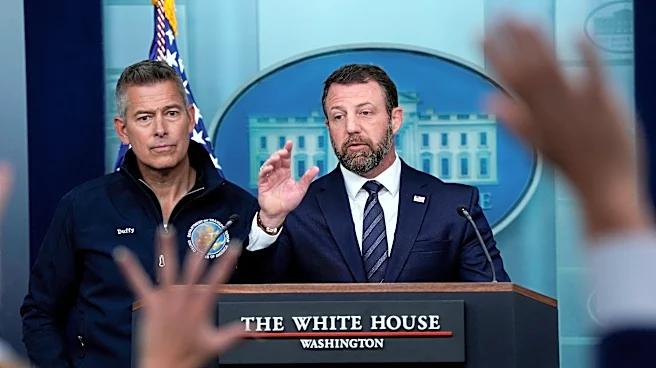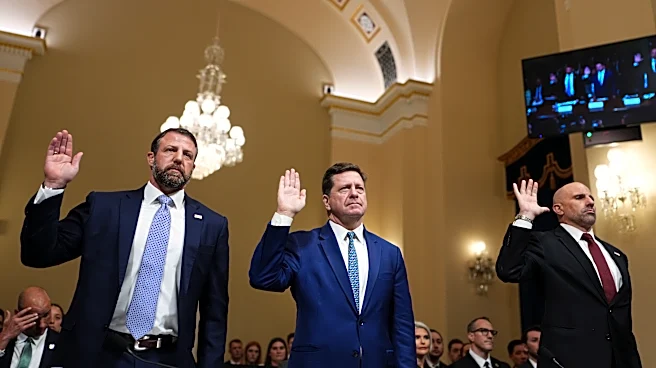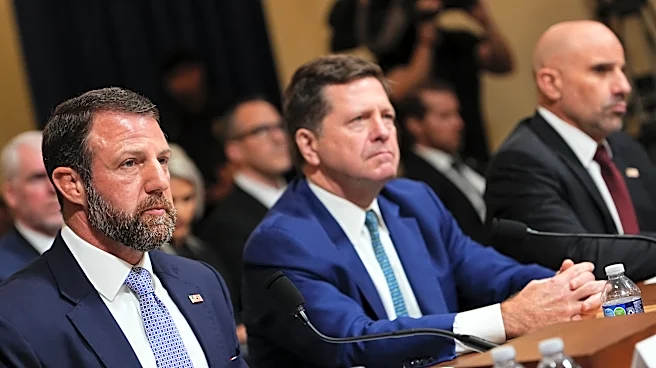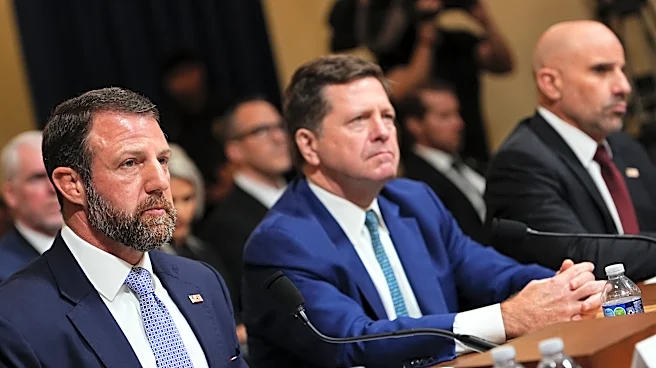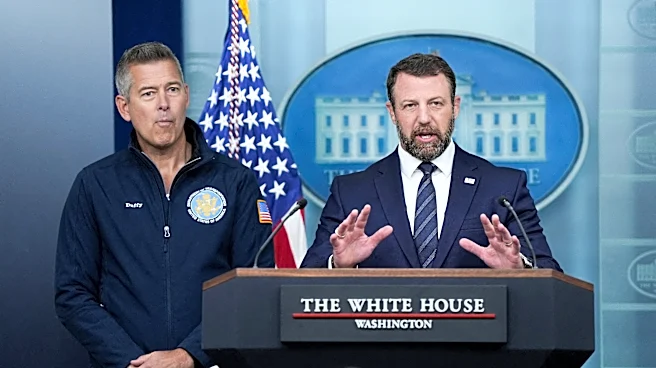


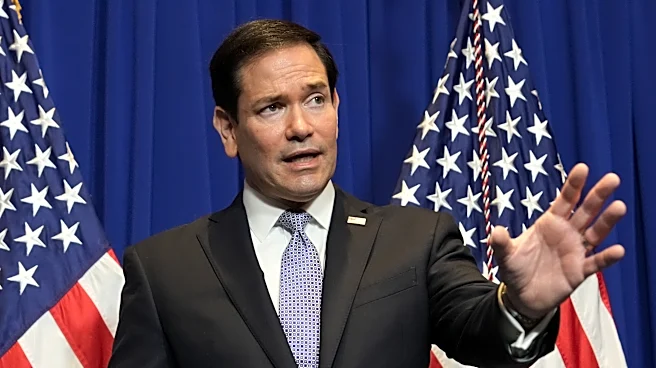

WASHINGTON – Homeland Security Secretary Markwayne Mullin declined to tell lawmakers Nov. 18 whether the Trump administration erred by pushing out more than 1,000 of the nation’s top civilian cyber defenders after a week of technology failures forced a nationwide ground stop and disrupted major banking and computer services.
Mullin also said he couldn’t tell a House committee how many people currently work at the Department of Homeland Security’s Cybersecurity and Infrastructure Security Agency, or CISA.
Mullin’s comments came in response to questioning by Rep. James Walkinshaw, D-Virginia, at an annual “Worldwide Threats” hearing of the House Homeland Security Committee that also featured testimony by Director of National Intelligence Jay Clayton
and a top FBI official.
Walkinshaw, elected in September 2025 to replace his former boss, the late Rep. Gerry Connolly, pressed Mullin on CISA staffing as federal authorities warned that hackers have dramatically ramped up cyber intrusions into U.S. critical infrastructure using autonomous artificial intelligence tools.
“One of the most serious threats we face is cyberattacks targeting the technology systems and the critical infrastructure that Americans rely on every day – our water systems, our hospitals, our banking networks,” Walkinshaw said. “And those threats, those attacks, are exploding.”
Walkinshaw also said the recent series of unrelated software outages that have stoked panic across the country − including the Federal Aviation Administration's grounding of planes − are not coincidences.
Instead, he said, they stem from private businesses and government agencies frantically patching their systems to close vulnerabilities that hackers using advanced AI could “exploit at a speed and scale unlike anything we've ever seen.”
There's no evidence that malicious hackers had anything to do with the FAA ground stop, according to U.S. officials. CISA defends federal civilian networks and serves as the government's main cyber liaison to private industry, sharing threat warnings and helping companies upgrade their security and respond to attacks. Companies' cooperation is largely voluntary.
Clayton expressed similar concerns, but reiterated his previous comments that U.S. intelligence agencies see no sign of a "coordinated cyberattack" or state-sponsored activity of any kind.
Even so, Walkinshaw said, the threat posed by AI-assisted hackers is real – and growing.
'We’re under attack'
“We’re under attack,” Walkinshaw said. “But at precisely the moment that these threats were growing, the Trump administration gutted CISA, the agency responsible for helping protect us against those attacks.”
In a flash alert issued Nov. 13, the FBI warned that attackers are using ARTEX, an open-source AI-driven “autonomous penetration testing framework” to automate multiple phases of cyber intrusions, from reconnaissance to data theft.
The FBI said hackers are using AI to launch such attacks globally across multiple sectors, including financial services, government, technology, defense, semiconductor, energy, healthcare, manufacturing, telecommunications and legal industries. AI is allowing hackers to go from targeting a system to privileged access “in under three hours,” according to the alert.
CISA down from 3,400 to 2,200 employees under Trump
At the hearing, a Walkinshaw staffer held aloft two large graphics – one showing the threats spiking sharply upward and another depicting the number of CISA employees declining precipitously.
Walkinshaw asked Mullin about his June testimony that CISA had about 2,200 employees but needed to hire more staff to reach its goal of 2,800.
When asked how many fully onboarded employees CISA has today, Mullin replied, “As I told the chairman, I’ll get …”
“Mister Secretary, you’ve been here for hours” testifying, Walkinshaw interrupted. “If you wanted to tell us that number today, any number of those people behind you could have given you that number.”
Gesturing toward the DHS aides seated behind Mullin, Walkinshaw said: “Either they’re not serving you well, or you don’t want to tell us.”
Walkinshaw said the administration inherited a workforce of about 3,400 and “fired and pushed out more than 1,000 cyber defenders.” He asked Mullin to say yes or no on whether that was a mistake, given the escalating cyber threats.
“I wasn’t there when that was made,” Mullin said. “I don’t know the reasoning behind it, so I’m not going to talk about why someone was let go when I wasn’t involved in it.”
On March 5, President Donald Trump fired Kristi Noem, his first Homeland Security secretary in his second administration, not long after lawmakers grilled her about the department’s massive spending.
Asked why he told Congress that CISA needed to rehire hundreds of people if pushing out so many employees wasn’t a mistake, Mullin retorted: “I didn’t say (bring) those employees back. I said we’re hiring new people. We need to bring experts in.”
Mullin, a former House representative and senator from Oklahoma, denied that any critical cyber work was going undone despite the departure of so many CISA employees.
The agency, he said, has “not missed a mission.”
When Walkinshaw asked why CISA needed more staff in that case, Mullin said: “We need to address emerging threats.”
“The threats don’t exist today?” Walkinshaw asked.
“The threats always evolving,” Mullin said. “They’re always moving, and we’re always trying to catch them.”
Seeking an independent probe of CISA cuts
In an Aug. 20 letter, Walkinshaw and other committee Democrats asked the U.S. Government Accountability Office to independently examine the impact of recent workforce reductions and program cuts on CISA’s “ability to meet its mission requirements such as defending the nation’s critical infrastructure from cyber-attacks.”
The push comes as cyber and physical threats increasingly target hospitals, financial networks, water treatment facilities, energy systems and other infrastructure Americans rely on every day, Walkinshaw and other Democrats, including the committee’s ranking Democrat, Rep. Bennie Thompson of Mississippi, wrote.
By mid-2025, nearly 1,000 CISA employees, roughly one-third of the agency’s workforce, had left or been removed from active service, the Democrats said in their letter to the GAO, adding that CISA has since announced plans to hire more than 300 employees “to rebuild its depleted workforce and address critical staffing gaps.”
“Yet the Trump administration’s fiscal year 2027 budget proposal would eliminate nearly 900 additional positions, potentially compounding the loss of personnel and expertise at the agency responsible for leading the nation’s civilian cyber defense,” the Democrats wrote.
This article originally appeared on USA TODAY: DHS Secretary Mullin won't say if cyber agency cuts were a mistake