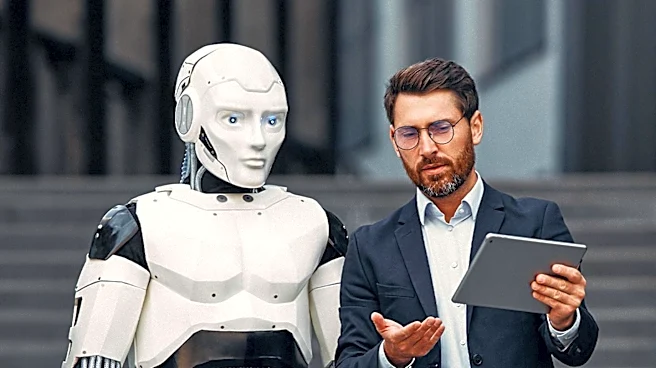





Artificial intelligence is fast taking over as both the applicant and the recruiter in a job hunt, which means the only thing that can get you to stand out is your personal touch, research shows.
AI often helps applicants write their résumés while another AI bot helps recruiters sift through some of those very same personal checklists to decide who gets through the hiring process, studies show. Up to 71% of 11,000 résumés across 13 industries analyzed by hiring technology company Cadient contained at least one section showing characteristics of AI-written content.
Meanwhile, Resume Builder’s latest survey of 948 business leaders taken last year estimated 83% of companies would use AI to screen résumés.
ATS, or Applicant Tracking System, is an automated
program that reads, parses, and ranks the content of a résumé to match what employers look for. Essentially, it sifts through thousands of résumés based on certain words to narrow the applicant pool for human hiring managers.
With AI on both sides of job hunting, many Americans wonder what's the best way to break through to the human side of getting a job.
"There's no magic bullet," said Matt Berndt, career site Indeed's head career strategist. "Everyone's looking for a solution here. With 'ATS,' is it AI talking to AI?"
Should job seekers use AI?
There's nothing wrong with using AI, but career experts say people shouldn't rely on it to land a job.
For one, AI can exaggerate or, in the worst case, lie about your experience and skills, they said.
AI has been known to hallucinate, or make up information. One famous case involved a New York attorney who used ChatGPT to help write a court brief. AI invented several legal cases, complete with fake names, detailed summaries, and non-existent court decisions that the federal judge discovered in the lawyer's submitted brief.
Recruiters "are screening résumés now to determine if AI has exaggerated or hallucinated capabilities on a résumé," said Bill Mastin, chief executive at Cadient.
Using AI to craft a résumé or cover letter won't disqualify you from a job, but extreme exaggeration or outright lies likely will, experts said.
"My recommendation to job hunters is to use AI to help pull out how their capabilities fit with the job requirements, but they must review what AI has written and tweak it or rewrite it so that it is accurate and not exaggerating," Mastin said. "It is key they do that because there are tools now like Cadient Smart Shield, which will find the exaggerations in someone’s résumé."
Job seekers also need to review and edit AI's generated materials to make sure it reflects their skills, career experts said. Recruiters want to see your story, especially if you're looking to pivot career paths, Berndt said.
"AI's scoring candidates that match against criteria – objective stuff like do you have the degrees, skills the job requires," Berndt said. If yes, then recruiters look at the type and volume of experience you have.
At that point, "you should always start with your own words," he said. "Articulate tasks and results. That gives recruiters a good idea if you have skills, hard or soft, like persuasion or team building. You can look and craft your résumé to position yourself to the new job."

How important is it that applicants use their own words?
To find out what résumés get the best responses online, AI-powered career and résumé builder platform Kickresume submitted 204 real job applications over two months earlier this year using a set of realistic candidate profiles. They primarily targeted customer service and sales-representative roles.
It found that the human touch on an AI-generated résumé significantly boosted the chances of a positive response.
Nearly one in five (18%) AI-written résumés that had been edited to tailor them to the job description got a positive response. That was almost double the 10% positive response rate of AI-generated résumés that hadn’t been edited to fit the job, the study showed.
"That's not a knock on AI—it’s built to get you a strong first draft in seconds, but it’s the human who supplies the substance—concrete achievements, real figures, the specifics that make a résumé yours," wrote Julia Belak, a certified professional résumé writer at Kickresume, in the report.
AI can help job seekers put their best foot forward, but "authenticity always wins," Mastin said.
Medora Lee is a money, markets and personal finance reporter at USA TODAY. You can reach her at mjlee@usatoday.com and subscribe to our free Daily Money newsletter for personal finance tips and business news every Monday through Friday morning.
This article originally appeared on USA TODAY: Bot vs. bot. Why your AI-written résumé needs a human touch