

Now that kids across the country are back to the daily school grind, here's something worth putting on your radar. Thanks to a new federal school choice tax credit program, starting next year, families in around 30 states will benefit from additional funds, regardless of whether they attend a public or private school.
Sounds pretty good, right? So why are so many blue-state governors refusing to opt in?
They're afraid to tick off the teachers unions that bankroll their campaigns. It has nothing to do with what's best for kids. It's about unions protecting their grip on public schools that are already failing too many students.
With the midterms approaching, parents and Republicans should make Democratic governors answer for why they won't sign
on.

Republicans and President Donald Trump created the program, called the Education Freedom Tax Credit, as part of last year's One Big Beautiful Bill Act. It offers federal tax credits of up to $1,700 to people who donate to nonprofits that in turn provide scholarships to families. The funds can cover private school tuition, tutoring, uniforms, services for children with disabilities and other education-related expenses.
All states have to do to participate is have their governor opt in. Thirty-one have signaled they're in so far. Only three – Oregon, Minnesota and Wisconsin – have said no.
The rest are states with Democratic governors who can't bring themselves to decide, stuck between angering unions and angering parents.
Michigan Gov. Gretchen Whitmer still hasn't made a decision. When will she?

Let's look at my state of Michigan as a microcosm of what's going on. Gov. Gretchen Whitmer, a Democrat, keeps demurring that she needs "more information" about the program. U.S. Education Secretary Linda McMahon has repeatedly called her out for the inaction.
Whitmer's office did not respond to several requests for comment.
It's true that the U.S. Treasury Department is still finalizing rules for the program, expected by the end of the month, which will take that excuse off the table.
The reality is that Whitmer has no intention of opting in. She's facing heavy pressure from teachers' unions and the Democratic-controlled State Board of Education to stay out.
Whitmer's avoidance, like that of other liberal governors, is a political calculation.
"Governors like Gretchen Whitmer are kicking the can down the road until after the elections because they don't want to risk upsetting the teachers unions if they opt in," Corey DeAngelis, senior fellow at Americans for Fair Treatment and a leader in the school choice movement, told me. "They also don't want to opt out and upset parents."

To be sure, critics call these tax credits a backdoor around state bans on public funding for private schools, subsidizing families who'd have gone private anyway. But the money isn't diverted from public schools; it's foregone revenue on donations people are already choosing to make. And it's not just tuition – it funds tutoring and disability services for kids who need it most.
Michigan kids could use the help. They're struggling in key subjects, and the state ranks 44th nationally in fourth-grade reading – a critical benchmark for future academic success.
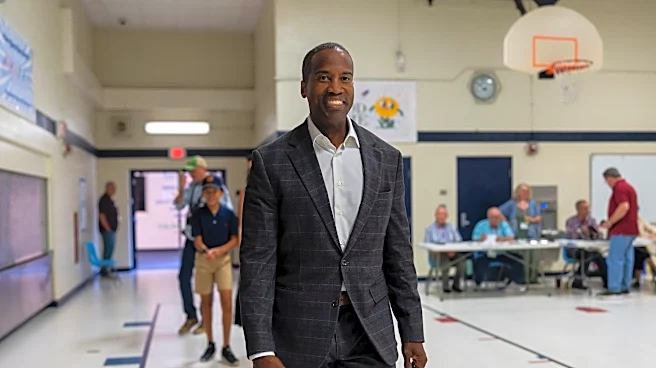
Luckily, Whitmer is term-limited, and Michigan voters will choose someone new in November. Republican John James, a sitting congressman, has said joining the program will be a top priority if elected governor. The Democrat in the race, Secretary of State Jocelyn Benson, has echoed Whitmer's talking points.
Some Democrats are supporting school choice. More should get on board.
Governors like Whitmer may be beholden to teachers unions, but a few Democratic governors have done the right thing.
Colorado Gov. Jared Polis was first, saying last year he'd be "crazy not to" opt into the Education Freedom program. New York Gov. Kathy Hochul has said her state plans to participate too.
Groups like Democrats for Education Reform, and even Arne Duncan, education secretary under former President Barack Obama, have also come out strongly in support of the program. Polling consistently shows it's popular with voters, including in New York and Michigan.
Ben DeGrow, senior policy director for education choice at ExcelinEd, says blue-state governors have a good case for joining.
“The unions and other interest groups are going to push these governors to not opt in because it could allow some kids to use the funds for the private school tuition piece of it,” DeGrow told me. “Opting in, there’s no reason why governors can’t use the bully pulpit of their office to encourage support for kids in public schools who need tutoring, academic intervention and other support.”
Democrats and teachers’ unions constantly complain about needing more money for schools. This program is a way to create a new funding stream. Education Reform Now, an affiliate of Democrats for Education Reform, estimates what states stand to gain by participating: in Michigan, if just 1% of eligible tax filers contribute, that would generate more than $22 million in potential scholarships.
If Michigan doesn't opt in, taxpayers can still donate to scholarship organizations in states that do participate, like Ohio and Indiana. But Michigan families won't see a dime of it.
If Democrats like Whitmer truly care about kids more than special interests, this is their time to prove it.
Ingrid Jacques is a columnist at USA TODAY. Contact her at ijacques@usatoday.com or on X: @Ingrid_Jacques
This article originally appeared on USA TODAY: Michigan students need help. Whitmer keeps stalling. | Opinion