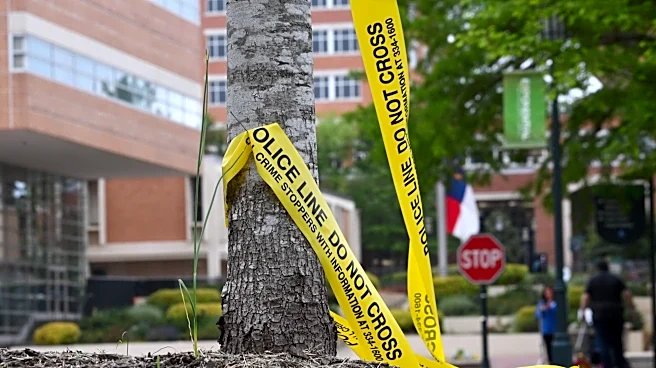




On Aug. 10, a Florida mother of two and her young daughters came home from the beach to find her ex-boyfriend waiting. When she tried to call 911, he took her phone. She told her girls to go inside and call for help before he forced her into a car, drove away and fatally shot her then himself. He was a Pinellas County sheriff’s deputy with 14 years on the job
. He's one of many who has carried out such a crime.Officer-involved domestic violence keeps happening, even though the tools to reduce it already exist and have been shown to work.
I spent my career as a New York City police officer, and I now teach criminology and work in public policy. I know how hard it is for the profession to admit that some of its own commit the very crimes they are sworn
to prevent. But I have seen this problem from the inside and studied it from the outside, and both views lead to the same conclusion: The methods to prevent domestic violence already exist. Our country built them and proved they worked – but then let them fall apart for lack of awareness and adoption.
Officer-involved domestic violence is a rising share of violent crime

The problem is substantial, even though no one knows its true size. In February, the FBI’s special report on domestic violence found that these cases make up a rising share of all violent crime.
Yet no law requires America’s roughly 18,000 law enforcement agencies to report how often their own officers commit domestic violence.
The best available research compiles studies based on self-reporting estimate that anywhere from 5-40% of officers have committed violence against a partner or family member.
The profession has known this for decades. In the late 1990s, the International Association of Chiefs of Police (IACP) declared officer domestic violence a matter of "paramount importance" and issued a model policy for how to reduce these crimes. That policy focused on mandatory reporting, seizure of weapons, independent investigation and protection for victims.
The most recent adoption study – from 2013 – was a New York Times investigation, which found that "only a quarter of the 56 largest city and county police departments that responded to a recent survey have a distinct policy for domestic violence involving officers."
The resistance was not subtle. When Congress barred anyone convicted of misdemeanor domestic violence from carrying a firearm, the nation's largest police union testified against the law and sued to overturn it.
The lawsuit did not succeed. The IACP's effort, voluntary from the start, drained away.
Agencies can even often fail to fire domestic abusers. A 2025 Philadelphia Citizens Police Oversight Commission report found that more than 85% of officers fired in one stretch, including those accused of domestic violence, won their jobs back through union-backed arbitration.
Police-focused anti-domestic violence policies work
However, we also know prevention works. In 2009, Florida State University researchers built a training program that taught officers how to recognize warning signs of domestic abuse, intervene with colleagues and keep violence out of their own homes. More than 40,000 officers completed the training.
A peer-reviewed study of over 850 officers found that after the training, their reported likelihood of arresting a fellow officer in a domestic violence scenario nearly doubled, from 26 to 47%. The study also found that they were more likely to say they'd report a colleague and help victims find services.
A grant later expanded this training into a national toolkit, offered free to any law enforcement agency in the country. But when the grant ended, so did the funding behind the push to get it used. As a result, no state or federal rule requires the training, and it remains rare.
The fact is no new tools need to be invented. Police-focused anti-domestic violence policies that work already exist and are backed by evidence. Florida’s experience showed prevention training works. The problem is how to fund awareness and scale that training, so it reaches recruits in every academy across America.
In addition, every agency should be required to adopt a formal officer-involved domestic violence policy. And the FBI should collect and publish data on domestic violence by officers, so we can better understand the size of this problem and demand accountability.
Police culture is slow to change. But I've also worked with plenty of officers who would have stepped in if they had been trained to see the signs, and I have known chiefs who would enforce such a prevention policy. And chiefs need to insist such trainings get used.
Sadly, the recent domestic violence in Florida has happened before and will happen again – until more law enforcement agencies are aware that this training exists and make the effort to adopt it.

Jillian E. Snider is a retired New York City police officer, an adjunct lecturer at John Jay College of Criminal Justice, a resident senior fellow at the R Street Institute, and serves as a member of the Council on Criminal Justice’s Women’s Justice Commission.
This article originally appeared on USA TODAY: I was a cop. We know how to stop officer-involved abuse. Will we?