


It took 250 years for America’s states to elect three Black governors. In the 2026 midterms, they elected four more in a single night.
The night before I was sworn in as the third in 2023, Deval Patrick of Massachusetts, the second African American ever elected governor, pulled me aside and told me one of his only regrets: He had waited until he left office to think seriously about who would come next. As a mentor of mine, I knew he shared that not as a throwaway line, but as a charge.
My being the third African American ever elected governor in our nation’s history was less a statement of progress than an indictment of how slowly it has come. That night, I promised to make sure America’s leadership looks like America. And I would not wait until
I left office to start.

So I campaigned hard for Keisha Lance Bottoms in Georgia, David Crowley in Wisconsin and Aaron Ford in Nevada, not just because they would make history, but because they are good public servants who understand the assignment: making child poverty history and making income inequality history.
Since Election Day, plenty of people have called this the end of an era. I am more interested in the next one.
Our history is our power

Voters of every party demanded a change to the status quo. They are done with a system where families do everything right and still can’t get ahead. They want their bills to be lower. They want a government that works for them.
When I first ran, people kept asking, “How do you possibly think you can win?” It wasn’t just because I was polling at 1%. It was because nobody thought someone who looked like me could lead Maryland. That question has always followed Black candidates, and it was never about whether we were qualified. I was not the third African American ever qualified to be a governor. It was about whether we were “electable,” the polite word that did the work “qualified” no longer could.
My answer was always: “Because I know our full history.” Our history is not only the doors closed to us. It is the people who fought for us without knowing us, who believed in the hope of us, and who knew they would never live to see that hope realized.
On Election Day, it was realized in four states at once. Voters in Florida, Georgia, Nevada and Wisconsin did not ask who looked electable. They asked who would best fight for them and their families.
So why does race matter at all? Because history matters. None of this was inevitable, and none of it is irreversible. Our history is our power.
I hope to be the last 'only Black governor' in America

Look at what they ran on:
- In Georgia, Keisha, now the first Black woman elected governor of a state, prioritized lowering everyday costs and expanding access to health care.
- In Wisconsin, David, the state’s first Black governor, pledged to lower housing, utility, health care and child care costs.
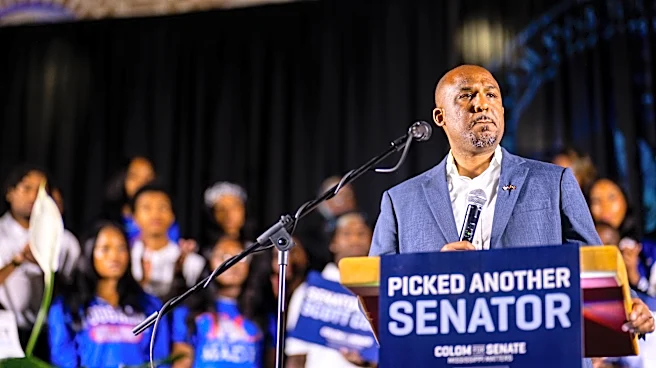
- In Nevada, Aaron, the first Black governor elected west of the Mississippi, promised to declare an affordability emergency on day one.
- In Florida, Byron Donalds, the first Black Republican ever elected governor, ran on lowering property insurance costs and property taxes. Different parties, same mission: make life more affordable and make government deliver.
After their wins, Keisha, Aaron, David and Byron promised to govern for those who didn’t vote for them, too. That is a welcome break from a decade of leaders who treated half the country like the enemy. You cannot love your country if you hate half the people in it. The next era belongs to leaders who govern for all of it.
Gov.-elect Donalds and I will disagree on plenty. But we were both raised by single mothers who believed education was everything. I pray for him and will work with him because Floridians and Marylanders want that from us. Progress is not partisan.

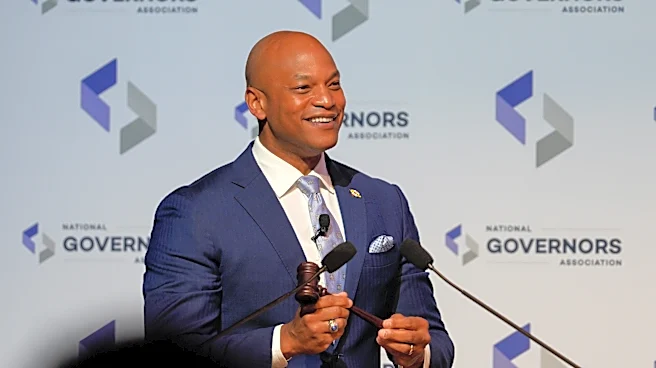
I am proud to serve as chair of the National Governors Association, and I’ve seen what governors can do when we judge an idea by whether it’s good, not where it came from. But it is not enough for our leadership to look like America. We need leaders willing to fight for the hope of this country and the promise of its future.
Come January, five Black governors will serve at once, 10% of the nation’s total. And Stacey Plaskett will take office as the first Black woman elected to lead a U.S. territory. Gina Hinojosa in Texas and Amy Acton in Ohio made history of their own. This is an important step toward a more perfect union.
Deval’s regret became my charge. The fourth, the fifth and beyond are here.
For nearly four years, I have been the only Black governor of any state. In January, I lose that title. I have never been happier to give something up. And I pray nobody ever has to hold that title again.
Wes Moore is the 63rd governor of Maryland.
This article originally appeared on USA TODAY: Wes Moore: I was America's only Black governor. I'm happy to lose that title