



Merriam-Webster just got a glow-up.
The long-standing dictionary announced on Sept. 15 that it added 1,400 new words, many of which are inspired by social media culture, like "looksmaxxing," "Rickroll" and "meme coin."
Merriam-Webster's additions follow soon after Dictionary.com announced on Sept. 12 that it added nearly 6,000 new words and abbreviations. "Glow-up," a noun that means a dramatic enhancement to someone or something's physical appearance, made both additions.
Interested in seeing what new words were added to Merriam-Webster? Check out a few below.
See some of the new words added to Merriam-Webster
Here's a closer look at some of the new words added to Merriam-Webster, by category:
Social media and internet slang
- Glow-up (noun): a usually dramatic enhancement especially to someone's or something's physical appearance
- Looksmaxxing (noun): the practice of taking one or more sometimes extreme or dangerous measures intended to increase one's physical attractiveness
- Parasocial (adjective): relating to or involving a one-sided emotional connection with someone (especially a celebrity or fictional character) whom one does not know personally
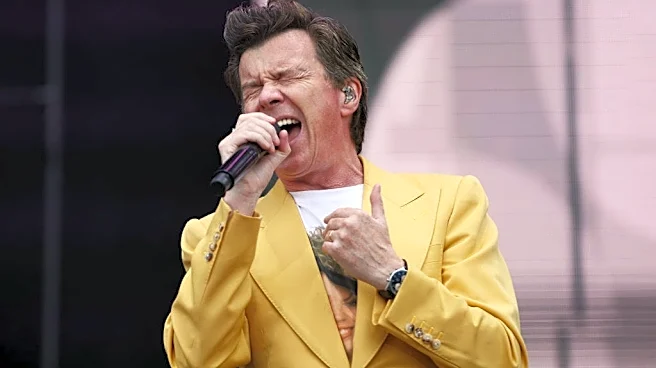
- Rickroll (verb): to trick someone into hearing the song, "Never Gonna Give You Up" by Rick Astley

- Meme coin (noun): a cryptocurrency created typically as a humorous tribute to something, such as an internet meme, or someone, such as a celebrity, and that typically has no real utility
- Promposal (noun): a creative and often elaborately or extravagantly staged request for someone to be one's date for a prom
- Letterboxing (noun): the technique of formatting a recorded video to show the full frame within the screen area of a device, such as a television or phone, that has a different aspect ratio
- Cuffing season (noun): a time of the year when people who are not married or in a relationship begin looking for a short-term romantic partner to spend the colder months of the year with
- Sunday scaries (plural noun): feelings of anxiety or sadness that arise on Sunday from the knowledge that the weekend is almost over
- Crashout (noun): a vehicular crash; dramatic ending or failure; or mental or emotional breakdown
- Whack-a-mole (noun): a situation in which a new problem appears as soon as an existing similar problem has been addressed
- Yacht rock (noun): a style of soft rock music originating in the 1970s and 1980s
- California sober (adjective): engaging in or characterized by recreational use of marijuana and/or alcohol combined with abstinence from other drugs, such as cocaine or methamphetamine
- Shapewear (noun): tight-fitting undergarments designed to shape and smooth the body

- Neckbeard (noun): a beard that partially covers the area under the chin and the throat or someone belonging to a subculture associated with neckbeards, such as a socially awkward gamer or computer nerd, misogynistic or ultraconservative internet roll or hipster
- Copium (noun): avoidance, denial or minimization, as of a bad situation, problem, outcome, etc., imagined as a narcotic
- Trash panda (noun): informal and humorous synonym for raccoon
- Mandela Effect (noun): a phenomenon in which many people collectively misremember a specific fact, event or detail in a consistent manner; the experience of many people having the same false memory
Technology
- Compute (verb): to determine especially by mathematical means or determine or calculate by means of a computer
- Vibe coding (noun): the act or practice of using an artificial intelligence system to generate computer code in a given programming language
- AGI (artificial general intelligence) (noun): the potential capability of computer systems or algorithms to match or exceed human cognitive abilities, such as reasoning and learning or an artificial intelligence system having this capability
- Uncanny valley (noun): a psychological effect characterized by feelings of unease or revulsion in response to the nearly but imperfectly lifelike quality of something, such as a doll, a robot, an AI-generated image or voice, or a computer-animated character, that is intended to simulate a human
Food
- Superfood (noun): a food, such as salmon, broccoli or blueberries, that is rich in nutrients like as antioxidants, fiber or fatty acids, considered beneficial to one's health
- Cake pop (noun): a lollipop made usually of a compressed ball of cake crumbs and icing that is dipped in a usually chocolate or sugary coating and often decorated, as with sprinkles or piped icing

- Shishito (noun): a slender, usually mild chili pepper of East Asia typically harvested while still green
- Chili crisp (noun): a spicy, crunchy condiment made typically of oil, fried chili peppers and often other aromatics, such as fried onions or garlic
How are new words added to Merriam-Webster?
According to the Merriam-Webster website, a word
is added to the dictionary when many people use it and agree on its meaning.
Dictionary editors actively read and look for changes in language, often looking at websites and publications with a wide national readership, the website outlines. Editors then create citations for these words, collecting context and sourcing, which are stored in a searchable database. Editors then research even more, looking through articles, books and speech to see how often a word is use, how widespread it is used and how meaningful the use is, the Merriam-Webster website states.
Editors must judge if there is enough evidence to put a new word into the dictionary, which is reviewed by senior colleagues. Merriam-Webster does not have a committee or host regular meetings for the inclusion of new words, the website continues.
Greta Cross is a national trending reporter at USA TODAY. Story idea? Email her at gcross@usatoday.com.
This article originally appeared on USA TODAY: Merriam Webster adds 1,400 new words. See definitions