
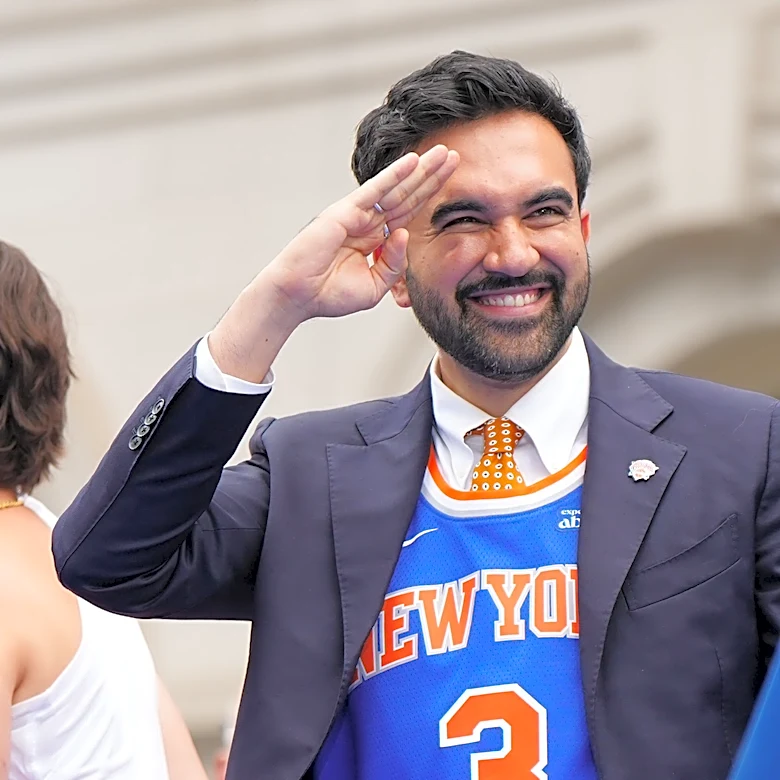


“I resist the idea that we should play this cancel culture gotcha game that tells us who we can’t talk to,” Michigan Democratic Senate nominee Abdul El-Sayed said during a Sept. 15 debate.
El-Sayed has leaned on that line, or some version of it, to defend his relationship with controversial Twitch streamer Hasan Piker, who has become a major point of attack for El-Sayed's Republican opponents.
El-Sayed has distanced himself from Piker in recent weeks, but he still invokes “cancel culture” as a shield against criticism. In doing so, he misunderstands what was wrong with it in the first place. His framing implies there is no one too toxic for him to stand beside.
“I don't do cancel culture,” El-Sayed said on Charlamagne tha God's radio show Aug.
31. "I go everywhere, I talk to everybody."
But political movements have every right to police the boundaries of acceptable debate, even when that means shutting out voices with a big audience.
Hasan Piker goes beyond acceptable debate
El-Sayed's relationship with Piker has dogged him all cycle. Piker campaigned prominently on his behalf during the primary, and El-Sayed even spent part of primary Election Day at a Detroit pool party with Piker and other influencers.
El-Sayed has dismissed criticism of the relationship as a "gotcha game," but Piker's comments amount to far more than a political liability. They are far outside the mainstream, vile and plentiful.
Piker's most infamous line is that "America deserved 9/11," but it’s only the start.
"Yeah kill them, kill those (expletive) and murder those (expletive) in the streets," Piker has said of certain landlords. "Let the streets soak in their (expletive) red capitalist blood, dude."
His endorsements of violence don't stop there, and they aren't all old or, as he claims, insincere. He has repeatedly defended armed groups that the U.S. government designates as terrorist organizations.
"I do not have a single issue with Hezbollah as a form of militancy trying to incur penalties on the genocidal state of Israel," Piker said in May 2025. Of the Houthis, Piker said: "What the Houthis are doing, on the other hand, is resistance. And it's not only moral, but it's just."
He isn't just violent. He's hateful. He has attacked Orthodox Jews with a smear about inbreeding.
He has also diminished sexual violence and defended the Hamas terrorists behind the Oct. 7, 2023, attacks on Israel.
"It doesn't matter if rape happened on October 7th," Piker has said. "It doesn't change the dynamic for me." On that date nearly three years ago, Hamas killed more than 1,200 people, mostly civilians, and took more than 200 hostages.

There are more awful statements than I could fit in a single column. Piker and El-Sayed both like to wave them off, El-Sayed as a dumb thing said out of context, Piker as three or four choice quotes. If any one of them were a one-off, that might hold. But Piker has a steady drumbeat of violent, terror-supporting and antisemitic rhetoric, and at some point the off-the-cuff remarks add up to a portrait of character.
The test is simple: Are the statements repeated, recent and aimed at an audience of millions? Piker's are.
There is nothing wrong with judging a politician who stands beside a man who encourages violence and hatred, or who waves away the legitimate concerns they raise.
Being against cancel culture doesn't mean an endlessly broad tent
Cancel culture was a serious problem. People lost jobs for expressing mainstream political views or for old jokes made in poor taste. Pressure campaigns pushed institutions to enforce a narrow set of social views on ordinary people.
The problem with cancel culture was never that people were suffering social consequences for positions outside of the realm of acceptable debate. The problem was that people well within the mainstream of American thought were being punished for ordinary opinions, or for jokes deliberately twisted against them.
The proper response to cancel culture was never to drop every standard for whom it is reasonable to associate with. It was to encourage debate within the mainstream, and to admit that some views fall outside it.
Piker and Nick Fuentes, a White nationalist streamer who has called the Holocaust exaggerated, shouldn't be censored. But politicians who associate with them, and refuse to condemn them, should pay a political price.
Republicans aren't immune. After the cancel culture wars, many understandably recoiled from silencing extreme voices, and some have made El-Sayed's mistake. Vice President JD Vance has declined to condemn Tucker Carlson, who has peddled antisemitic conspiracy theories under cover of "just asking questions," or the Young Republican chapters whose racist and antisemitic messages were exposed.
Left and right alike have drawn the wrong lesson from the cancel culture wars. El-Sayed and others on the left seem to have concluded that pruning the edges of a movement is always a mistake. It isn't.
A movement with no standards for acceptable speech ends up with Hasan Piker and Nick Fuentes inside the tent. Both parties should understand that the tent has a limit, and that these men should be kept outside it.
Dace Potas, a law student, is an opinion columnist for USA TODAY. Follow him on X: @DacePotas
This article originally appeared on USA TODAY: El-Sayed is making a mistake with Piker as midterms approach | Opinion