






TEL AVIV − In 1972, elite Israeli commandos were tasked with rescuing 90 passengers and seven crew members held hostage by Black September, a Palestinian militant organization, after the group hijacked Sabena Flight 571 en route from Brussels to Tel Aviv via Vienna.
The commandos freed the hostages after disguising themselves as technicians sent to repair the plane. Two future Israeli prime ministers participated in the raid. One of them was a young Benjamin Netanyahu. During the assault, a bullet tore through his bicep.
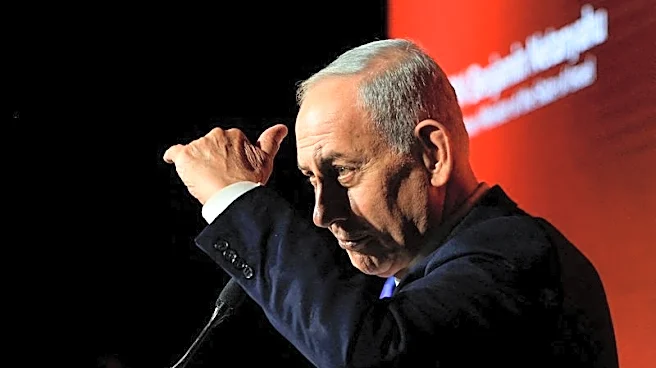
Five decades later, Netanyahu, 77, Israel's tough-talking, longest-serving prime minister and a leader who has arguably done more to shape modern Israel than any of his predecessors, is once again trying to convince voters ahead
of an Oct. 27 election that he is the only one who can keep them safe. He is campaigning on the very issue − security − that his critics accuse him of being weak on.
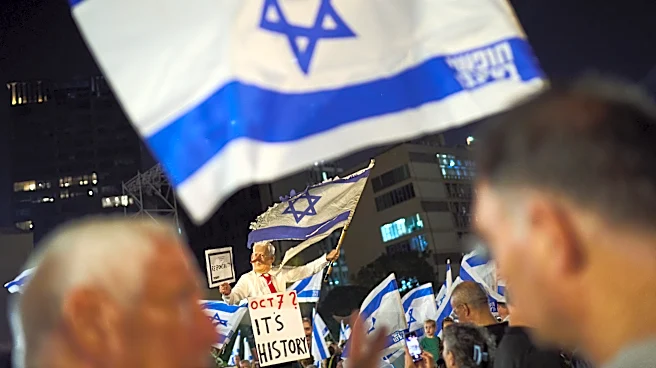
National security has dominated the run-up to the vote, the first election since Oct. 7, 2023, when Hamas-led militants carried out the deadliest attack in Israel's history, killing about 1,200 people and taking 251 hostages. It was a day that shook Israelis to the core. The election is, to a large degree, a reckoning with that day.
"Campaigning on security just a short time after Oct. 7 would have been impossible for Netanyahu," said Shmuel Rosner, an Israeli researcher, columnist and pollster who will run an exit poll for an Israeli TV channel on the day of the vote.
"Three years later, he can say: 'Look, Oct. 7 was a disaster. But I am the only one capable, experienced and calculated enough to help Israel rebound in the way we did.'"

Still, Netanyahu has been dogged by allegations that he bears at least some responsibility for Oct. 7, with critics accusing him of allowing Israel's vaunted military to grow complacent, ignoring intelligence warnings from Egypt and the United Arab Emirates, and deliberately bolstering Hamas in Gaza to undermine Palestinian aspirations for statehood.
Netanyahu strongly disputes these allegations. He denies wrongdoing and has resisted accepting blame for the security failures. He also argues that since Oct. 7, he has made Israelis safer by severely weakening Hamas' leadership and military capabilities in Gaza, those of Hezbollah in Lebanon and, with substantial help from the United States, the military and nuclear capabilities of their chief backer, Iran.
'Consequential': An Israeli election without equal
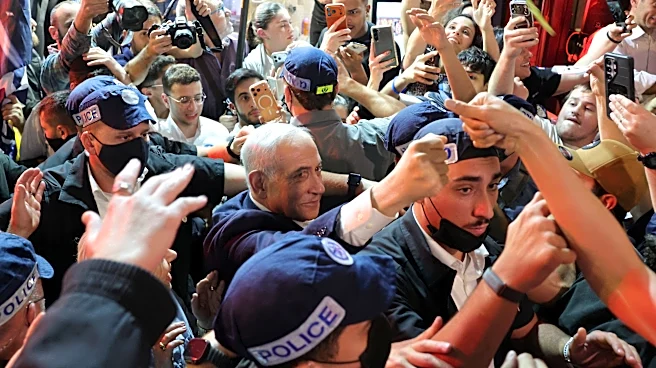
For many Israelis, it is a message that has cut through.
"You don't change leaders just because you were attacked," said Gideon Ariel, 63, a supporter of Netanyahu's right-wing Likud party who lives in Ma'ale Hever, an Israeli settlement in the occupied West Bank. "Pearl Harbor happened on President Franklin D. Roosevelt's watch. What happened? He was re-elected."
The example of Pearl Harbor and Roosevelt is one Netanyahu himself has invoked.
But other weighty matters loom over the vote beyond Israel's security, many of them domestic. Chief among them: What kind of country do Israelis ultimately want theirs to be?
One that embraces military hawkishness? One that is more religiously conservative? One that prioritizes democracy and government accountability? One that explicitly rejects any path to eventual Palestinian statehood?
Ami Pedahzur, a professor of Middle Eastern and Islamic Studies at the University of Haifa, said many Israelis regard this as "the most consequential election in Israel's history," with the country divided into two electoral camps offering radically different visions of its identity and future.

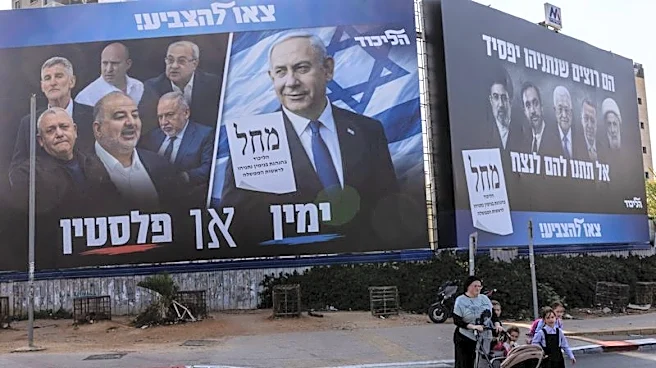
On one side is Netanyahu's coalition of nationalist and religious parties.
They support expansion of Israeli settlements and further control over the occupied West Bank, policies that critics have long said contribute to the displacement of Palestinian communities and undermine prospects for a Palestinian state. Some prominent figures on the Israeli right have also advocated facilitating what they describe as voluntary emigration from Gaza, proposals that Palestinians and human rights groups warn could amount to forced displacement, a potential war crime.
They also want to press ahead with efforts to overhaul Israel's judicial system that would limit the Supreme Court's authority and increase political influence over judicial appointments. Supporters argue that these reforms are necessary to curb what they see as left-liberal judicial activism and restore authority to elected representatives.
"The old status quo is not coming back," said Simcha Rothman, an outspoken right-wing Israeli politician and lawyer who helped draft the reforms. "If a terrorist kills someone, can you demolish his house? The law is very clear: yes. But it actually depends on the court's panel of judges."
Opponents warn that they would undermine judicial independence and weaken democratic checks and balances. Before the Hamas attack, hundreds of thousands of Israelis took part in nationwide protests against the proposed reforms over several months.
"The judicial overhaul is really a judicial coup," said Nimrod Novik, a former senior policy advisor to the late Israeli Prime Minister Shimon Peres. "It directly challenges the independence of Israel's courts."
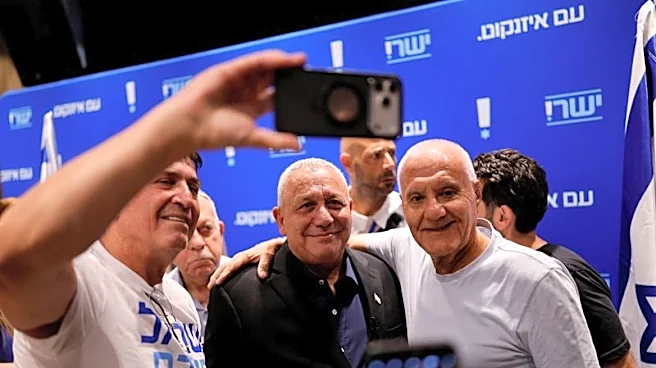
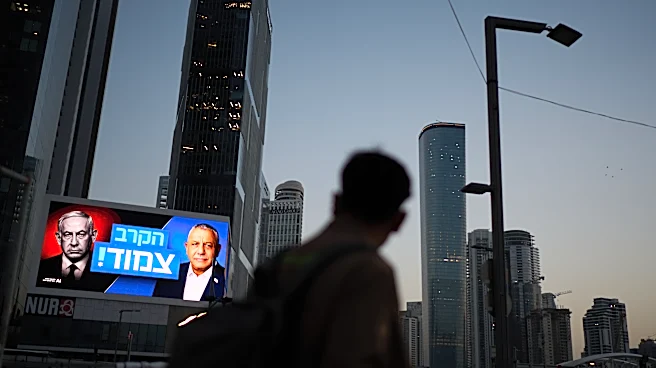
On the other side, an alliance of ideologically diverse parties has emerged, with former Israel Defense Forces chief of staff Gadi Eisenkot, leader of the centrist Yashar! party, as its leading figure. This grouping, the University of Haifa's Pedahzur said, wants not only to end Netanyahu's 19 years of nonconsecutive rule but also to strike a different balance between Israel's secular, religious and democratic identities.
This bloc emphasizes strong democratic institutions and checks on power, he said.
Gadi Eisenkot: Netanyahu's opposite
Eisenkot, 66, comes from a working-class family of Moroccan Jewish immigrants, a stark contrast to Netanyahu's privileged upbringing. He is relatively inexperienced politically, having only served one term as a lawmaker. He shares many of Netanyahu's hardline security views but has not faced the same level of international scrutiny over them.
But many Israelis have warmed to what they see as Eisenkot's unassuming public image − his lack of apparent political polish and plainspoken manner. He often appears at campaign events in jeans and a T-shirt, another striking difference to Netanyahu, who comes from Israel's Ashkenazi elite and has long cultivated a combative and flamboyant political style.
For many ordinary Israelis, Eisenkot is relatable in another, all-too-familiar way: His son and two nephews were killed fighting in Gaza. One of Netanyahu's sons, by contrast, spent much of the war in Miami, drawing widespread criticism in Israel as thousands of reservists were mobilized, many returning from far-flung places to serve.
"He's very modest," said Giora Inbar, a former senior general in the Israel Defense Forces. Inbar was Eisenkot's commander when they both served in Lebanon in a series of wars, the first one in 1982, against Iran-backed Hezbollah militants. "When I left the army and he became IDF chief of staff, I used to meet him every week. He wanted to hear from people outside the organization, even if that meant criticism."
The two camps are also pushing competing agendas on whether Israel's ultra-Orthodox Jews, who are projected to make up nearly a quarter of the country's population by 2050, should be required to serve in the military; how to better integrate Arab citizens of Israel, who account for roughly a fifth of the population; how to allocate strained resources amid multiple military conflicts; and, overarching it all, how to reconcile these competing priorities within a Jewish state.

Can Netanyahu hold the line?
The contest is on a knife-edge, as so many Israeli elections have been in recent years.
But the battle for Israel's future is arguably even more uncertain this time.
More than three dozen parties are contesting the vote. Polls suggest about a dozen will pass the threshold of 3.25% valid votes needed to win seats in Israel's 120-seat parliament, known as the Knesset. But election trackers show that neither of the two main blocs is likely to secure the 61 seats needed for a parliamentary majority.
That part is not unusual.
In fact, in the history of Israeli elections stretching back to 1949, no single party has ever won a majority outright, which is why Israeli governments have always been coalitions. Finishing with the most seats does not guarantee power. What it typically means, though not always, is that Israel's president gives the leader of the largest party the first chance to wrangle and cajole other parties into striking a deal to reach the 61-seat threshold.
Such horse-trading invariably comes with conditions.
For Netanyahu, that has meant filling his cabinet with controversial figures such as Itamar Ben-Gvir, his national security minister, who has been convicted of incitement to racism against Arabs. Bezalel Smotrich, his finance minister, has been a driving force behind the vast expansion of Israeli settlements in the occupied West Bank over the past four years. The settlements are considered illegal under international law, a characterization Israel disputes.

Still, neither Netanyahu's bloc nor Eisenkot's is forecast to secure the 61 seats needed for a parliamentary majority. Some parties from both blocs have ruled out joining forces with potential partners on ideological or identity grounds. These include Arab-led parties that could, in theory, hold the balance of power.
"This reluctance reflects a structural problem in Israeli politics," said Rana Zaher-Karayanni, a scholar, political activist and former member of the Nazareth City Council, in northern Israel. Zaher-Karayanni is an Arab Israeli citizen.
"Jewish opposition parties fear losing voters if they cooperate with Arab parties," she said.
So barring a surprise, it could take weeks or even months for Israel to form a new government. And if no one can, the country could be forced to vote again.
Another possibility is a minority government, in which a party or coalition takes office without controlling a majority of Knesset seats, relying instead on support or abstentions from lawmakers outside the government to survive confidence votes and pass legislation. But it remains unclear who could muster enough support to become prime minister under such an arrangement.
If all efforts to form a government fail, Israel votes again. And maybe again.
In the meantime, Netanyahu could remain in office as caretaker prime minister.
The Trump factor
One voter who has had more than enough of Netanyahu is Dor Dougma, 30, a recent graduate from Hadera, in Israel's northern Sharon region, about 30 miles from Tel Aviv.
Dougma will cast his ballot for Eisenkot.
He said he wants a leader focused on education, the economy, and the rising cost of living, issues Eisenkot has pledged to address. It bothers him that Israel's ultra-Orthodox citizens have long enjoyed broad exemptions from military service. Netanyahu stands little chance of staying in power without ultra-Orthodox support.
Dougma is tired of what he described as "the spectacle" of Netanyahu. He said he feels he knows Netanyahu too much.
"It sometimes looks to me that Netanyahu cares more about American interests than Israeli ones," Dougma said, referring to President Donald Trump's late endorsement of his longtime ally.

In an Oct. 18 Truth Social post, Trump praised Netanyahu as "Strong, Brave, and Brilliant" despite opposition from within Israel.
Netanyahu quickly capitalized on that praise.
"Donald, we have a job to finish," Netanyahu said in a video of a telephone conversation with Trump that he posted on social media, apparently referring to Iran. "We'll finish it together. We'll finish it, and no one else will do it."
Netanyahu, like other parties across the political spectrum, has used AI-generated campaign videos, including attack ads designed to provoke emotional responses from voters. Some have been eyebrow-raising.
In one, released in July and posted on X by Netanyahu, Eisenkot is seen running through a meadow toward a young man who critics say resembles his late son. Instead of embracing him, he runs past him and hugs Mansour Abbas, the leader of Ra'am, an Arab Israeli party. The video has been viewed more than a million times.
In another, released in late August by the far-right Otzma Yehudit party of Netanyahu's security minister, Ben-Gvir, an AI-generated clip shows purported Palestinian detainees in prison uniforms being transported on a conveyor belt that critics likened to a concentration camp.
The post was subsequently deleted.
"All magicians in the end run out of rabbits to pull out their hats," Dougma, the recent graduate, added, referring to Netanyahu's remarkable ability to survive electoral setbacks, bitter political rivalries and allegations of corruption.
At one point, Dougma excused himself to answer an incoming call. It turned out to be an AI-generated campaign robocall, one of many he said he had received in recent weeks.
Different but with security similarities
Still, analysts say there are limits to how much Israel's two main political blocs truly differ.
"Ultimately, the two sides both share hawkish views on security, little hope or expectations for peace with the Palestinians and significant distrust of the international community," said Pedahzur, of the University of Haifa.
Eisenkot, like Netanyahu, opposes Palestinian statehood and generally supports Israeli settlements in the occupied West Bank, even if he has sharply criticized settler violence against Palestinians and some of Netanyahu's settlement expansion policies aimed at appeasing the nationalist and religious parties in his bloc. Eisenkot also wants to finish what Netanyahu started in Gaza by dismantling Hamas' military capabilities. Two of Eisenkot's potential coalition partners, Avigdor Liberman's Yisrael Beiteinu and B'Yachad, led by former Prime Minister Naftali Bennett and former Prime Minister Yair Lapid, are not known for their dovish views.

In fact, the desire for security is a common thread connecting the vast majority of Israelis, even as their government's policies in the occupied West Bank and its military response to Oct. 7 have drawn international condemnation. The Israeli offensive has killed more than 74,000 Palestinians in Gaza, according to health authorities in the Hamas-run territory.
The war has devastated Gaza's economy, education and healthcare systems and infrastructure, affecting its more than 2 million residents. Israel continues to strike targets across the territory despite a ceasefire agreement that took effect more than a year ago.
But Novik, the former adviser to Israel's late prime minister Peres who is now a fellow at the New York-headquartered think tank Israel Policy Forum, said Eisenkot generally favors diplomacy over military action.
Eisenkot has spoken publicly, for example, about how he backed the nuclear deal, known as the Joint Comprehensive Plan of Action (JCPOA), between Iran, the United States, and several other Western nations.
Trump torpedoed it. Netanyahu cheered him on.
Where will the vote leave Palestinians? Mostly where they were, analysts say.
"In the short term, the daily level of pressure exerted on Palestinians may decrease if the opposition comes to power," said Khaldoun Barghouti, a Ramallah-based Palestinian expert on Israeli affairs. "However, on a strategic level, no new Israeli government will represent a fundamental shift toward a better future for Palestinians."
For some Israelis, the vote nevertheless represents a potential turning point in their relationship with the world's only Jewish state.
One dual-national Israeli citizen who lives in the United States and returned to Israel to vote said that if Netanyahu's hawkish bloc returns to power, he is not sure he will ever come back. He said the Israel he knows and loves would be gone, having effectively devolved into a coldhearted security state without sufficient judicial oversight. He asked not to be identified for fear of a backlash from fellow Israelis.
A long-simmering corruption trial
The election's outcome could also prove consequential for Netanyahu personally.
He became Israel's first sitting prime minister to be indicted when he was charged with bribery, fraud and breach of trust in three separate corruption cases in 2019. Prosecutors allege that Netanyahu accepted hundreds of thousands of dollars' worth of champagne, cigars and other gifts from wealthy businessmen and sought to trade political and regulatory favors with a newspaper publisher and a telecommunications magnate in exchange for favorable media coverage.
Netanyahu denies all the charges. Though sitting prime ministers in Israel do not automatically enjoy immunity from prosecution, he has argued that a pardon would allow him to focus on national security threats and foster "national unity."
He submitted a formal pardon request to Israeli President Isaac Herzog last year.
His trial, which began more than six years ago, has also been repeatedly interrupted by security crises and official commitments. His lawyers have cited these circumstances in requests to postpone testimony and adjust court schedules. They have also challenged aspects of the prosecution's case.
For three years, Netanyahu has also resisted public pressure to establish an independent state commission of inquiry into the security and intelligence failures that allowed the deadliest attack in Israel's 78-year history to unfold.
Eisenkot has vowed to establish such an inquiry if elected, saying it should also scrutinize his own record as military chief in the years preceding Oct. 7.
Ariel, the Likud supporter who lives in the Ma'ale Hever settlement in the occupied West Bank, is not convinced there is a credible alternative to Netanyahu. He said Netanyahu has proven time and again that he is the leader best equipped to keep Israel safe and preserve its Jewish identity.
He pointed to Netanyahu's diplomatic achievements, including thenormalization agreements he helped broker with Trump between Israel and several Arab countries.
He said the election presents Israelis with a stark choice: Netanyahu's "incredible security activities" over the past several decades versus a group he characterized as relatively inexperienced politicians whom he believes are more interested in building ties with Palestinians.
Kim Hjelmgaard is an investigative journalist covering global stories for USA TODAY, from living rooms to conflict zones. He is based in London.
This article originally appeared on USA TODAY: Israeli vote reckons with Oct. 7, Netanyahu, and future of Jewish state