








Invasive Burmese Pythons are a great threat to South Florida's native species — so much so that the state employs qualified contractors to help hunt them.
Two initiatives, the Florida Fish and Wildlife Conservation Commission's Python Action Team Removing Invasive Constrictors
(PATRIC) program and the South Florida Water Management District’s Python Elimination Program, work "in tandem" to compensate qualified people with "nonnative constrictor control experience," according to the FWC's website.Being a state contractor is "demanding," according to the PATRIC application form, which says that "most contractors" remove "over 30 pythons per year."
"As of April 2025, over 23,500 pythons have been removed from natural areas in the state of Florida,"
reads the FWC's website. "Of that total, over 11,000 pythons have been removed by FWC PATRIC and SFWMD PEP contractors since program inception."
Want to work as a python hunter? What to know
The department says that "hunters, anglers" and other "outdoor recreationists with experience removing pythons or other large constrictors from the wild" should apply.
The South Florida Water Management District's Python Elimination Program contracts python "removal agents" to work "on designated lands across South Florida, including in Monroe, Miami-Dade, Broward, Collier, Hendry, Lee, and Palm Beach counties," according to its website.
The program pays contractors a variable hourly survey rate, which depends on the area they're searching, according to the program's FAQs. Regular pay is $14 per hour, premium pay is $20 per hour and ultra-premium pay is $30 per hour, with 10 billable hours per day.
An additional incentive is paid "for every python removed based on length," according to the program's website — $50 for the first four feet and $25 per foot for every foot after four.
Additionally, $200 will be paid for any verified active python nest, and $50 for the "documented catch and release of any telemetered research pythons."
Burmese pythons pose a threat to Florida's native species
Adult Burmese pythons have few predators, according to the FWC, and frequently prey upon native species, including those that are threatened or endangered.
Burmese pythons can also threaten the safety of human beings, although they ultimately pose the biggest danger to the ecosystems they become established in. They can also prey on household pets, such as cats and dogs. They can consume meals equivalent to 100% of their body mass.
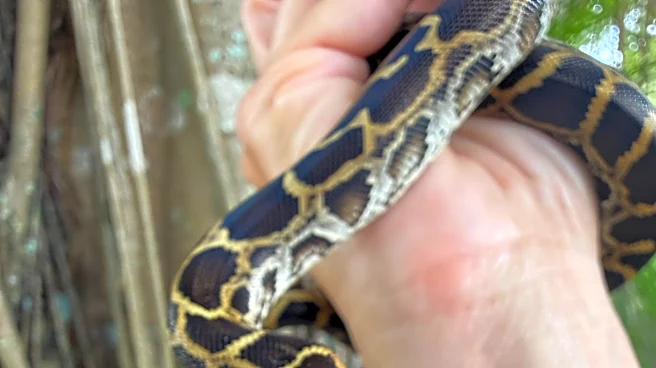
Though Burmese pythons can grow to over 20 feet in length, those captured in Florida are usually between six and 10 feet long, says the FWC. In adulthood, they’re larger than almost all native snakes, and are usually tan with dark blotches along their backs and sides.
Additionally, the dark patches along their bodies usually fit together like puzzle pieces, and can look similar to the patterns on giraffes. They also have dark wedges along the tops and bottoms of their heads, as well as behind their eyes.
Sarah Perkel is a South Florida Connect Reporter for the USA TODAY Network's Florida Connect team. You can get all of Florida’s best content directly in your inbox each weekday day by signing up for the free newsletter, Florida TODAY.
This article originally appeared on USA TODAY: Florida contracts professional python hunters. How much can they make?