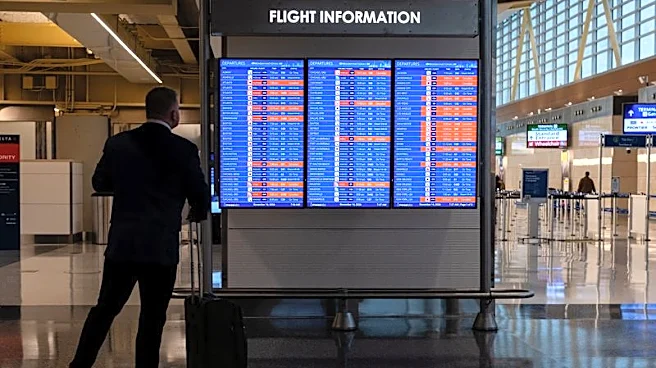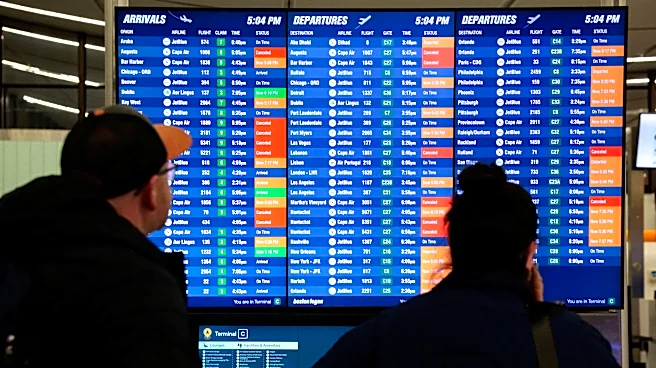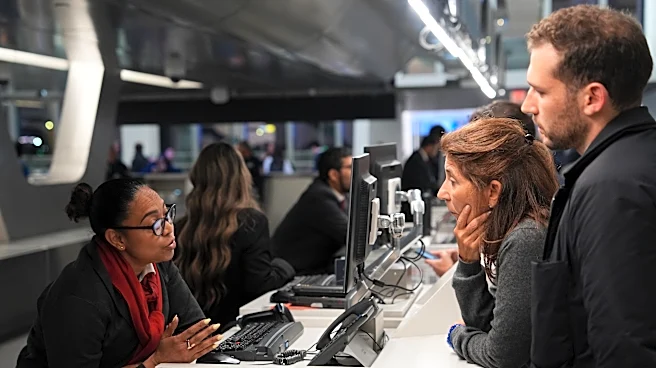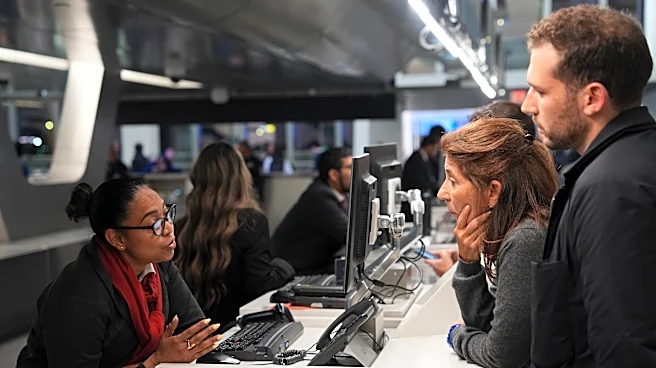




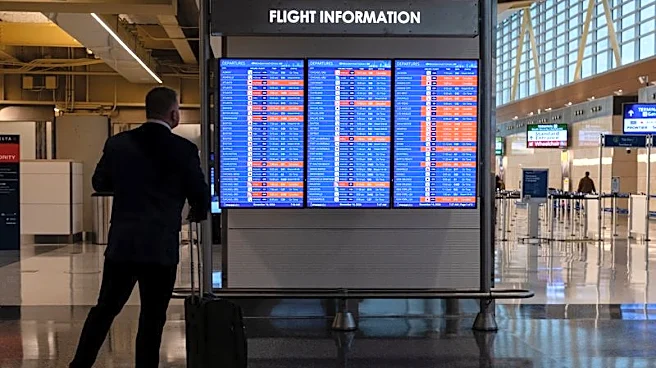
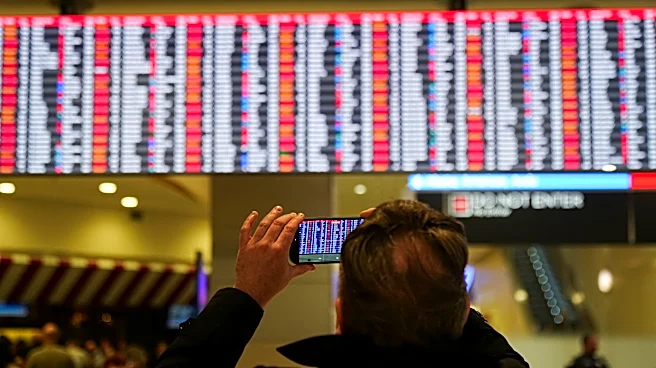
After a nationwide FAA ground stop on Nov. 13 disrupted tens of thousands of flights and left many stranded, and United Airlines' "widespread" system outage three days later, some travelers may be nervous about their upcoming holiday flights.
The federal agency issued the approximately four-hour-long ground stop "due to extraordinary circumstances and reasons for safety" caused by a telecommunications network issue at a remote FAA location during routine maintenance, according to the U.S. Department of Transportation. At 3:36 p.m. ET, the FAA began identifying instability in radar and communications systems at traffic control centers, Transportation Secretary Sean Duffy told reporters at the White House on Nov. 13.
“What we have is an incredibly
old air traffic control system,” Duffy said, adding that switches and routers got “overloaded” in the system’s analog technology. “They started to give us inconsistency in the data from those routers, and because of that we shut the system down.”
The ground stop was lifted that same evening but contributed to more than 18,000 flight cancellations and 27,000 delays across the U.S. throughout the weekend, with some disruptions bleeding into Monday.
"The minute you overwhelm those circuits, they stop performing, and they become unreliable, and that's when you really ought to be shutting it down. That's, of course, what it appears they ultimately did," said Robert W. Mann Jr., a former airline executive officer and current president of R.W. Mann and Co., an independent airline consultancy.
With the busy winter holiday travel season just around the corner, travelers may be wondering whether their flights are at risk of disruption again or if it's safe to fly. "That's the 25,000 flights-a-day question," added Mann.
Here's what to know.
Is it safe to fly?
Yes. Last week's FAA ground stop was issued out of precaution, and officials said there were no immediate safety threats. "To the American traveler, our number one job is their safety, and Bryan [Bedford] mentioned this, and I’ve mentioned this before, but we will keep you on the ground; you won’t get to your destination if we think you can’t get there safely," said Duffy in a Nov. 16 news release.
Mann agrees, saying he isn't worried about safety or network aspects following the ground stop. "I think first off – and most importantly – it's not a safety issue because they made sure that when they were concerned about the system stability, they simply stopped adding new flights to it," he said. "There was never any issue with the ability of flights en route to communicate or navigate properly. What appears to have been an issue was the ability to add new flights to the system and maintain its stability. So that's why they put in place the ground stop."
Statistically, flying remains the safest way to travel in the U.S., despite two high-profile fatal commercial plane incidents over the last two years. In March, there was a tragic accident at LaGuardia Airport involving an Air Canada jet that killed two pilots and injured dozens. The midair collision of an American Airlines jet and an Army helicopter over the Potomac River in Jan. 2025 was the first fatal plane crash of a U.S. airliner since 2009.
According to the 2025 Transportation Statistics Report from the Bureau of Transportation Statistics, there were fewer fatalities from air travel than by car, water transportation or trains in 2023. Historically, nine out of 10 air travel deaths involve general aviation, not commercial flying, the report states.
Following aviation accidents, the National Transportation Safety Board, airlines and other industry stakeholders work toward safety recommendations and collaborate to make flying as safe as possible.
Should travelers worry about their holiday flights?

Amid short staffing at the FAA, shutdowns and most recently, the nationwide ground stop, travelers may worry about their upcoming holiday flights. On Nov. 13, Duffy said U.S. flight operations should be back to normal by Thanksgiving.
"We believe we have addressed the initial cause of the disruption by immediately disabling the functionality of the originating routers," the Department of Transportation told USA TODAY. "As a precaution, we disabled the same functionality on approximately 60 similar routers in the system."
It's possible the continued modernization efforts of air traffic control systems will cause future issues. "There are going to be incidences, and we don't know when they're going to occur and how they're going to occur, but they are going to occur," said Duffy, who has also requested $50 billion in funding from Congress in addition to the $12.5 billion initially approved in 2025.
"There are two work streams at the FAA: maintenance and modernization. This issue occurred during maintenance," the DOT added.
For now, Mann said travelers most likely don't need to be concerned about safety. "Because it's such a large system, it will take a while. But in no case has it been unsafe. And again, it's because you've got professionals doing their jobs to ensure that is the case," he said.
This article originally appeared on USA TODAY: The big question after the FAA ground stop: Is flying safe?